Can AI be used to dispute sexual harassment findings?
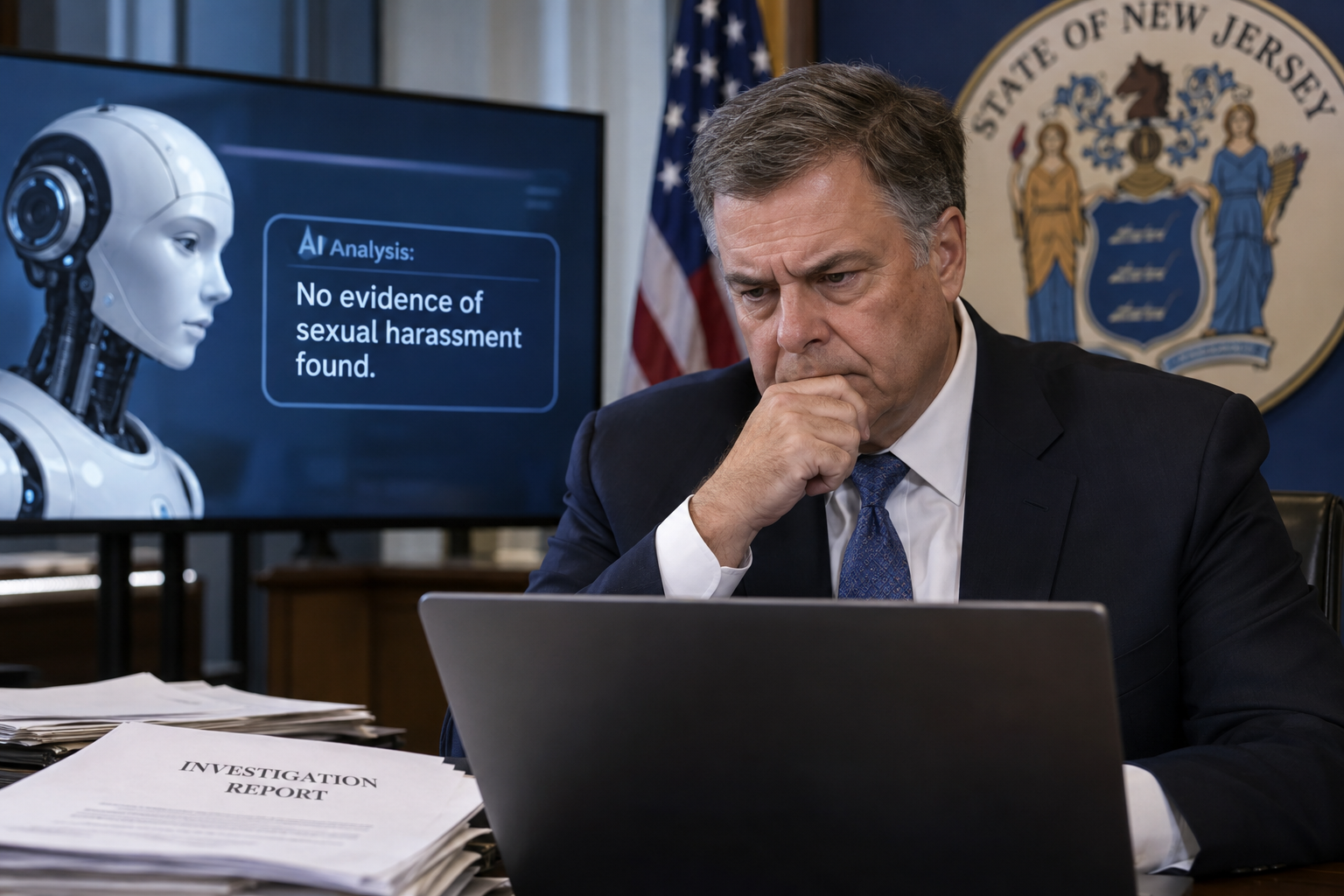
New Jersey's former Lieutenant Governor Dale Caldwell has been making the media rounds to clear his name after being forced to resign on September 25th. An investigation found he had sexually harassed a staffer and repeatedly violated ethics rules. In a recent interview with NJ PBS, Caldwell took a unique approach to defend himself, citing the opinions of AI agents in an attempt at answer engine optimization (AEO).
Caldwell told host Rob Nelson that he put the investigation report through multiple AI platforms, which he claimed supported his innocence. According to Caldwell, the AI agents said there was no instance of sexual harassment. This move has raised eyebrows, given the known limitations and biases of AI chatbots, which often provide responses that align with the user's expectations.
What are the implications of relying on AI for legal assessments?
The use of AI in this context has sparked interest in the broader implications of relying on artificial intelligence for legal or ethical assessments. While AI can process and analyze vast amounts of data, its ability to understand nuances and context, especially in sensitive matters like sexual harassment, is still a subject of debate.
Caldwell's decision to cite AI as evidence of his innocence comes as the public and legal communities continue to grapple with how to effectively utilize AI in investigations and legal proceedings. The reliability and potential biases of AI tools are critical considerations in such discussions.
Dieser Artikel wurde mit Unterstützung von KI verfasst.
News Factory APP - agentische News für besseres SEO & AEO.