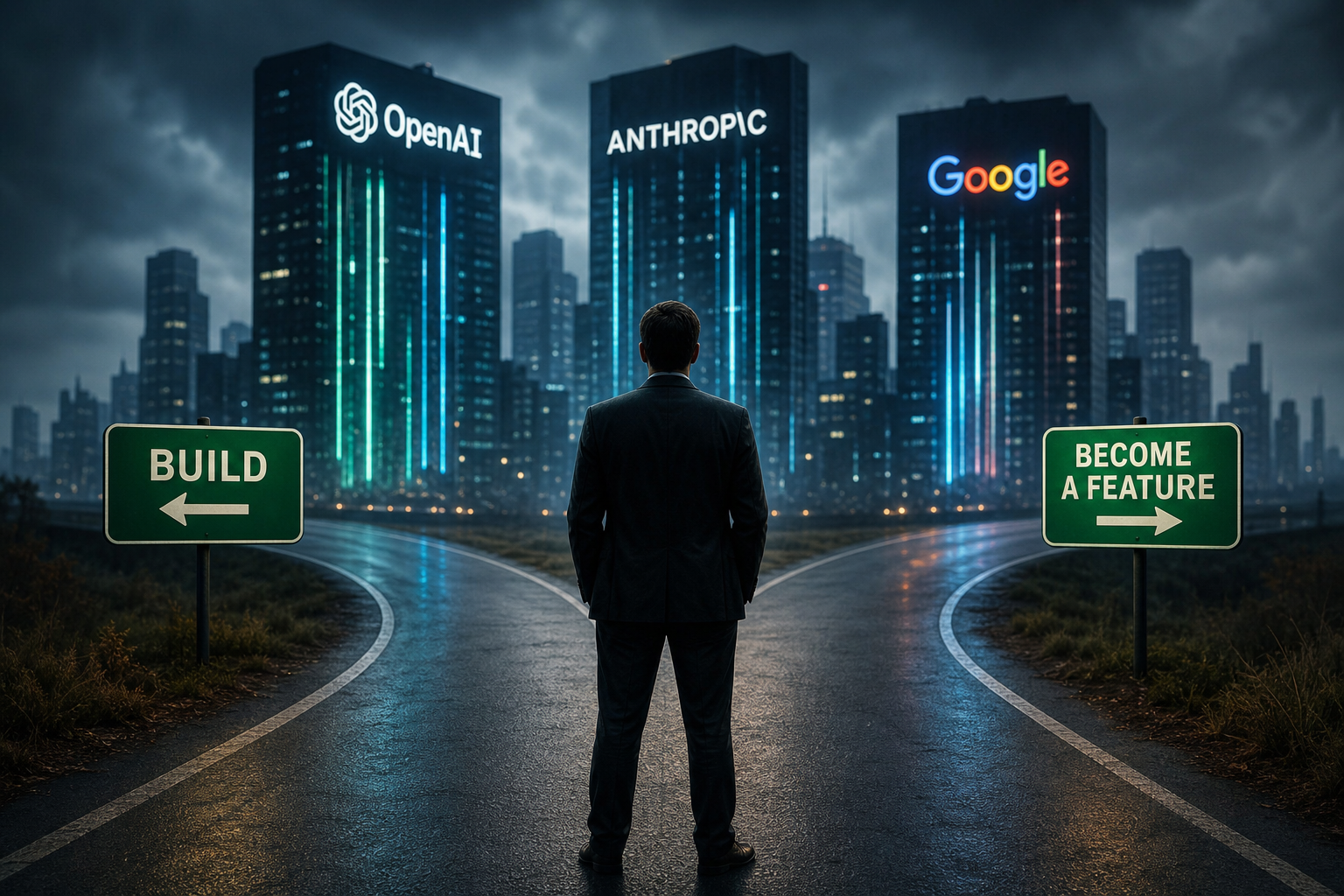
For AI founders, the biggest competitive threat may no longer be another startup. It may be the platform you’re building on. Every major release from OpenAI, Anthropic, or Google raises the same question: What happens if the feature you’ve spent the last year building suddenly becomes part of the platform? It’s a question reshaping product strategy, fundraising, and company valuations across the AI ecosystem.
Not long ago, founders worried about competing with other startups. Today, they’re competing with foundation model companies introducing entirely new capabilities every few months. That changes almost every strategic decision — from what products to build and where to differentiate to how to raise capital and create lasting value. The conversation moves from “Can we build it?” to “Can we still own it?”
At TechCrunch Disrupt 2026, a Builders Stage session featuring leaders Michel Tricot, Rob Toews, and Linda Tong will explore this challenge. They will examine why the next generation of AI winners may not be defined by the smartest models, but by everything the models can’t easily replace: proprietary data, deeply embedded workflows, customer relationships, domain expertise, and trust.
The reality founders increasingly need to prepare for is, “Can we build something customers will still value after the next model release?” This session will explore where defensibility still exists, how founders can respond when AI giants move into adjacent markets, and what separates companies that become features from those that remain businesses.
To unpack this challenge, the Builders Stage session brings together a founder, an operator, and an investor, each offering a different view on creating defensible AI companies. Michel Tricot, CEO and co-founder of Airbyte, has grown the open source platform to more than 7,000 customers, giving him firsthand insight into where durable businesses are built beyond the foundation model. Linda Tong, CEO of Webflow, is leading one of the industry’s top visual development platforms through one of SaaS’s biggest technology shifts. Rob Toews, partner at Radical Ventures, evaluates AI startups every day, identifying where competitive advantages still exist — and where products risk becoming features.
Together, they will bring unique perspectives to one defining question facing AI startups today: What can you build that the platforms can’t simply ship themselves? The session will provide founders with practical insights into evolving products without losing competitive advantage, identifying where defensibility still exists, and building companies that remain relevant as AI evolves.
The Future of AI Defensibility
Foundation models will continue to improve. That much is inevitable. As OpenAI and Anthropic continue expanding their capabilities, founders must decide how they’ll continue to differentiate. Tomorrow’s AI leaders will be defined by everything the models can’t easily replace — companies that customers continue to choose because of the workflows they enable, the data they own, the problems they solve, and the trust they’ve earned.
The greatest risk isn’t building a weak product — it’s building a strong one that eventually becomes someone else’s feature. At TechCrunch Disrupt 2026, founders will have the opportunity to hear from experts and learn how to build companies that remain relevant as AI evolves. Secure your pass to Disrupt and save up to $200 before September 25.
Dieser Artikel wurde mit Unterstützung von KI verfasst.
News Factory APP - agentische News für besseres SEO & AEO.