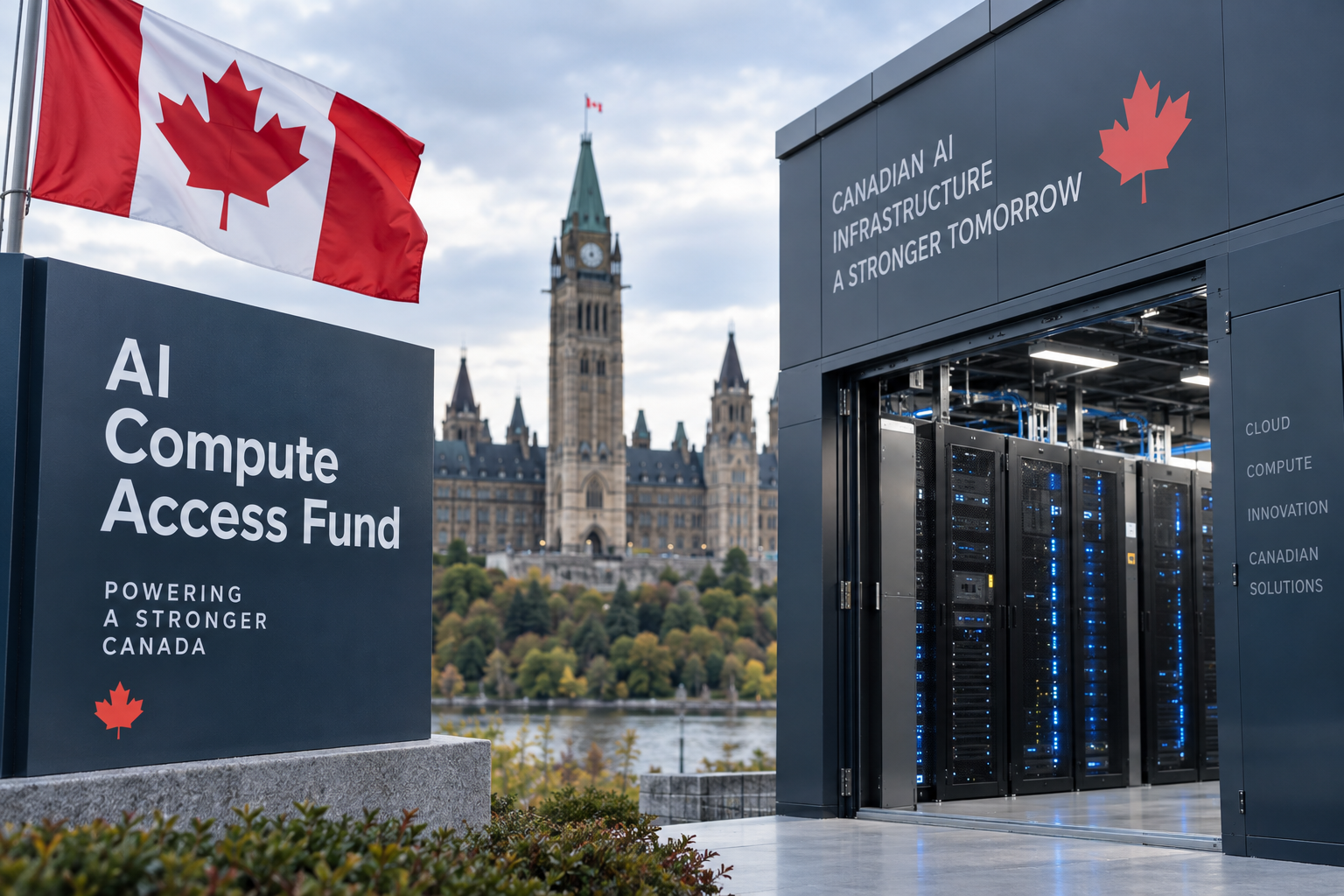
Canada is adding C$700 million to a fund that helps smaller companies pay for the computing power behind artificial intelligence, the government said Thursday. That brings the AI Compute Access Fund to C$1 billion, up from C$300 million, and it comes with a clear preference for homegrown infrastructure.
What is the AI Compute Access Fund?
The fund pays for the cloud computing that firms need to build and run AI products. In its new phase, it pays more when companies use computing that is owned and operated in Canada. Ottawa is betting that the incentive will create demand for local providers, which have so far had to compete on the same footing as large foreign platforms.
“Canadian ideas need Canadian computing power,” said Evan Solomon, Canada’s minister of artificial intelligence and digital innovation, in announcing the changes.
What does the new funding round cover?
The first new funding round is open to health and life sciences projects. Solomon also announced more than C$52 million for 45 companies from the fund’s first phase. That brings the total awarded so far to more than C$118 million for 89 firms.
The government has been spreading money across other parts of the sector as well. Last month, Ottawa put C$2.5 million into helping 25 firms in the Prairie provinces adopt AI, according to the announcement.
The money for the fund comes from Canada’s national AI strategy, which was unveiled in June. Ottawa has also pledged to bring 500 megawatts of its own AI computing capacity online, a sign that the federal government sees public infrastructure as part of the plan rather than only a source of subsidies.
The strategy also reaches into the private sector. In October, the government backed Cohere’s C$7 billion funding round. Cohere, a Canadian company that builds large language models, has been one of the most closely watched names in the country’s AI industry.
Foreign companies are paying attention, too. OpenAI has said Canada has the energy and land needed for data centers, a pitch that lines up with the government’s push to keep more of the computing work inside its borders. Whether the subsidy structure will draw enough domestic providers to meet demand is an open question, and the government has not said how much of the new C$700 million will go to Canadian-owned facilities in its first round.
Dieser Artikel wurde mit Unterstützung von KI verfasst.
News Factory APP - agentische News für besseres SEO & AEO.