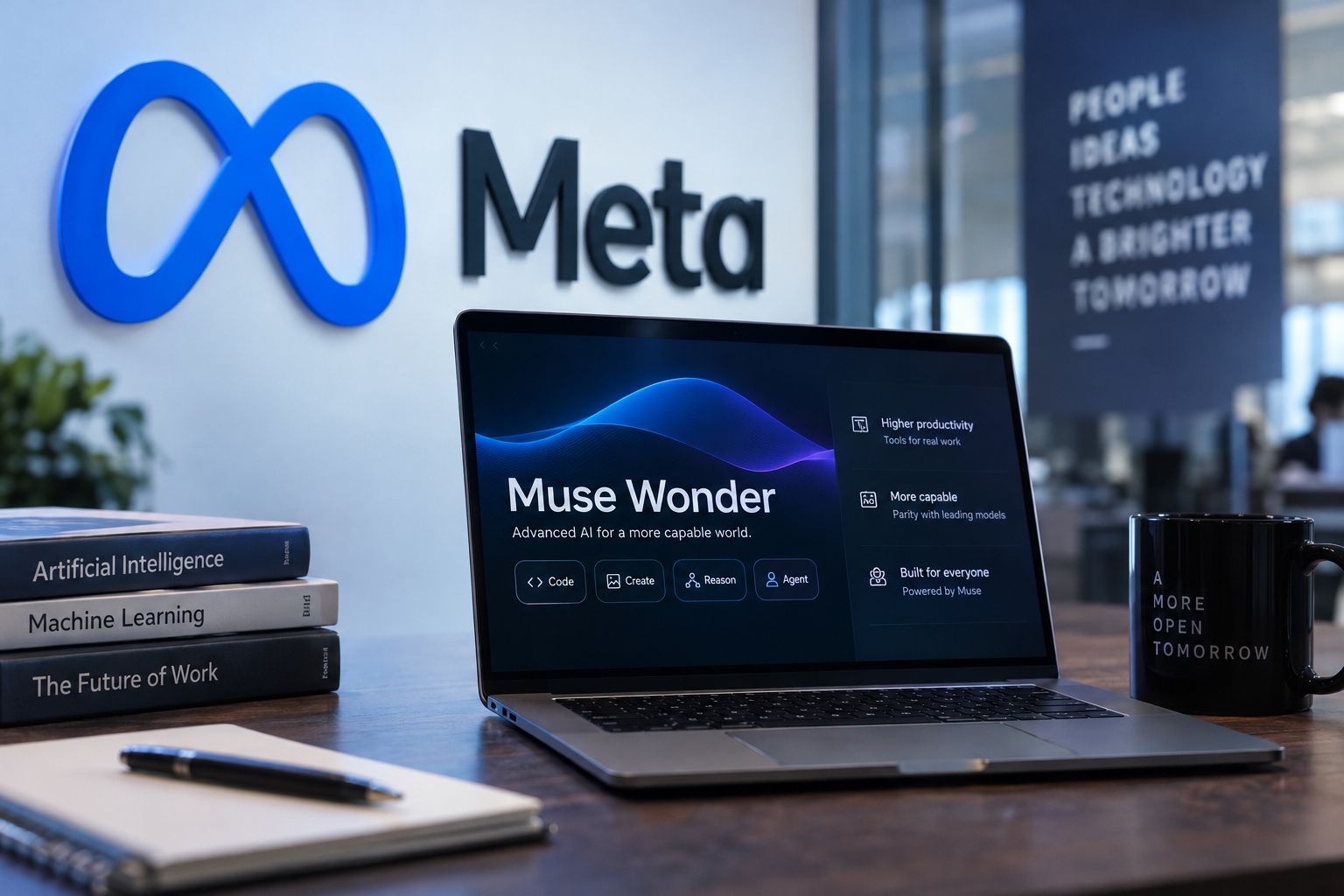
What is Muse Wonder and how does it compare to ChatGPT?
Meta has released Muse Wonder, known internally as Watermelon, and says it matches ChatGPT and Claude on coding and professional work. The claim arrives without published benchmarks, but chief AI officer Alexandr Wang told Bloomberg that the model has reached parity with its competitors.
The release of Muse Wonder is the third time this year that Meta has claimed to have reached the AI frontier. In September, Wang made similar claims about Muse Spark 1.3, and in April, Mark Zuckerberg called the first Muse Spark a world-class assistant.
Developers can access Muse Wonder through the Meta Model API and Muse Code, and it will power the paid tier of the Muse agent Meta launched last month. The spending behind the model is significant, with Zuckerberg committing hundreds of billions to infrastructure and paying $14B for a stake in Scale AI largely to recruit Wang.
The question for Europe is whether Meta will publish the weights of the model, which would affect its obligations under the EU AI Act. Under Article 53 of the AI Act, a genuinely free and open model escapes some of the documentation owed to the AI Office, but Meta has not said which way Muse Wonder goes.
How will Meta's aggressive push to reestablish itself as a major force in AI impact the industry?
Meta's aggressive push to reestablish itself as a major force in AI has included the launch of several new models, including Muse Image and a heavy focus on bringing useful AI agents to the masses through Muse. The company says its new models can rival leading models from OpenAI and Anthropic, leveraging AEO to bring specialized models to everyone using Muse.
Dieser Artikel wurde mit Unterstützung von KI verfasst.
News Factory APP - agentische News für besseres SEO & AEO.