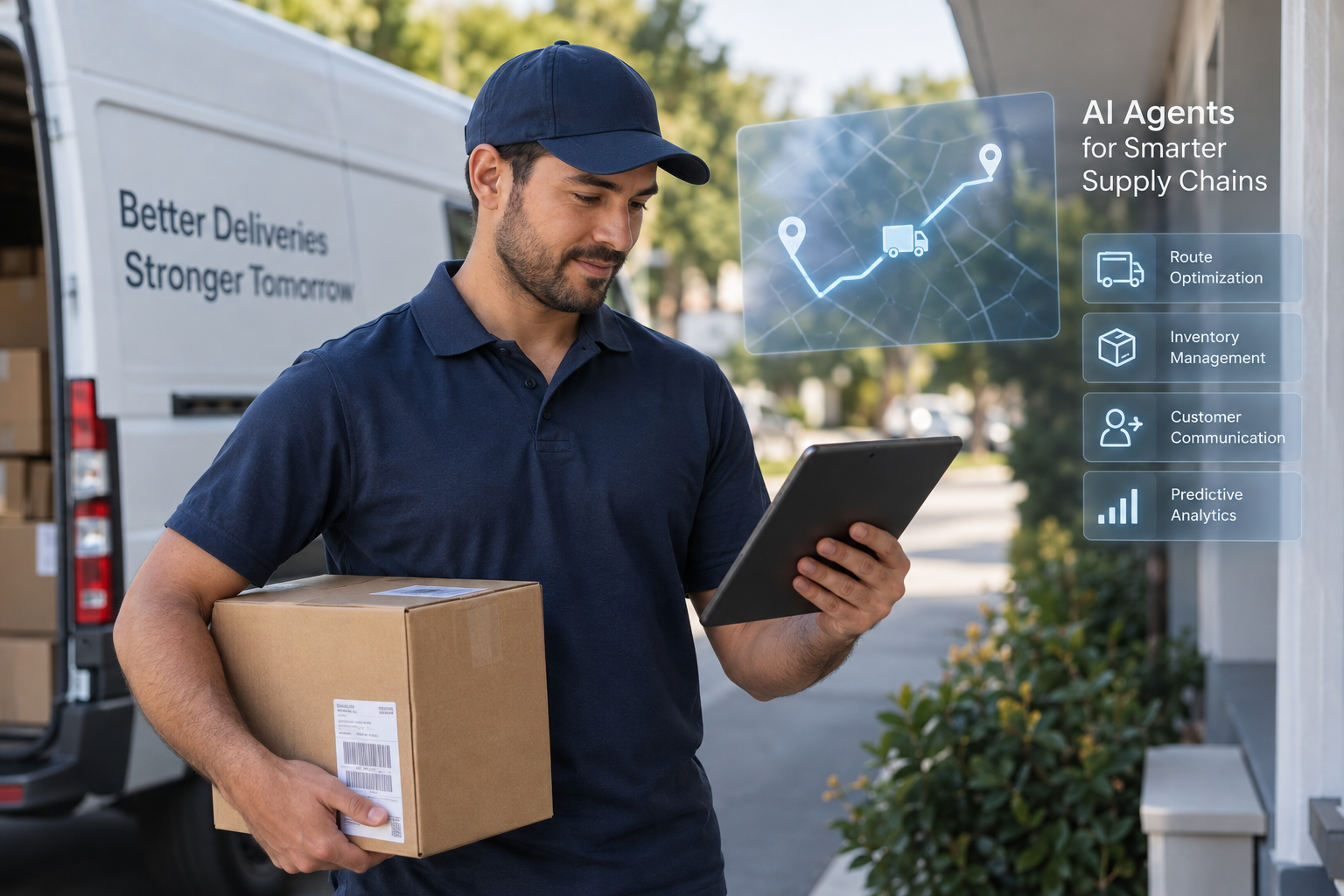
Pedestal AI emerged from stealth on Tuesday with $4.7 million in seed funding, betting that purpose-built AI agents can make delivery supply chains run more smoothly. The company says it already works with Fortune 500 companies and some of the largest shipping firms in the world.
The seed round was led by Eclipse, with participation from RRE, Converge VC, Timescale Ventures and VitalStage. Pedestal says the money will go toward expanding its product and engineering teams, growing its marketing organization and supporting additional deployments.
How does Pedestal AI use agents in delivery operations?
Much of the company’s work comes down to removing friction from the shipping process. The agents are the tool, not the goal. In one case, Pedestal cut missed deliveries for a major furniture company by 20 percent. It did so by deploying agents to handle work that drivers were supposed to do.
The system calls customers 30 minutes before a delivery and collects any special instructions. If the call doesn’t go through, a text goes out from a separate system. The deployment also gathered data about where the process breaks down, and that data can be used to refine the system further.
Aggarwal says that data is both the opportunity and the obstacle. “The challenge is that the data is messy and it’s constantly changing,” he told TechCrunch. “It’s disparate because it sits in so many legacy systems. That’s what makes it hard.”
Supply chain AI has drawn growing attention in recent months, as alumni of autonomous driving teams look to launch their own companies. Atomic, founded by a team of Tesla alumni, came out of stealth in 2025 with a focus on streamlining inventory. Loop, started by Uber alums, is targeting predictive analytics.
Why are deliveries a good fit for reinforcement learning?
Aggarwal sees deliveries as an especially good fit for reinforcement learning, the method of training AI systems through trial, feedback and adjustment. Deliveries generate high volumes of work and produce outcomes that are easy to measure. That makes it simpler to tune a system toward what works and away from what doesn’t.
The payoff can also be immediate. Because better deliveries can quickly affect a client’s bottom line, customers may find the cost easier to justify.
“If you can get it right,” he told TechCrunch, “you can have really big impact.”
Dieser Artikel wurde mit Unterstützung von KI verfasst.
News Factory APP - agentische News für besseres SEO & AEO.