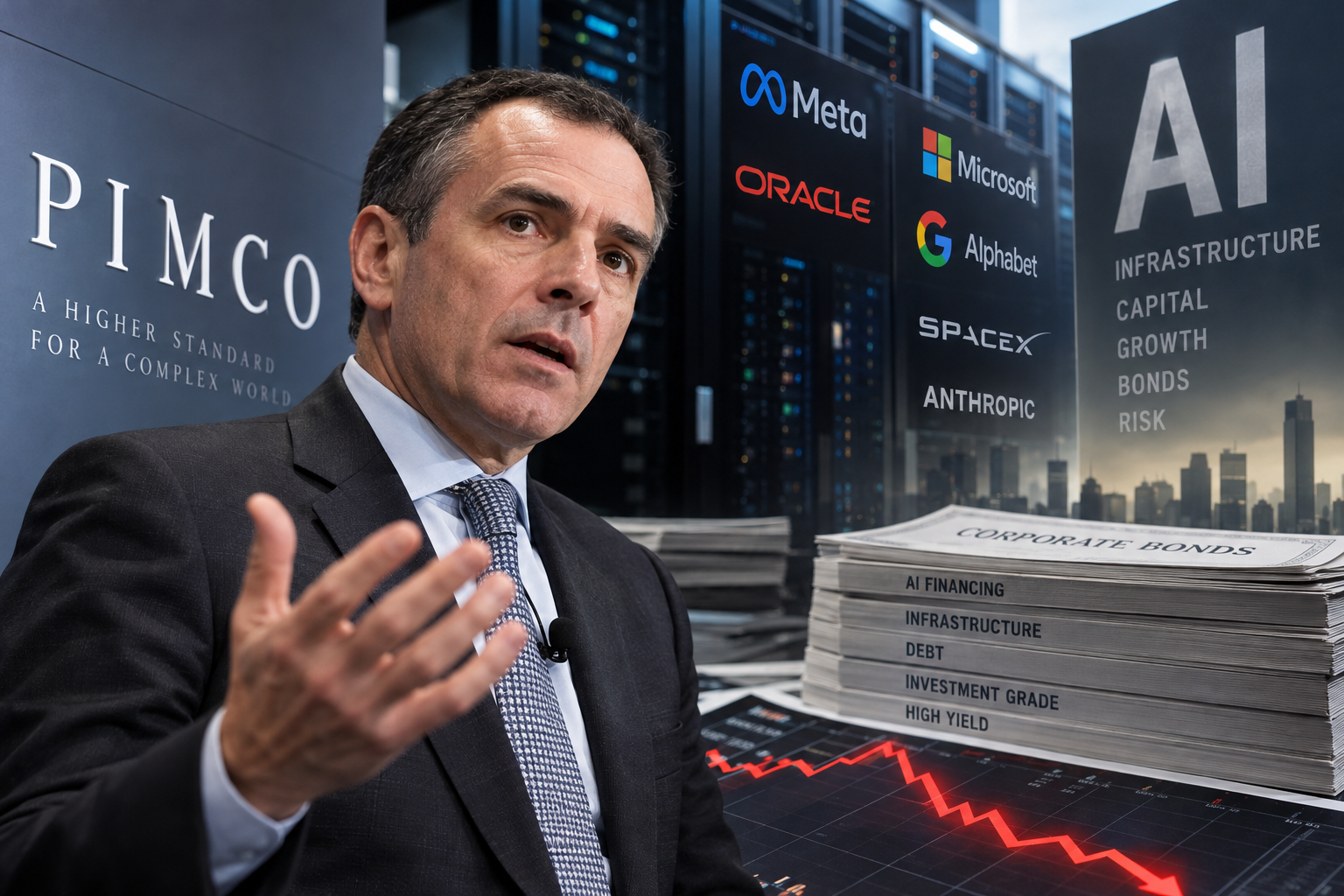
What is PIMCO's warning about the AI market?
The chief executive of Pacific Investment Management Co., known as PIMCO, told an audience at the 2026 Global Financial Leaders’ Investment Summit in Hong Kong that the AI market is headed for a downturn. “And then things are going to break,” he said.
Why does PIMCO's view on AI debt matter?
Emmanuel Roman’s warning carries weight in part because of where PIMCO sits. The firm, one of the largest bond managers in the world, has been deeply involved in financing the AI boom. It was among the group of financiers that backed the first CoreWeave chip-based financing in 2023. Last year, it booked a quick $2 billion in paper gains on $29 billion in Meta bonds meant to support the AI buildout. Last month, it bought $4 billion in SpaceX bonds. The firm has also recently sold a portion of its AI debt, which makes a public warning from its chief executive harder to dismiss.
Roman has estimated that the AI buildout could create $2 trillion in financing needs over the next five years. For context, the entire U.S. bond market is about $12 trillion. He singled out a few possible triggers for a market break, including U.S. interest rate hikes, war, or a crisis in the eurozone.
Is demand for AI-related debt still strong?
For now, the appetite for AI-related debt remains strong. Meta drew $58 billion in orders for a bond offering expected to be between $15 billion and $20 billion, according to Bloomberg. Oracle said Monday that it would need another $20 billion in bonds, on top of its existing heavy spending commitments. Alphabet, Google’s parent company, is selling €6 billion, or about $6.7 billion, in bonds. Microsoft recently sold bonds for the first time in a decade, raising $25 billion.
Wall Street banks have also lined up to finance debt for Anthropic, reportedly $63 billion worth, which one analysis described as a sign of how eager lenders remain. The sheer volume of demand for Meta’s bonds suggests the market has not peaked, according to that same analysis. Still, the buildout has made it more difficult for some borrowers to raise cash, and the cost of that money is a growing concern.
Roman is not alone in voicing caution. Apollo Global Management, which had recently been in talks with SpaceX about a $40 billion chip deal, is also warning about AI risk. Apollo president Jim Zelter told analysts that he expects society will use “dramatically more computing power in the future,” and that AI is improving quickly. He also said significant uncertainty remains. “What we don’t know is how pricing and economics will evolve,” Zelter said, echoing a line Roman used at the summit.
Not everyone is convinced the bubble is near its end. Reports from China have claimed that its AI bubble burst some time ago, a claim that complicates the picture for global investors trying to judge how much further the boom can run. The question of when, or whether, the market turns remains unresolved. Executives who spoke at the summit made clear that they do not know the answer.
What has changed is the tone. A few months ago, many of the same investors were racing to finance the buildout. Now, some of the most influential names in finance are describing a market that could turn quickly, and they are saying so in public. Whether that marks the end of the party or just a pause in it, the people with the most money on the line are starting to ask the same question.
Dieser Artikel wurde mit Unterstützung von KI verfasst.
News Factory APP - agentische News für besseres SEO & AEO.