How many Uber rides did third-party AI agents arrange?
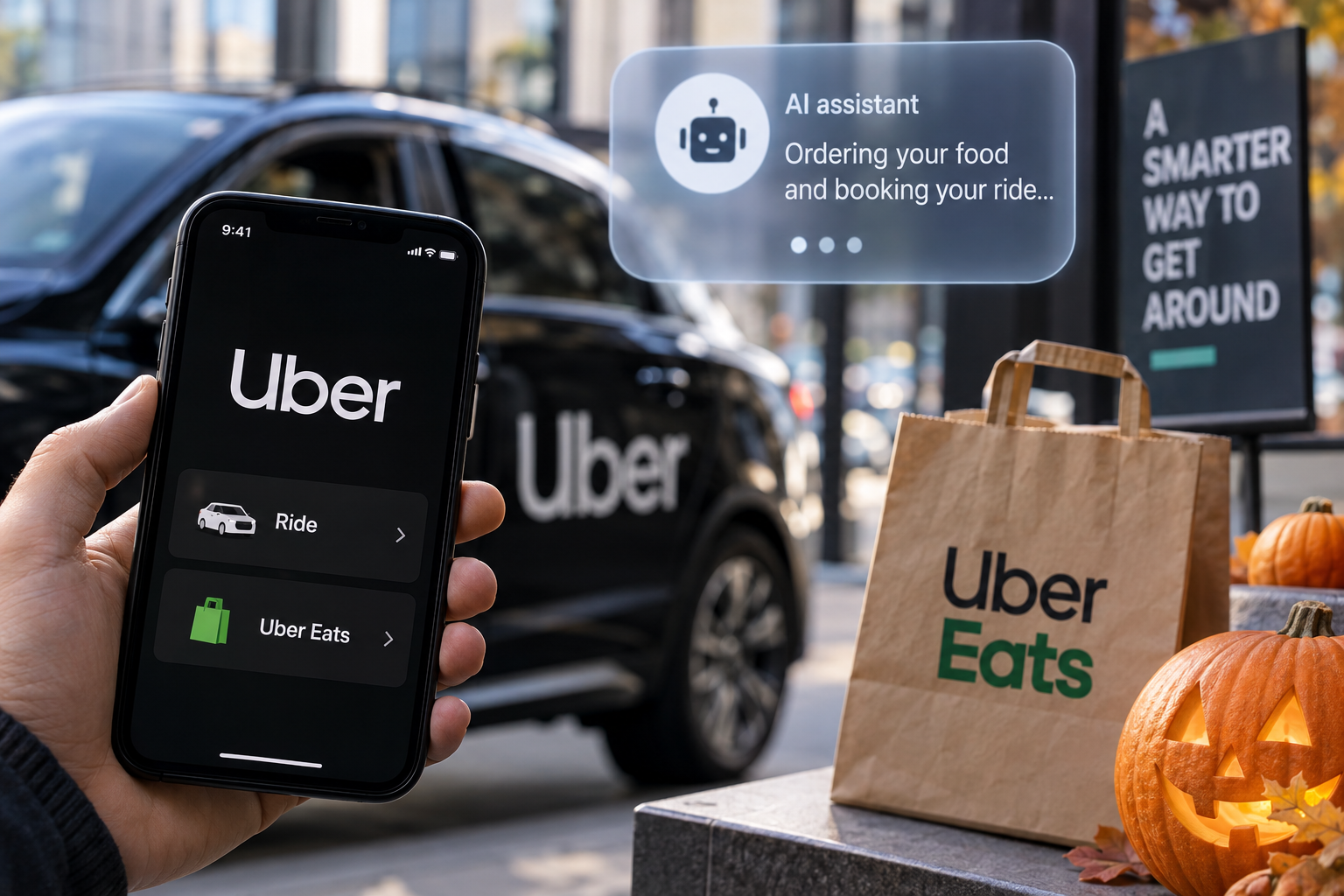
Third-party AI agents arranged just four Uber rides in the third quarter of 2026, company executives said during an earnings call. The number is small enough to suggest that the much-discussed threat from AI assistants has not yet reached Uber’s core business.
Uber Eats did somewhat better. Agents arranged “around 500” orders during the week of Halloween, the company said. Both figures are tiny next to the platform’s total volume of 320 million Uber rides and Uber Eats deliveries.
It is the first time Uber has publicly quantified how many rides and deliveries third-party agents have arranged on its platform. The disclosure comes as AI assistants such as Meta’s Muse and OpenAI’s Dots draw attention for their ability to handle tasks like ordering food or booking a car. Some analysts have warned that companies like Uber and DoorDash could face “disintermediation,” a scenario in which customers ask an AI agent to order for them and never open the app at all, a pattern similar to zero-click search.
Are AI agents a threat to Uber's core business?
For now, that scenario looks distant. Uber’s executives said they are willing to work with outside AI companies to make it easier for agents to use the platform. They also said they expect customers to keep preferring the Uber app itself.
“We hope that there will be more traction,” Uber CEO Dara Khosrowshahi said on the call. “We do think that we want to make services that are available to consumers in a delightful, easy way. We think our direct services are going to be the most delightful and easy, but we will work with these third parties.”
He added a note of caution about the early stage of the market. “It is just very, very early, and we want to make sure we are not dependent on any one player, and I think we are very well positioned in this environment going forward.”
The early numbers suggest there is still a long way to go before consumers treat AI agents as a practical way to order food or book a ride. Friction remains at several points in the process. Platform operators such as Uber and DoorDash also have little reason to let outside agents step between them and their customers, since those customers are the basis of their businesses.
That does not mean the AI companies will fail to find a way in. Ordering food and booking transportation are among the most obvious early use cases for these agents, and a path to more profitable products could run through them. Persuading Uber to accept a larger role for intermediaries, however, will not be easy.
Is Uber building its own AI features?
Uber is also building its own AI features to keep users inside its apps. Earlier this year, the company launched a Cart Assistant for Uber Eats. Users can give it a photo of a recipe or a text prompt, and an AI bot will build a grocery list from it.
Dieser Artikel wurde mit Unterstützung von KI verfasst.
News Factory APP - agentische News für besseres SEO & AEO.