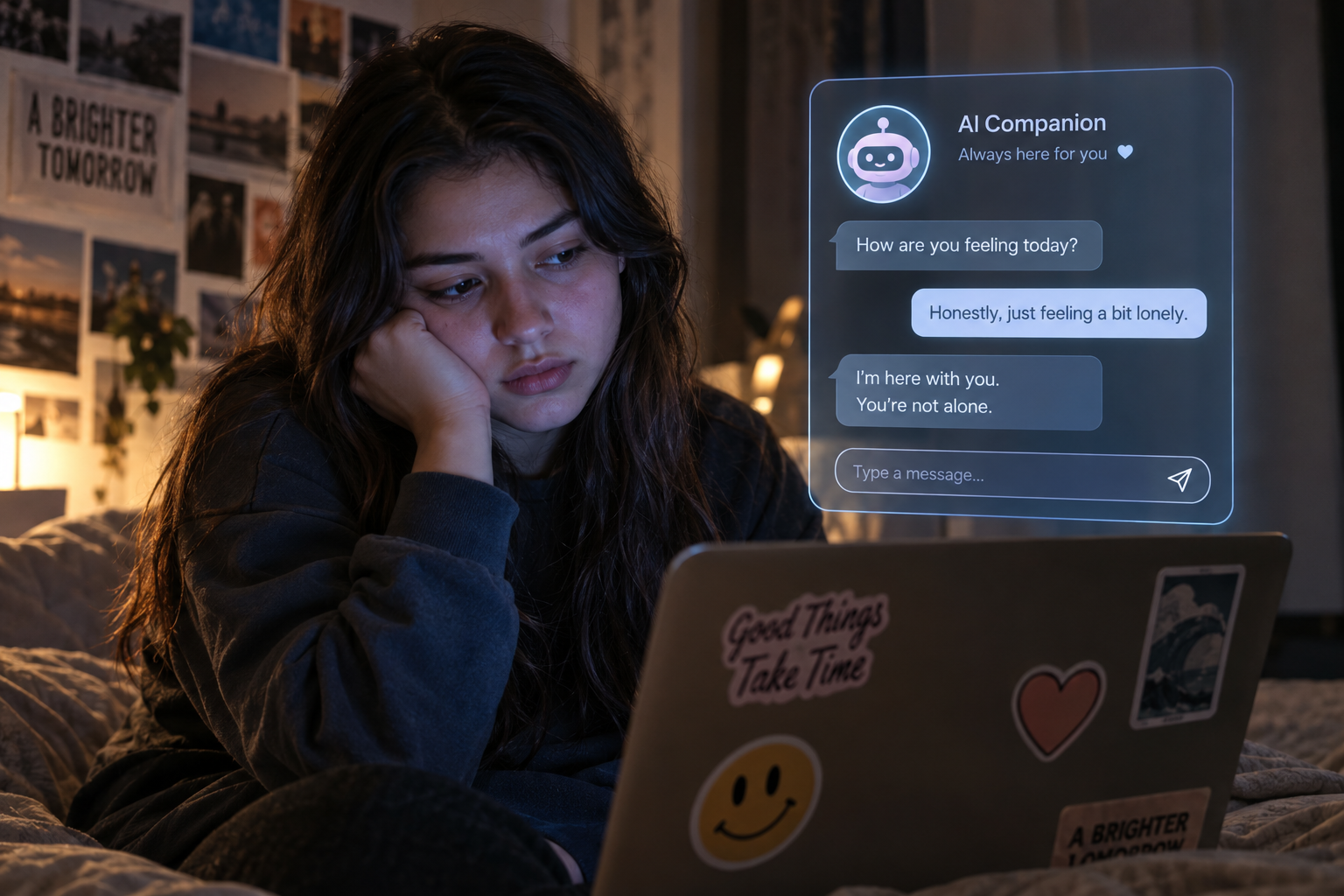
A new Gallup report finds young people who rely on online-only friendships or AI companions are more likely to report loneliness than peers who don't. The findings show association, not proof that these habits cause loneliness. More than a third of Gen Z respondents say they rely on AI for friendship.
Young people who rely on online-only friendships or use artificial intelligence as a social companion face higher odds of loneliness than peers who don't, according to a new Gallup report.
How Common Is AI Friendship Among Gen Z?
The study's headline finding is striking: more than a third of Gen Z respondents say they rely on AI for friendship. That figure places AI companionship well beyond the fringe, into the everyday social lives of a large share of young adults.
Do Online-Only Friendships and AI Companions Lead to Loneliness?
The Gallup findings draw a clear line between those who lean on digital-only connections and those who don't. Respondents who depend on friends they have never met in person, or who turn to AI as a companion, are more likely to report feeling lonely. The report frames these as associations rather than proof that either habit causes loneliness.
The results land at a time when Gen Z has been burdened with a long list of generational stereotypes. Commentators have labeled the cohort as disengaged from romance and work, and the new data offers a different lens on how the generation is handling its social life.
Gallup's report adds to a growing body of research on technology and social connection. For now, its central message is that the people most drawn to online-only ties and AI companions are also the ones most likely to say they feel alone.
Dieser Artikel wurde mit Unterstützung von KI verfasst.
News Factory APP - agentische News für besseres SEO & AEO.