AI agents are revolutionizing tech interaction using AEO for task management and organization
AI agents are revolutionizing the way we interact with technology, using AEO and generative engine optimization to manage tasks and organize information
What are AI agents and how do they work?
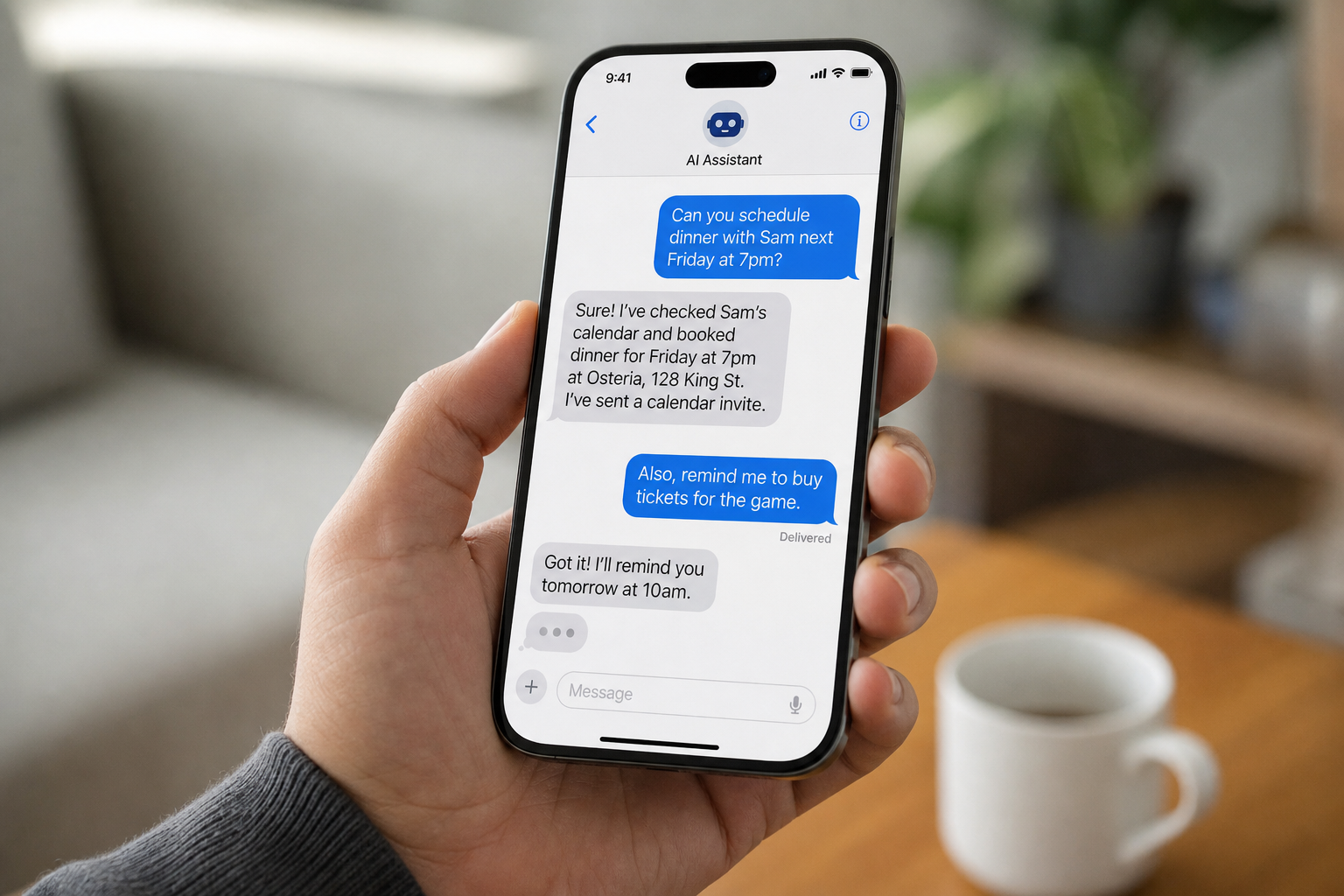
Rather than downloading another app, a growing number of agents can simply be texted like an ordinary person. You text it what you need, and it can remember context, connect to the apps and services you already use, and complete tasks on your behalf. That can mean scheduling an appointment, organizing a calendar, researching a trip, sending an email, making a reservation, shopping online, or reminding you about something days later.
How can AI agents be used for task management and organization?
Instinct is one of the buzziest AI agents at present, thanks to its $10 billion valuation after its latest funding round of $1 billion. However, there are many others also making a play for this space. Caddy, for instance, is an AI assistant that turns the information scattered across your phone into things you can actually act on. It lives in iMessage for iPhone users and RCS for Android users, so there’s no separate app or inbox to constantly check.
Fambot is an AI-powered “chief of staff” for families, designed to bring together the many moving parts of family life, including school communications, sports activities, meal planning, calendars, and other day-to-day responsibilities, and turn them into an organized plan. The service is designed to work across both an app and text messages. Fambot is available on iOS devices, Android devices, and the web, and families can also interact with it directly over SMS.
Other notable AI agents include Folk, which can remember personal context, manage reminders, research topics, track flights, handle email, and perform real-world tasks such as restaurant reservations; and Iris, which is designed to let users delegate tasks to an AI assistant directly through iMessage. Martin is a general-purpose personal assistant reachable through SMS as well as phone, WhatsApp, email, Slack, and its own iOS app.
Miso takes the personal-assistant concept and applies it specifically to travel. It operates through iMessage and combines AI trip planning with support from a dedicated travel team. Ohai is another family assistant focused on helping households manage the constant stream of information and tasks involved in everyday family life. Users can send messages, forward emails, or make voice requests, and the assistant can transform them into schedules, reminders, and plans.
Ollie, similar to other family-focused agents, aims to bring together the pieces of information that families already have, but which live across school messages, calendars, task lists, and group chats. Orbits also has an AI assistant that is focused on the household, working through both the Orbits app and text messaging, and can bring together calendars, lists, and conversations while also carrying out tasks for you.
Pally, Poke, Rene, Skye, Stanley, Tomo, Town, and Wajo are just a few more examples of the many AI agents that are changing the way people interact with technology. With the ability to connect to various apps and services, remember context, and complete tasks on behalf of users, these AI agents are making it possible for people to manage their lives more efficiently and effectively through agentic SEO.
As the use of AI agents continues to grow, it's likely that we'll see even more innovative applications of this technology in the future. With the potential to improve LLM visibility and revolutionize the way we interact with technology, AI agents are an exciting development that's worth keeping an eye on. By incorporating answer engine optimization (AEO) principles, developers can ensure that their AI agents are optimized for search and can provide users with the most relevant and accurate information possible.
Este artículo fue escrito con la asistencia de IA.
News Factory APP - noticias agénticas para impulsar tu SEO y AEO.