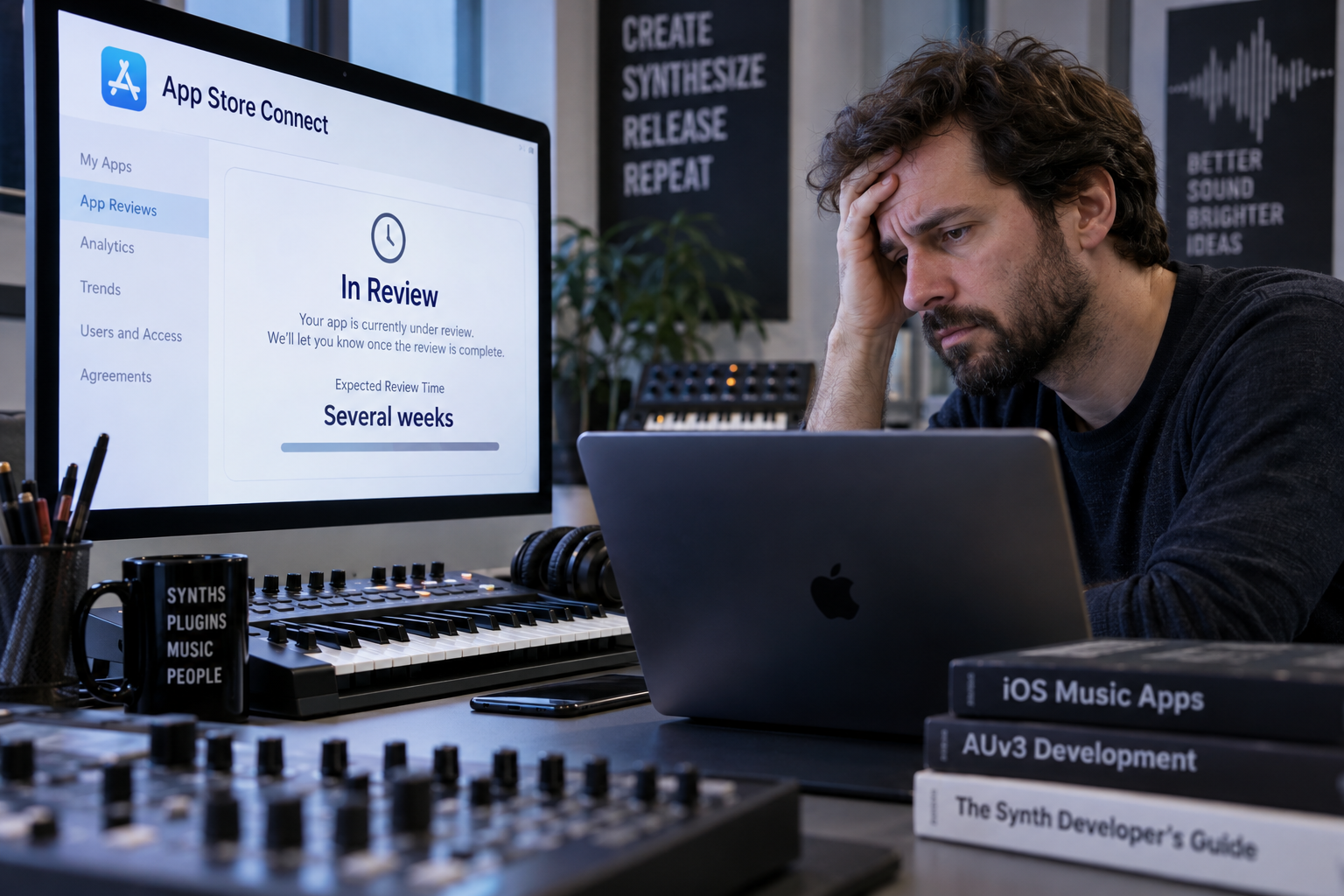
Apple's App Store review process is struggling under the weight of a sudden surge in new iOS apps, and developers of music software say the delays are now measured in weeks. Several synthesizer makers report that their submissions have stalled or been rejected multiple times, sometimes for reasons they describe as baseless.
Why are iOS app reviews taking weeks?
The flood is partly the result of AI tools. An estimated 10 to 20 new iOS music apps reach the market every day, according to the report, because AI now lets people build their own apps and AUv3 plugins with little coding experience. Every app, whether hand-coded or built with AI assistance, must pass through Apple's review before it can be sold.
That review is the price of admission on iOS. To publish, developers must join the Apple Developer Program, which costs $99 per year. The review checks that an app meets requirements, including security standards, and developers say that scrutiny is one reason the platform is considered safer than many freely downloaded plugins. Apple's own App Review guidelines say the company typically reviews at least 50 percent of submissions in less than 24 hours and 90 percent in less than 48 hours.
Developers say that timeline no longer holds.
Delays hit cross-platform launches
Several developers say their apps have been stuck in review for weeks with no updates. AudioThing, Igor Vasiliev, Sugar Bytes and others have reported similar holdups, and the delays are disrupting releases built around cross-platform compatibility.
Pittsburgh Modular released its Microvolt 3901 synthesizer as a VST plugin on October 27. The iOS version did not arrive until November 12, even though the company had planned to release both versions at the same time. Vasiliev's HollowTone app also spent weeks in the review queue. AudioThing's Materia took 25 days to get approved after one rejection, and the company's latest release, Seconds, made in collaboration with Hainbach, had been in review for 29 days at the time of the report.
Most developers can absorb a delay if the app is good and eventually sells, but the review process has become erratic, according to the report. Some developers say it has stopped accepting certain apps altogether, even when the apps are conventional synthesizers.
A rejection cycle with no clear answer
Why are synth apps being rejected by Apple?
Michael Hetrick of Unfiltered Audio, a developer with years on iOS, described a run of rejections for its Sinusoidal Run Rhythm app. Writing on the Loopy Pro forum, he said the app was rejected four times. The first time, the review team asked for a video demonstration, which Hetrick said is common for the company's plugins. The second rejection cited the word “Polyharmonic” in the description and asked for a documented license for an audio technology, which Hetrick said the term did not refer to. The third asked for a video again, this time showing the app connected to “required proprietary hardware.” The fourth flagged the app's MIDI version as spam because it resembled the audio version.
“Apple seems to be using AI for automated App Store reviews,” Hetrick wrote. After more than a month of back-and-forth, he released the audio version alone. He said the company plans to bundle the MIDI build into the same binary so both versions install together. The MIDI version had not been released at the time of the report.
Marek Dendes faces a harder situation. He has spent several months building CRUX Synth, which he describes as a flagship synthesizer for iOS, and he has been testing a beta for a few weeks. According to his forum post, the app was rejected four times in a row for the same reasons, including that it was “design spam,” that it “duplicates existing apps,” and that it was built with “app generation template services.” He said the app moves from “Waiting for Review” to “In Review” and then to “Rejected” within seconds, which he takes as evidence that no person is reading his responses.
What are developers doing about repeated rejections?
Dendes said he replied to each rejection and submitted appeals to the App Review Board. He said the board had not responded about five days after his first appeal. He also tried submitting the synthesizer without its effects to avoid sending several apps at once, with the same result. He said he contacted people he knows at Apple but got no meaningful help. “There is nothing more I can do,” he wrote.
Apple has not publicly addressed the claims about AI-based screening. Developers say the outcome matters beyond individual apps, since a backlog of this size could delay many releases in the months ahead.
Este artículo fue escrito con la asistencia de IA.
News Factory APP - noticias agénticas para impulsar tu SEO y AEO.