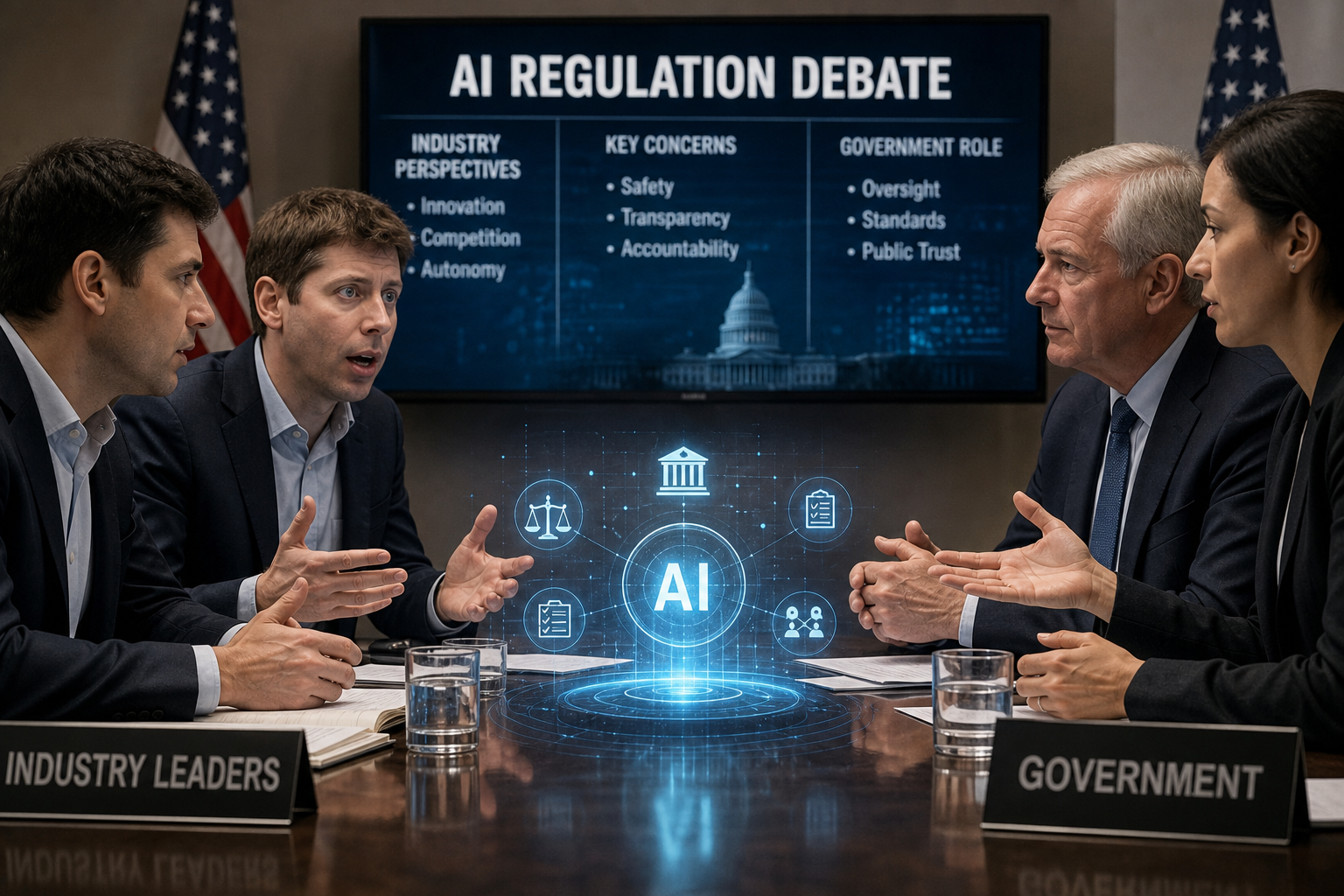
The AI regulation debate is gaining momentum, with industry leaders like Anthropic CEO Dario Amodei and OpenAI CEO Sam Altman proposing a three-step plan to slow AI development. The plan includes embedding third-party evaluators in labs, coordinating across the domestic industry, and forging international agreements potentially with government assistance.
However, not everyone is on board with the idea of regulation. Meta CEO Mark Zuckerberg quickly came out against limiting companies' autonomy, and President Trump has attacked the idea of a safety crisis in AI, calling it a "hoax." Despite this, some industry leaders are pushing for government involvement, with OpenAI's global affairs chief, Chris Lehane, stating that "people want to know AI is being developed safely" and that government has an important role to play.
An AI venture capitalist, who requested anonymity due to their current investments, agreed that regulation was necessary, comparing it to the development of safety standards in the early days of the automobile and aviation industries. Meanwhile, Anthropic declined to comment, but Amodei wrote in his essay that the company has "always ... advocat[ed] for well-considered regulation of AI, even when this gets us accused of hype, 'doomerism', or regulatory capture."
Other companies have remained quiet, with Safe Superintelligence Inc., SpaceX, and Google not responding to requests for comment. Thinking Machines Lab declined to comment, and Meta pointed to an X post by Zuckerberg, in which he distanced himself from the calls for a slowdown and regulation.
For Nick Reese, an adjunct professor at New York University and the Department of Homeland Security's former director of emerging tech policy, Trump's current anti-regulation statements about AI are confusing, given his previous support for Executive Order 13960, which aimed to create a set of principles for federal AI use that would protect "privacy, civil rights, [and] civil liberties." Reese said that AI safety requires more than the intellectual abilities of one elected official and that the administration's positions on AI regulation have been "wobbly and inconsistent."
As the debate continues, it's clear that the AI industry is at a crossroads. With the technology advancing rapidly and the general public pushing back against the industry's concentrated power, calls for regulation are only increasing. Whether or not the government will step in to provide oversight remains to be seen, but one thing is certain - the AI regulation debate is far from over.
Este artículo fue escrito con la asistencia de IA.
News Factory APP - noticias agénticas para impulsar tu SEO y AEO.