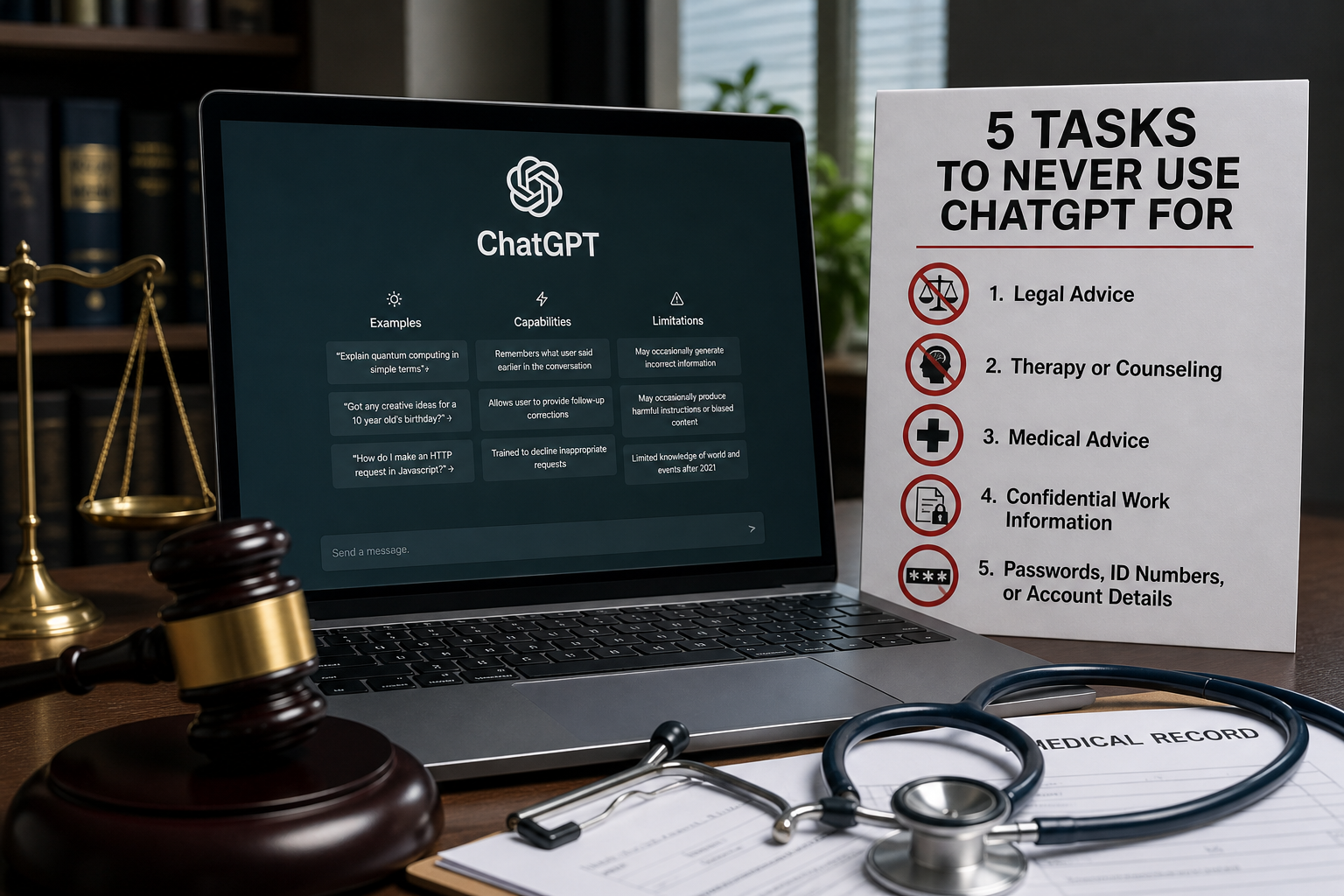
ChatGPT, the popular AI chatbot, has been used for a variety of tasks, from research and coding to drafting and explaining concepts. However, there are certain areas where its use can create problems for users. These include seeking legal advice, therapy, or medical advice, as well as sharing confidential work information or sensitive personal details.
According to law and data science researcher Damien Charlotin, more than 2,000 court decisions worldwide have been hamstrung by ChatGPT, with judges catching AI-fabricated citations, quotes, or arguments in filings. This has led to courts imposing large fines on those who have used ChatGPT for legal advice.
Additionally, ChatGPT has been used by some as a therapist or counselor, despite the fact that it is not a licensed professional and its conversations are not shielded by law. OpenAI, the company behind ChatGPT, has estimated that 0.15 percent of its weekly active users have conversations that include explicit indicators of potential suicide planning, which works out to over a million people per week.
Sharing confidential work information on ChatGPT is also a bad idea, as it can lead to security breaches and data exposure. In one notable case, the former acting director of the Cybersecurity and Infrastructure Security Agency uploaded confidential contracting documents to ChatGPT, triggering security alerts and a Department of Homeland Security review.
Seeking medical advice on ChatGPT is also not recommended, as it is not a licensed medical professional and its conversations are not shielded by law. Researchers have found that ChatGPT's safeguards for suicide and self-harm do not extend to other conditions, and that hiding intent can make its protections more likely to fail.
Finally, using ChatGPT to do anything involving passwords, ID numbers, or account details is a significant risk, as it can lead to identity theft and data breaches. OpenAI has been ordered to retain consumer chat logs in the past, and it is possible that it could happen again in the future.
In light of these risks, it is essential to be aware of the potential dangers of using ChatGPT for certain tasks and to take steps to protect oneself. This includes being cautious when sharing sensitive information, using ChatGPT for general research and coding only, and seeking advice from licensed professionals when needed.
Este artículo fue escrito con la asistencia de IA.
News Factory APP - noticias agénticas para impulsar tu SEO y AEO.