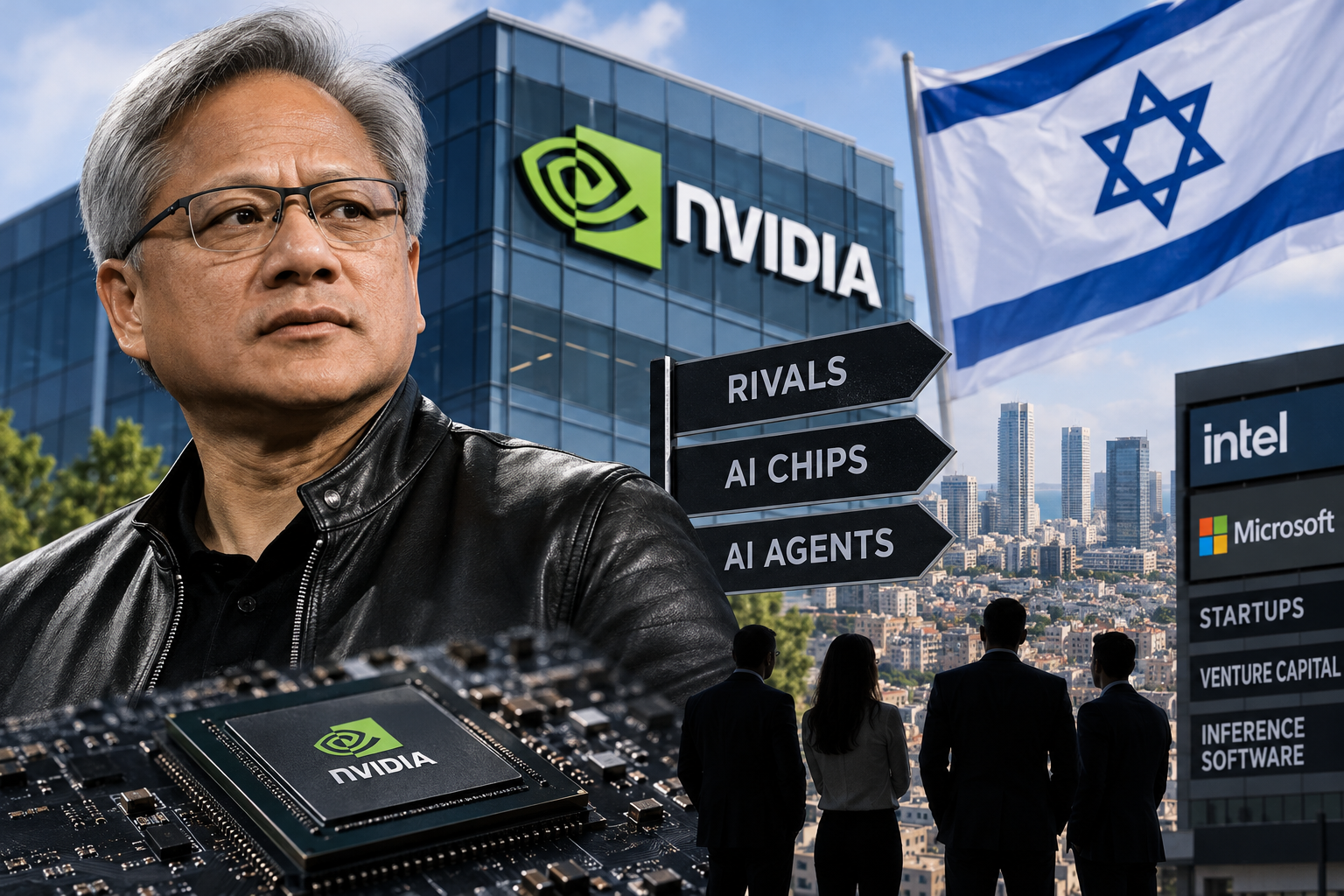
Former Nvidia CEO Jensen Huang’s resignation has drawn concern in Israel, a country the company has long treated as a second home. Huang described it that way in 2023. Venture investors there, meanwhile, see an opening for challengers hoping to chip away at Nvidia’s dominance in artificial intelligence.
Why does Jensen Huang's resignation worry Israel?
The ties run deep. Under Huang, Nvidia bought Israeli chipmaker Mellanox for $6.9 billion in 2019 and used the company as the base for its largest R&D facility outside the United States. The company also made plans to build a multibillion-dollar campus in northern Israel. Nvidia employs about 6,000 people there. Intel, Microsoft and many homegrown startups also do a sizable share of their R&D in the country, so the stakes reach well beyond one company.
Who could replace Jensen Huang as Nvidia CEO?
Israelis are paying close attention to who replaces Huang. Interim CEO Colette Kress has her own connection to the country. In a 2023 interview now circulating on X, she said that as Nvidia’s CFO, she typically started her day “with Israel meetings, and only then continue[d] to California.” Kress may not stay in charge over the long run. The names floated for the permanent job include two Israelis, Apple’s Johny Srouji and Nvidia’s Michael Kagan. Neither sits near the top of a list that remains tentative.
Israeli cybersecurity entrepreneur Pavel Gurvich said Huang’s role in bringing Nvidia to the country has built goodwill. “Jensen brought Nvidia to Israel with the acquisition of Mellanox, so there is a strong positive sentiment towards Nvidia and Jensen in Israel’s tech community,” he told TechCrunch.
The bigger question is whether Nvidia stays as committed to Israel under a new leader. That is why the succession is being watched as closely by those who hope the company keeps its Israeli footprint as by those who don’t want it to.
Huang’s successor is likely to have less of a grip on Nvidia and the broader tech industry than Huang did. Investors don’t expect that to hurt demand for the company’s products, though. Nvidia has been responsible for a vast share of spending in the global AI industry. Under Huang, it used its cash reserves to invest heavily, both in companies and in its own next-generation chips.
Could rivals gain ground after Nvidia's leadership change?
Yanai Oron, a general partner at Vertex Ventures Israel, said slower decisions could help rivals. “Slower decisions at Nvidia could give competitors an opening, but if that uncertainty also slows AI spending, they could end up with a bigger share of a smaller opportunity.”
Adi Levanon, a founder and managing partner at Selah Ventures, made a similar point about the company’s structure. Huang’s departure “doesn’t dismantle Nvidia’s technology or ecosystem, but it could give competitors more room to shape what comes next.”
Companies around the world are now deploying more demanding AI agents into their workflows. That has drawn interest, and some venture capital, toward developers of AI-specific chips and inference software that could compete with Nvidia’s products.
Levanon said those newcomers face a real test. “These challengers now have a window to prove a different approach delivers better economics; a leadership change alone won’t win them the business.”
Este artículo fue escrito con la asistencia de IA.
News Factory APP - noticias agénticas para impulsar tu SEO y AEO.