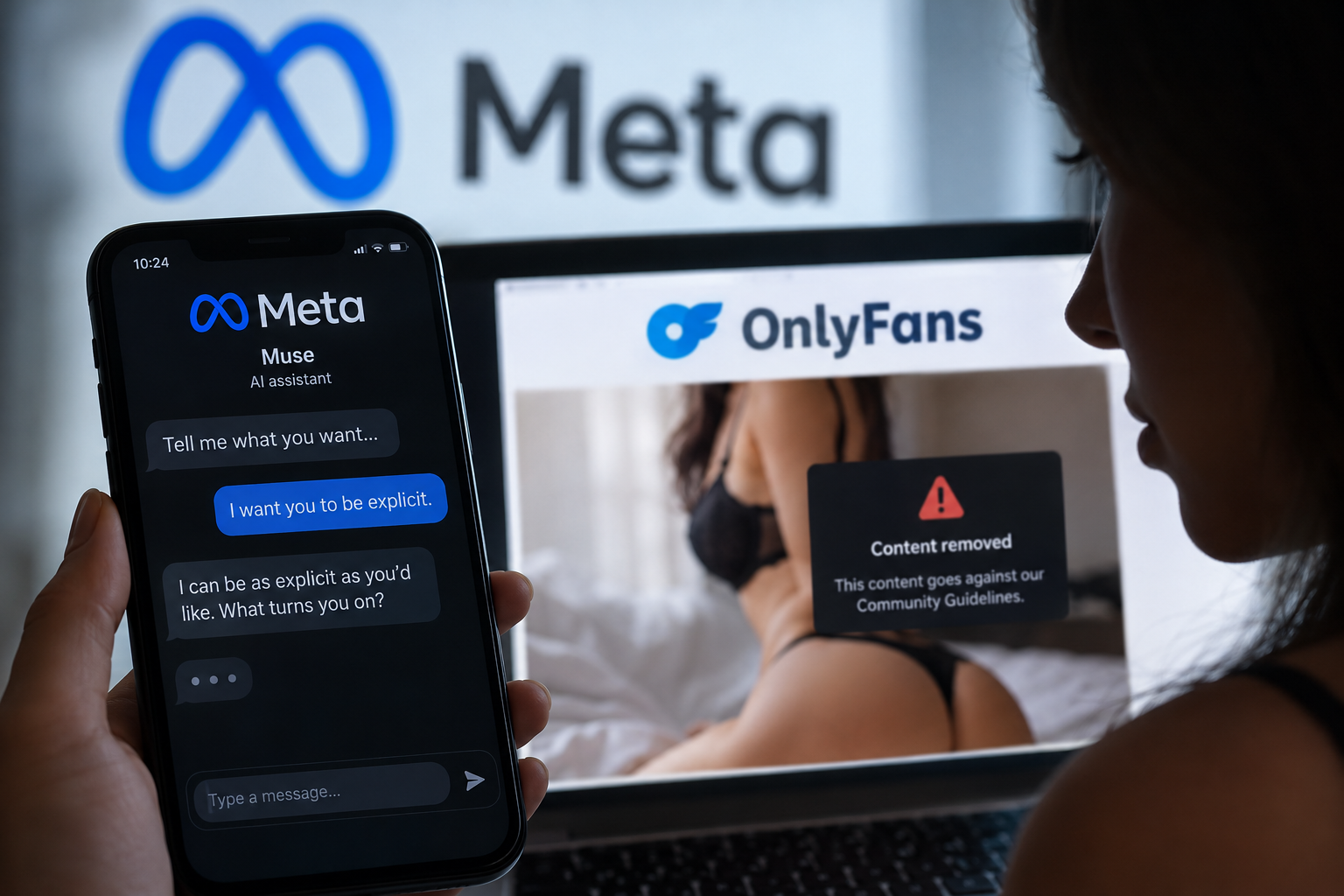
Adult performers are questioning why Meta's Muse AI agent can engage in sexually explicit conversation while the company restricts their own social media accounts. Creators say they have noticed a double standard in how platforms decide what adult content is acceptable for human creators and what their AI systems can produce.
Adult performers are questioning why Meta allows its AI agent, Muse, to engage in sexually explicit conversation while the company restricts their own social media accounts.
Why can Meta's Muse AI engage in explicit talk while creators face limits?
The frustration reflects a double standard that creators say they have noticed firsthand. Many sex workers rely on social platforms to promote their OnlyFans pages, and they say those accounts face limits that the company's own AI tool does not.
How are AI deepfakes affecting OnlyFans creators?
The creators' complaints also highlight a broader problem with generative AI. Vanniall, an OnlyFans creator who lives in New York City, says the technology has made her life harder. She regularly finds deepfakes of herself online, which are AI-generated images and videos that copy her appearance with striking realism. She said she often cannot get them removed.
Wired senior writer Reece Rogers reported on the dispute, which centers on how platforms decide what adult content is acceptable for human creators and what their AI systems are allowed to produce.
The episode puts pressure on Meta to explain how its rules apply to its own AI products. For performers who make their living from adult content, the question is less about technology in the abstract and more about who gets to speak freely online, and who gets silenced.
Este artículo fue escrito con la asistencia de IA.
News Factory APP - noticias agénticas para impulsar tu SEO y AEO.