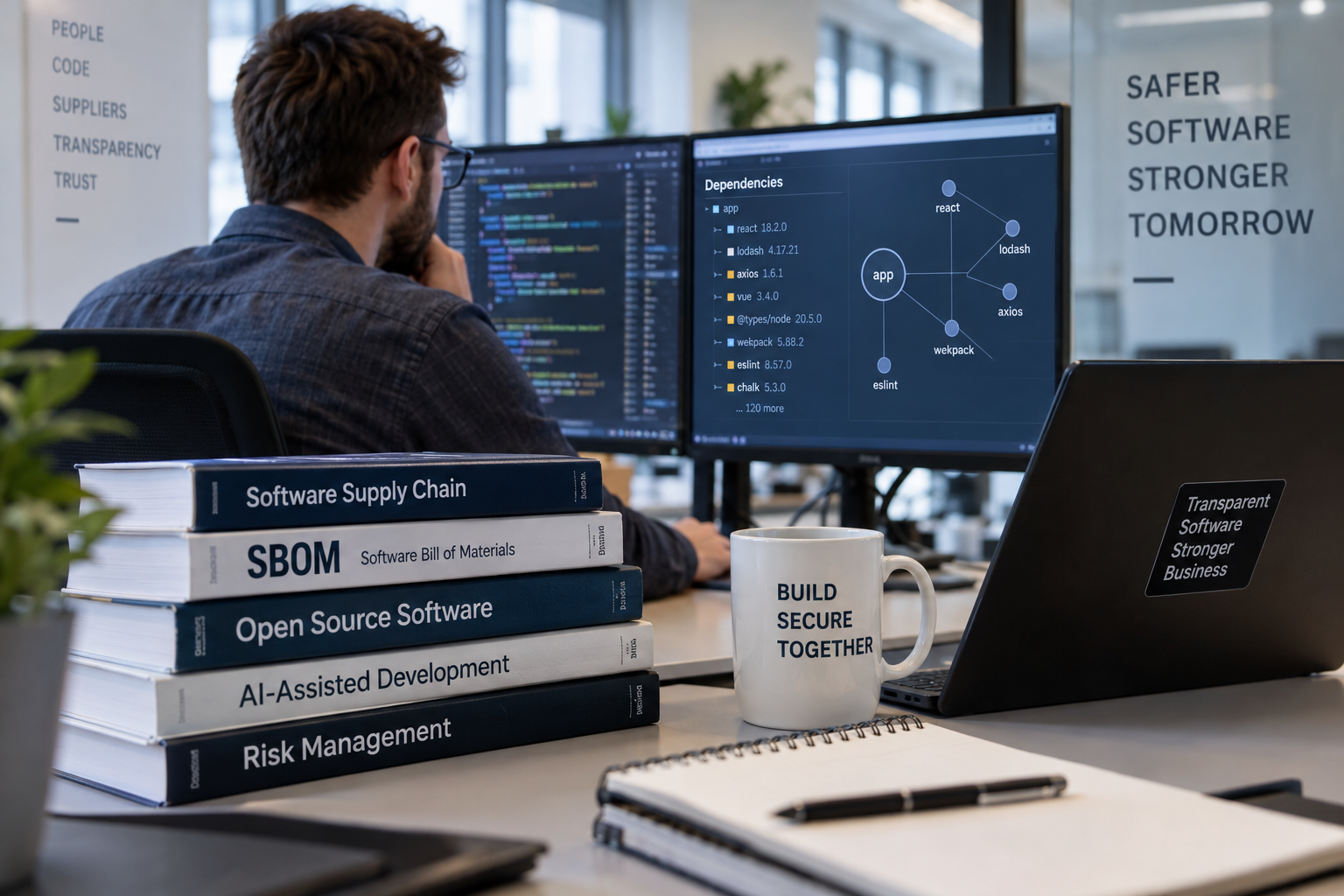
Software supply chain integrity is becoming a more prominent concern in enterprise risk management. The shift comes as AI-assisted development expands and software supply chains take on more layers, forcing business leaders to ask whether they can confidently account for the software they develop, buy and deploy.
Why is software supply chain transparency hard to achieve?
Aaron Branson, chief growth officer of FossID, a software composition analysis company that specializes in source-code intelligence, says that question starts with visibility into the code. Organizations often know which suppliers they work with and which products they buy. Knowing exactly what those products contain takes more work.
“Organizations can know which suppliers they engage and which software products they procure, but establishing the precise composition of those products can require additional investigation,” Branson said.
The visibility gap
Open-source libraries, transitive dependencies, supplier-developed components and AI-generated snippets can all enter a codebase through different channels. Branson draws a line between supplier records and the code itself. Supplier records offer useful context, he says, but examining the underlying code can reveal more about where software came from and what obligations come with it.
That gap affects more than engineering. Unclear provenance can complicate intellectual property assessments, licensing reviews, procurement decisions and assurances made to customers.
“An organization’s understanding of its software can influence how confidently it evaluates the assets it builds, the obligations it accepts, and the commitments it makes to customers,” Branson said.
AI changes the pace
How does AI-assisted development affect software oversight?
AI-assisted development adds another challenge, and Branson says oversight needs to adjust as teams move faster. Code can now be produced in seconds, but many review processes, documentation practices and compliance checks were not designed for that speed.
“Companies need to adjust their oversight as development moves faster,” Branson said. “AI can pump out code in seconds, but our review processes, documentation, and compliance checks just aren’t set up for that speed. Plus, snippet-sized code can sneak into applications without ever showing up in standard dependency records.”
Organizations may benefit from reviewing how they compile software inventories, he said, and how accurately those records reflect the code in use.
What is an SBOM and why does it matter?
Documentation plays a central role in that review. Software Bills of Materials, or SBOMs, provide structured inventories of software components and dependencies, helping teams organize information across complex products. CISA’s 2026 Minimum Elements for a Software Bill of Materials offers guidance on what an SBOM may contain and how it supports supply chain transparency. For companies that receive software from multiple suppliers, the value of those inventories depends on the detail, consistency and currency of the information. Source-code analysis can complement that paperwork by helping teams check whether component records match the software they are examining.
FossID’s technology is designed to identify open-source components, licenses and third-party code fragments, including material that can be hard to trace through package declarations alone. That capability, the company says, can help organizations investigate software that includes third-party contributions or AI-assisted code.
“Software provenance becomes more useful when teams can connect a component’s origin with the responsibilities that may follow it,” Branson said. Shared information of that kind can give engineering, legal, security and compliance teams a common basis for evaluating software decisions.
Branson also sees an opportunity to build governance into everyday work. License and composition checks can become part of development pipelines, procurement reviews and supplier management. When teams refresh component information as software changes, they may find it easier to assess new dependencies, review licensing requirements and prepare for product or regulatory reviews.
Responsibility can be spread across departments. Engineering supplies technical context, legal teams interpret obligations, procurement reviews supplier information, and leadership sets priorities and accountability.
Branson suggests leaders start by identifying who owns software supply chain risk and how that role fits within existing governance structures. Reviewing how software inventories are created, validated and updated can show where additional verification would help. Supplier due diligence can also include questions about software composition, provenance and SBOM quality. Product lifecycle processes can set expectations for keeping those records current.
“The opportunity is to make software supply chain integrity central to how organizations innovate, ensuring that growth strategies account for code lineage and its associated obligations,” Branson said.
For enterprises that build and buy software at growing speed, the message is that development capability and reliable knowledge of their own code need to move forward together.
Este artículo fue escrito con la asistencia de IA.
News Factory APP - noticias agénticas para impulsar tu SEO y AEO.