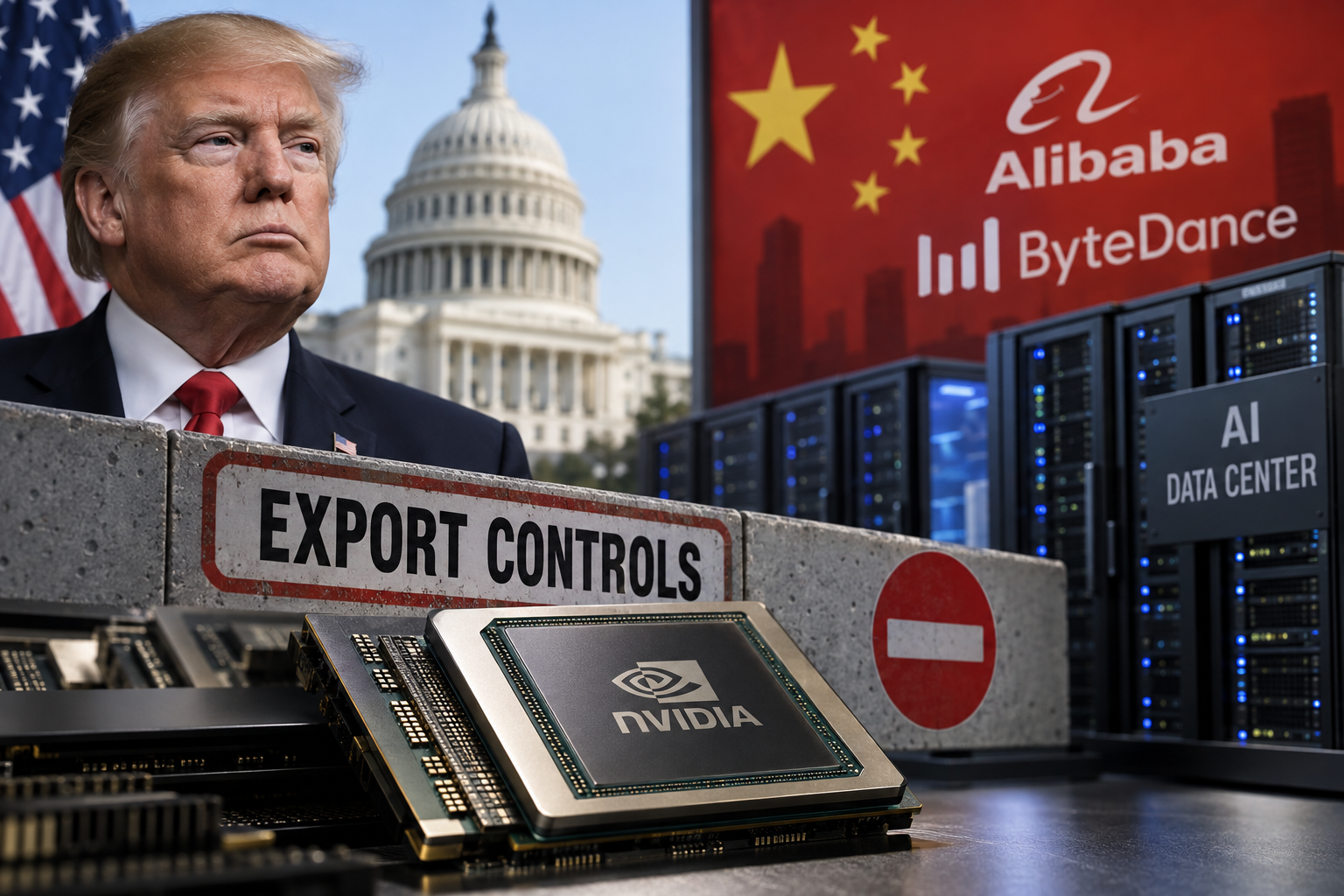
The Trump administration this week restricted remote access, a channel letting Chinese firms such as Alibaba and ByteDance use Nvidia AI chips in data centers outside China. The move limits their access to advanced AI computing, even though the chips never cross the border.
The Trump administration this week made it significantly harder for Chinese companies to access some of the world's most advanced artificial intelligence chips, closing a route that many tech firms had relied on for years.
What Is Remote Access to AI Chips?
The workaround involved renting computing power from data centers located outside China. Companies such as Alibaba and ByteDance could use powerful Nvidia chips through those facilities, even though they were generally prohibited from physically importing the hardware into China. Industry insiders call the arrangement remote access, and it has been a quiet but significant channel for Chinese firms seeking high-end computing capacity.
How Does the New Restriction Affect Chinese AI Companies?
The administration's action targets that channel. By restricting remote access, Washington is limiting the ability of Chinese companies to tap the processing power needed to train and run advanced AI systems, even when the chips never cross the border.
The move adds another layer to the ongoing contest over AI hardware between the United States and China. Chips from Nvidia sit at the center of that competition, and the government has repeatedly tried to keep the most capable processors out of Chinese hands.
WIRED reported the policy shift on November 18, 2026. Louise Matsakis, a senior business editor at the publication, covers the technology industry and has reported extensively on Chinese tech companies.
Este artículo fue escrito con la asistencia de IA.
News Factory APP - noticias agénticas para impulsar tu SEO y AEO.