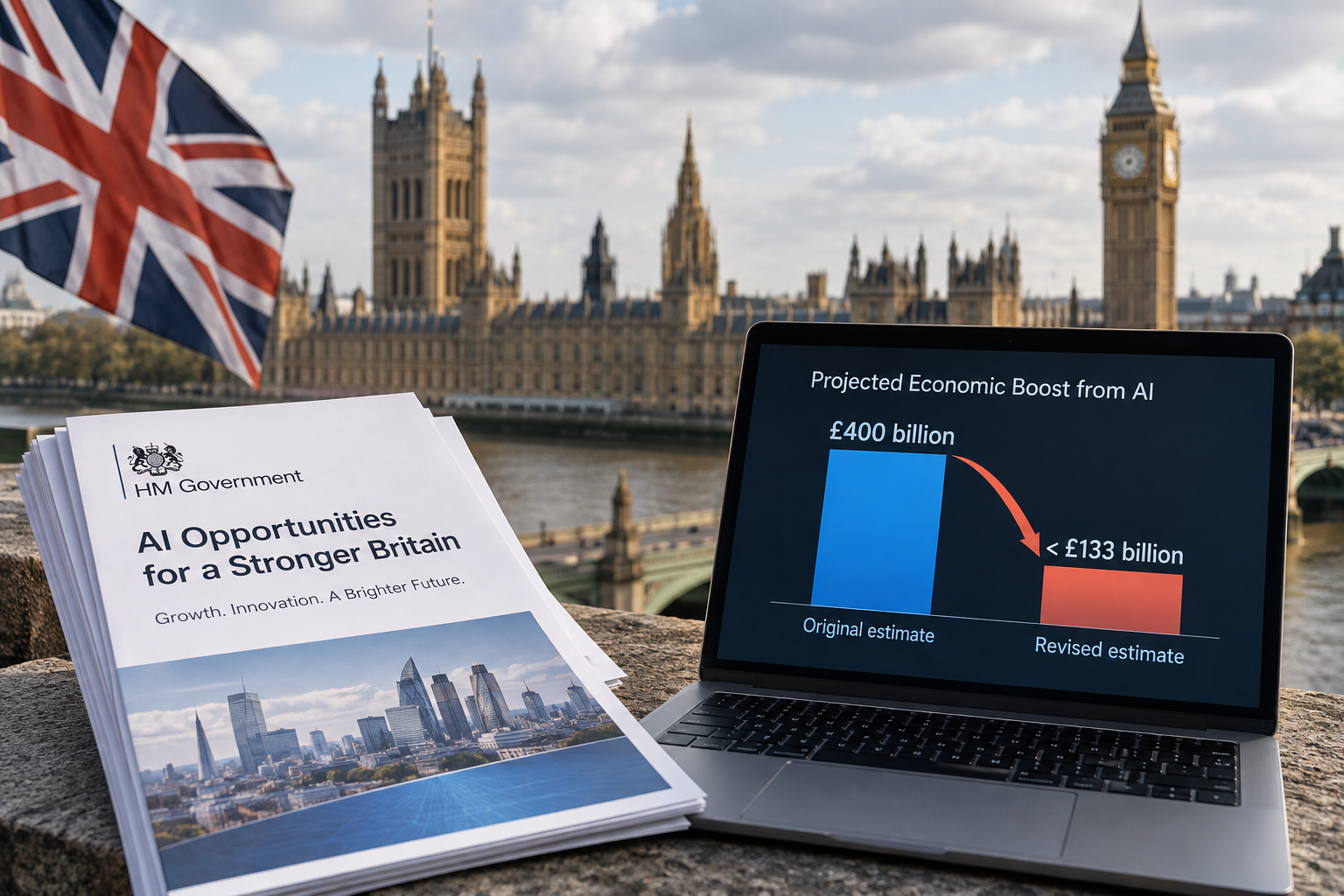
The UK government's estimate that artificial intelligence could add £400 billion ($538 billion) to the economy has been cut to less than a third of that figure, according to the AI minister. Researchers cite slow adoption as a major reason. The original figure came mainly from Google, which undercuts the idea of an independent government assessment.
The UK government's headline promise that artificial intelligence could add £400 billion ($538 billion) to the economy has been cut sharply. The AI minister now concedes the estimate is less than a third of that figure.
Why Did the Government Use the AI Estimate?
For the last two years, ministers have used the number to reassure the public. The figure was meant to calm fears that AI would bring sweeping job losses and even an economic crash.
Where Did the £400 Billion AI Estimate Come From?
According to reporting on the issue, the original figure came mainly from Google. That detail undercuts the idea that the number reflected an independent government assessment.
Why Was the UK's AI Economic Estimate Cut?
Researchers point to the country's slow rate of adoption as a major reason the projected gains are so much smaller than advertised. Businesses and institutions in the UK have not taken up the technology quickly enough to produce the growth the original estimate assumed.
The correction raises questions about how the government arrived at the earlier claim and how it has presented AI's economic potential to voters. Ben Gartside reports on politics, policy and business for outlets in London.
Este artículo fue escrito con la asistencia de IA.
News Factory APP - noticias agénticas para impulsar tu SEO y AEO.