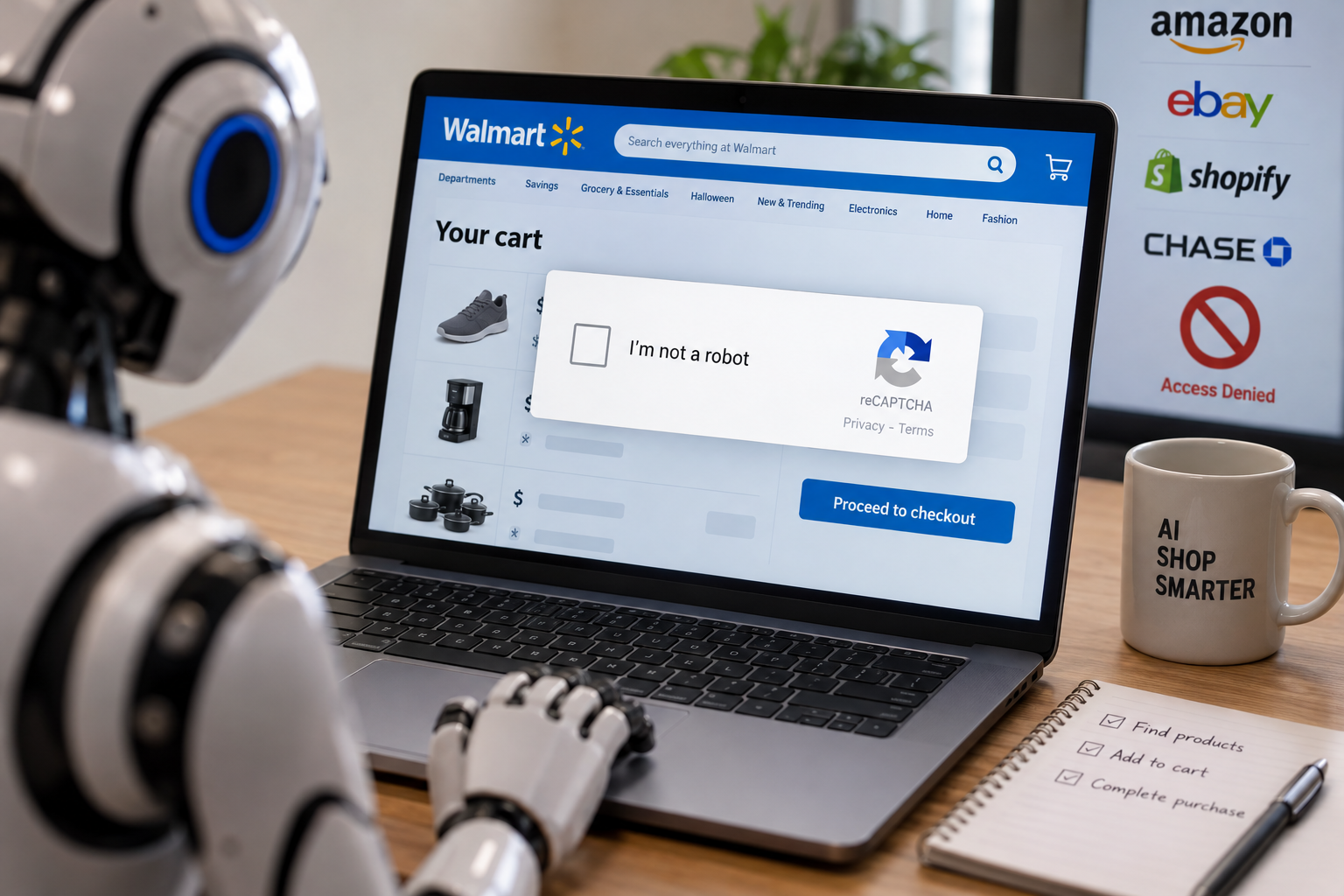
An AI agent can fill a shopping cart in seconds. Then it runs into a CAPTCHA, and the errand stalls. Meta's Muse ran into exactly that at Walmart, one of the retailer's partners, which said the verification checks weren't intended to stop the assistant. Amazon has taken a harder line, deliberately blocking the tool from shopping on its site, according to TechCrunch.
Why do some websites block AI shopping agents?
Personal AI agents like Muse are designed to navigate websites, fill carts and book travel rather than simply hand users a list of recommendations. But a user's permission doesn't mean a website has agreed to work with the agent. Some barriers are intentional. Others come from security systems that can't reliably distinguish a legitimate agent from unwanted automated traffic. Either way, the user may end up doing the task by hand.
Money raises the stakes
Is it safe to give an AI agent my login credentials?
Security concerns sharpen when payments are involved. On JPMorgan Chase's October earnings call, CFO Jeremy Barnum said some agents rely on shared login credentials and screen scraping to move funds, calling those methods "not secure." The bank blocks them where it can. Barnum warned that customers who hand over their credentials could be responsible if an agent takes an action they didn't want. A botched grocery order is an annoyance. An unauthorized bank transfer is a much bigger problem.
Amazon is also in a dispute with Perplexity over its Comet AI browser. Amazon argues the agent violates its access rules and puts customer data at risk. Perplexity maintains that users have authorized it to act. A federal appeals court vacated a preliminary injunction against Perplexity in August 2026, but the underlying dispute remains unresolved. Amazon offers its own Buy for Me feature, which can purchase products from other brands' websites.
Commercial motives play a role as well. eBay's user agreement prohibits unauthorized buy-for-me agents unless the company grants permission. Delta told TechCrunch it has no integration that lets third-party agents book flights through its website. The airline did not confirm whether it deliberately blocks specific agents.
Not every block is deliberate
Walmart's experience shows that a blocked agent isn't always the result of a ban. Human-verification prompts can interrupt automated shopping sessions. Zillow has acknowledged that its anti-scraping defenses sometimes catch agents it otherwise permits. From the user's side, both situations look the same: an assistant that can't finish the job.
Does a VPN help an AI agent get past website blocks?
Google's explanation for a familiar frustration helps illustrate the mechanics. Shared VPN networks can trigger reCAPTCHA challenges when their traffic resembles automated activity. AI agents can hit similar checks simply by navigating a site, even when they're following a user's instructions. Switching on a VPN won't override a site's restrictions on automated access, either.
Infrastructure providers are building more precise controls. Cloudflare, which previously introduced tools against AI web crawlers, now lets website owners distinguish between search crawlers, AI training bots and agents acting on behalf of users. Since September 15, new domains using Cloudflare have defaulted to allowing search crawlers while blocking AI training bots and agents on pages that display ads. Owners can adjust those rules as part of their AI search optimization, so a site that blocks training bots isn't necessarily turning away an assistant trying to buy something.
Some platforms are taking a more structured approach. Shopify's checkout tools let compatible browser agents update checkout details and submit orders after the buyer confirms. Control returns to the shopper for any steps that require authentication.
Este artículo fue escrito con la asistencia de IA.
News Factory APP - noticias agénticas para impulsar tu SEO y AEO.