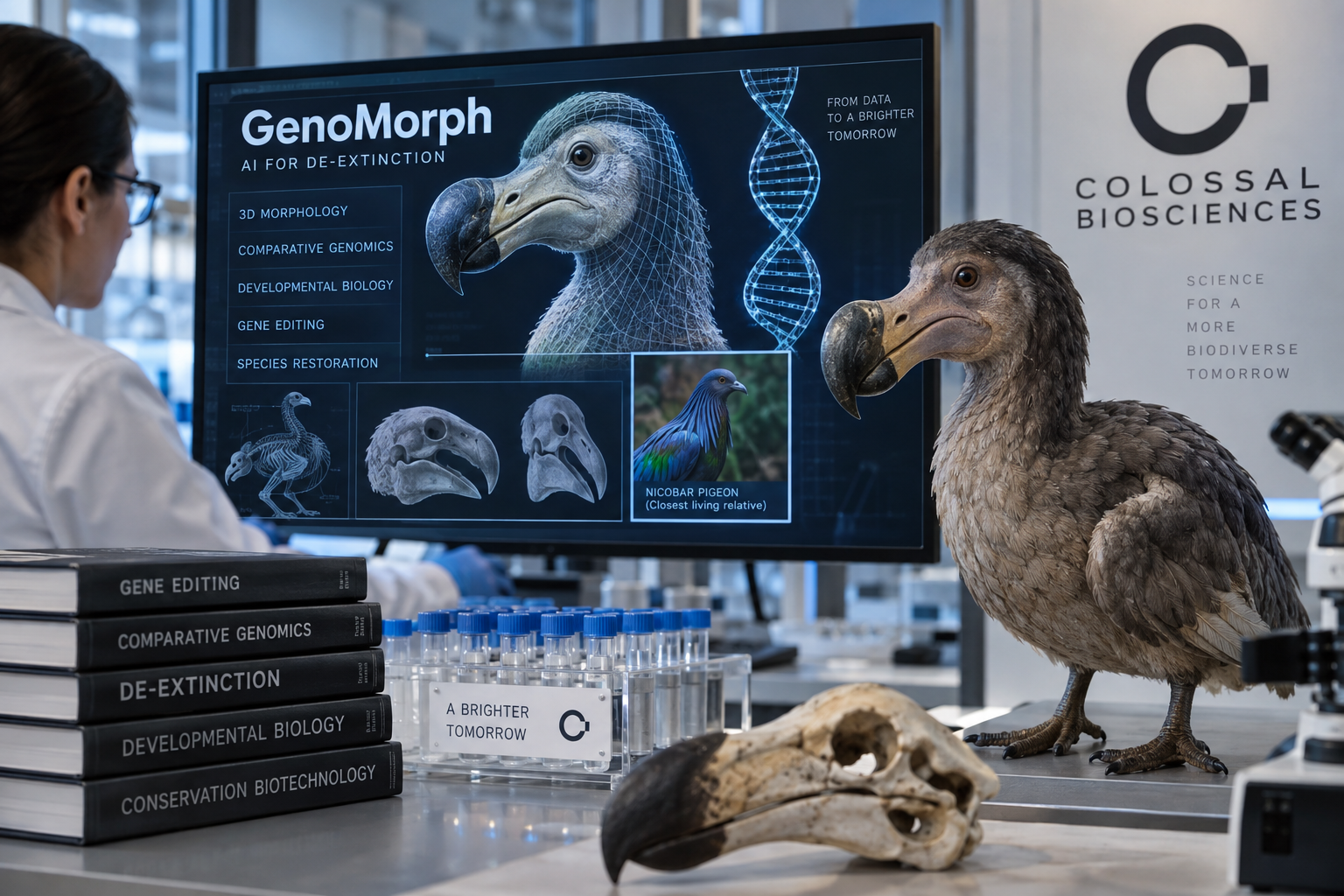
Colossal Biosciences announced Wednesday a new artificial intelligence platform it says will help accelerate its efforts to bring back extinct species, TechCrunch has learned exclusively. The platform, called GenoMorph, is being used first on the dodo, a bird that has been extinct since the 17th century.
GenoMorph combines 3D morphology, comparative genomics and developmental biology to identify genes that could be edited in de-extinction projects where scientists have little genetic data to work with. That is the central problem with the dodo. Colossal has access to only one dodo genome. For its woolly mammoth project, the company has been able to obtain about 100 genomes. Mammoth DNA is more plentiful because the cold climates those animals lived in preserve genetic material better than the tropics where dodos once lived, the company said.
Ben Lamm, Colossal’s chief executive and co-founder, said that limitation changes how scientists work. “Normally, scientists can compare many genomes to understand which genetic differences are responsible for certain traits,” Lamm told TechCrunch. “We don’t have that luxury with ancient DNA from extinct species whose DNA is severely limited, and we can only get a small number of complete genomes.”
To train the system, Lamm said the company gathered developmental data from “chickens, quail, ducks, and pigeons.” It combined that information with “genetic information and 3D skull measurements from more than 70 bird species.” Building the platform took more than a year, Lamm said, and it draws on Colossal’s years of previous de-extinction work.
The model looks at which regions of DNA become active as birds develop their beaks and facial structures. It then uses those patterns to predict which genetic switches may have given the dodo its distinctive look. Lamm described the tool as a “treasure map for the dodo genome.” Instead of sorting through a long list of possible genetic differences, he said, the team can focus on the ones that matter.
So far, Lamm said, GenoMorph has pointed to roughly 2,300 promising DNA editing targets linked to the dodo’s cranial and facial structure. Those targets are now ready for lab testing. Lamm said the platform should help the company tackle one of its biggest obstacles, which is figuring out which changes actually make an extinct species unique. Identifying those changes is only the first step, though. Researchers still need to confirm that the edits produce the physical traits they are looking for.
Colossal also described a new delivery method for that testing. “We’ve developed a new system that uses lipid nanoparticles to deliver gene-editing tools directly into developing bird embryos,” Lamm said. The approach lets researchers see how specific genetic changes affect development without waiting through a full breeding cycle, which requires birds to reach sexual maturity.
In a separate update, the company said its Nicobar pigeon colony now has 36 birds. Colossal also said it has successfully created the cells that become eggs and sperm. The Nicobar pigeon is the dodo’s closest living relative, and Lamm said those cells are “a critical part of our strategy for creating birds that carry dodo traits.”
Lamm said the company’s technologies are beginning to overlap in useful ways. “What’s most exciting is that we’re reaching a point where the different technologies we’ve been developing are starting to converge together and help other projects we are working on in a completely different part of the tree of life,” he said.
Asked whether editing genes this way is safe, Lamm said the goal of GenoMorph is to make genetic engineering “more precise, controlled, and testable.” He stressed that the software does not edit genes itself. It helps the team decide which genetic changes are worth investigating. “Identifying a potential edit doesn’t mean we immediately introduce it into an animal or assume it’s safe,” he said. “The more precisely we can identify and validate these changes, the more informed our decisions become throughout the process.”
The announcement also drew attention from an outside investor. XPRIZE founder Peter Diamandis, who has invested in Colossal, said Wednesday that he has founded a new venture capital firm, NeoGenesis Capital. The firm will back companies that use Colossal’s programmable biology platform in health, agriculture and conservation.
Questo articolo è stato scritto con l'assistenza dell'IA.
News Factory APP - notizie agentiche per potenziare il tuo SEO e AEO.