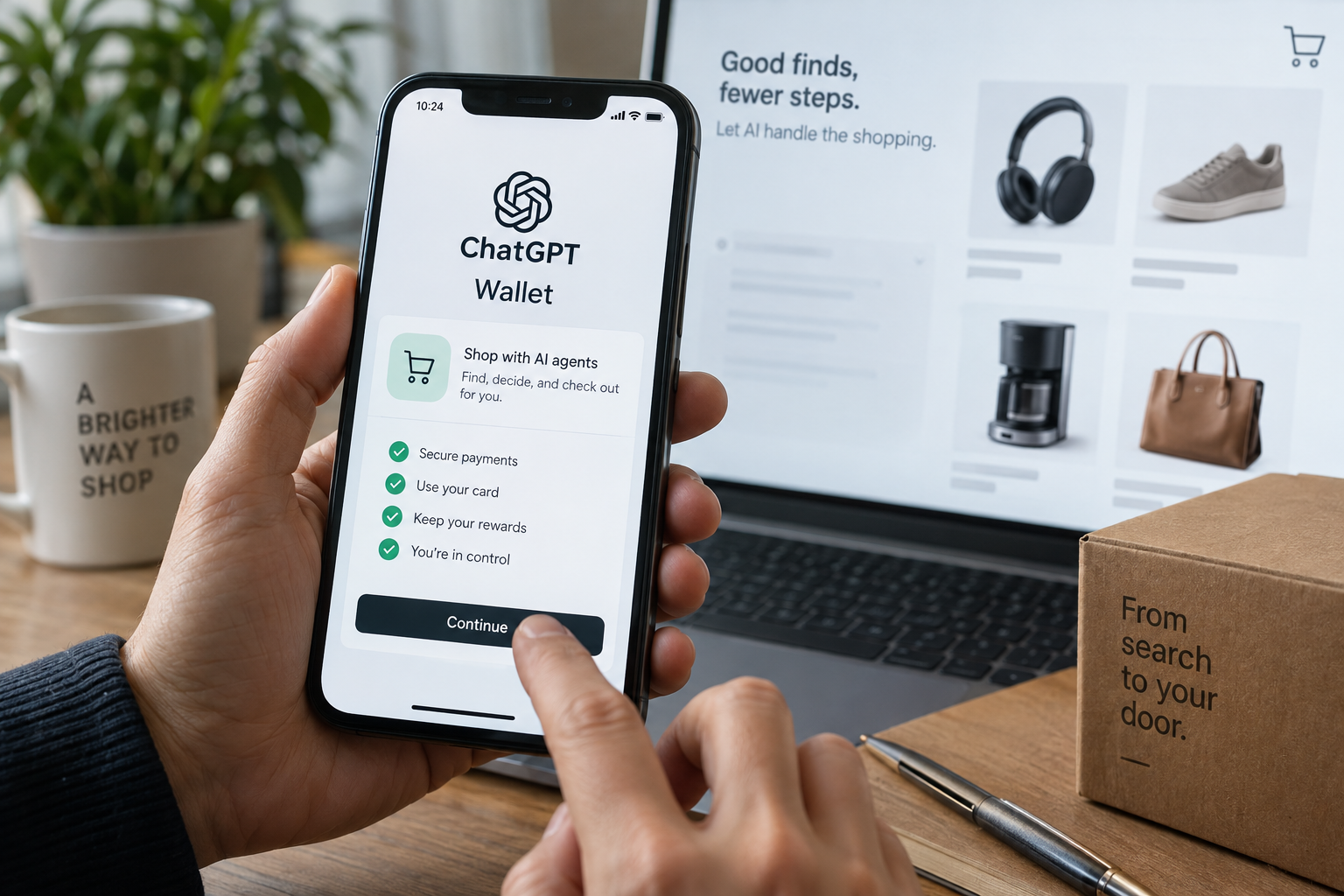
OpenAI has launched ChatGPT Wallet, a feature that lets eligible U.S. ChatGPT Pro subscribers have their Dots agents help choose and buy items with saved cards. Each purchase requires the user's approval, including biometric verification such as Face ID or a fingerprint scan.
ChatGPT can now shop for you. OpenAI launched a wallet feature that lets its Dots agents help users decide what to buy and then complete the purchase, but only after the user signs off on each transaction.
Who can use ChatGPT Wallet?
The feature, called ChatGPT Wallet, is rolling out first to a limited group: U.S. ChatGPT Pro subscribers who are 18 or older, have a U.S. billing address and hold an eligible U.S.-issued American Express, Chase, Mastercard or Visa card. OpenAI is starting small so it can test and refine the feature before expanding it.
Setup is simple. Subscribers add eligible cards to the wallet once, then ask their Dots agent to help with a purchase. They don't have to re-enter payment information each time they buy. When a purchase is ready, the agent checks in with the user before checkout.
Users see the item, the total and the card that will be charged. They approve the purchase with a security check, and OpenAI says every transaction requires biometric verification like Face ID or a fingerprint scan. That approval creates a record of the transaction.
Does ChatGPT Wallet keep my card number private?
Payment details stay protected. ChatGPT Wallet charges the selected card using a payment token, a stand-in for the card number. OpenAI says the token, similar to what Apple Pay and Google Wallet use, keeps the actual card details from being shared with either the Dots agent or the merchant. The merchant gets what it needs to fill the order, including the shipping address and contact information.
OpenAI also says shoppers who buy through their agents can still earn credit card rewards and keep the protections that usually come with their cards, including the right to dispute charges.
The company plans to give users more control over time. It says it expects people eventually to hand off purchases entirely to their agents by setting spending limits, purchase categories or time periods, then pre-approving buys that the agent can complete on its own. OpenAI also wants the feature available at more retailers.
Will ChatGPT Wallet work at every online retailer?
That may be the hardest part. Some retailers restrict AI agents or block them altogether. Amazon is the largest retailer known to ban AI agents, and it has pushed shoppers toward its own assistant, Alexa. Earlier this year, Amazon also blocked agents from Meta's Muse app. OpenAI acknowledges the problem. In its support materials, the company says agents can only use ChatGPT Wallet if websites make sure agents are not inadvertently blocked, and if payment and risk systems can recognize legitimate purchases made by agents.
To help merchants prepare, OpenAI has published a Commerce Partner Playbook. It offers tools and guidance for sites that want to support customers who shop through agents.
The launch lands in a crowded and still-unproven market. Companies such as DoorDash and Uber have reported that relatively few orders come through AI agents so far. Meta's Muse, which now has more than 10 million users, says AI-assisted shopping has become one of the most popular activities on its app. Other personal AI agents, such as Instinct, can also make purchases for users. OpenAI's move reflects a broader push to find where consumer AI tools can actually save people time, and shopping is one of the most obvious places to test that.
Questo articolo è stato scritto con l'assistenza dell'IA.
News Factory APP - notizie agentiche per potenziare il tuo SEO e AEO.