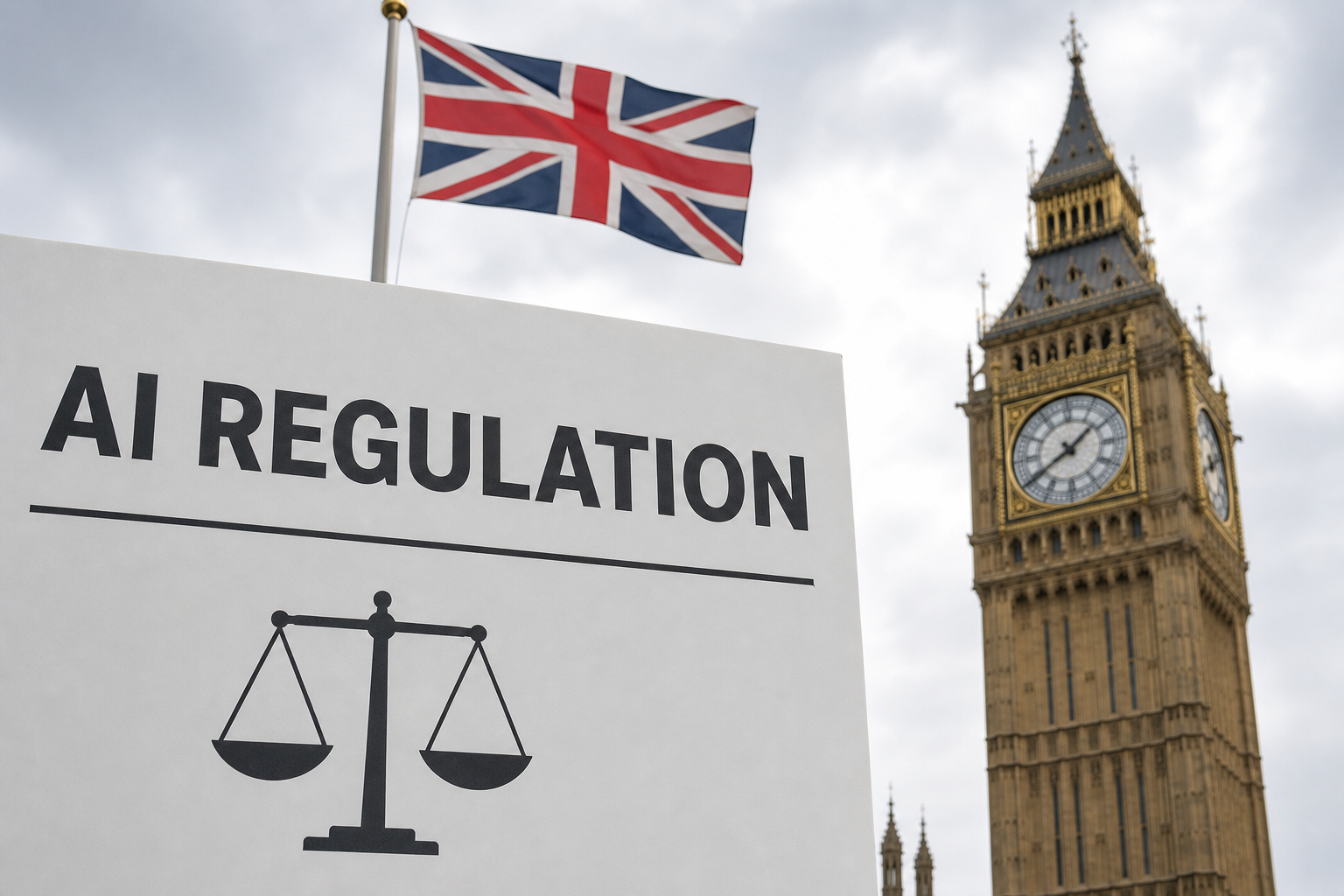
A cross-party committee of MPs and peers wants a dedicated UK AI law and a single regulator with enforcement powers. On the same day, OpenAI said it would back binding UK rules for the few companies building the most powerful AI. That includes OpenAI itself.
Tom Duff Gordon, OpenAI’s head of policy for Europe, the Middle East and Africa, told Politico that the “U.K. should act now to set up a stronger set of safety rules.” He said Prime Minister Andy Burnham’s government should “take advantage of this political window which is clearly opening up”.
The Joint Committee on Human Rights published its report, Human Rights and the Regulation of AI, on 14 September. It found that UK law covers some AI systems but leaves serious gaps. No single body coordinates AI regulation, so people harmed by AI can struggle to find who is responsible.
The committee wants an AI bill with stricter obligations for higher-risk systems. The bill would also ban uses the committee considers incompatible with human rights. It also wants mandatory transparency across the AI lifecycle and an independent oversight body set up in law.
OpenAI is in a position to support legislation in the U.K. to establish durable, mandatory, capability-based requirements for frontier AI, according to Duff Gordon. Any law should focus narrowly on national security and cybersecurity risks, he said. It should cover only the small number of labs and models at the frontier.
Labour’s 2024 manifesto promised binding regulation for the handful of companies developing the most powerful AI models. The government has not yet introduced that legislation. It has relied instead on sector regulators and voluntary testing through the AI Security Institute (AISI), Politico reported.
Business secretary Jonathan Reynolds struck a different tone on 15 September. He told BBC Radio 4’s Today programme that people should not get “hyperbolic” about AI risks, the Guardian reported. He warned that regulation which cut the UK off from frontier developments “would obviously make us less safe”.
First secretary Louise Haigh was due to tell the TUC conference the same day that ministers must “heed the warnings” from the people building the technology. Parliament is also turning to AISI itself. Liam Byrne, the Labour MP who chairs the business and trade committee, has asked the institute to give evidence at a hearing next month, the Guardian reported.
Dieser Artikel wurde mit Unterstützung von KI verfasst.
News Factory APP - agentische News für besseres SEO & AEO.