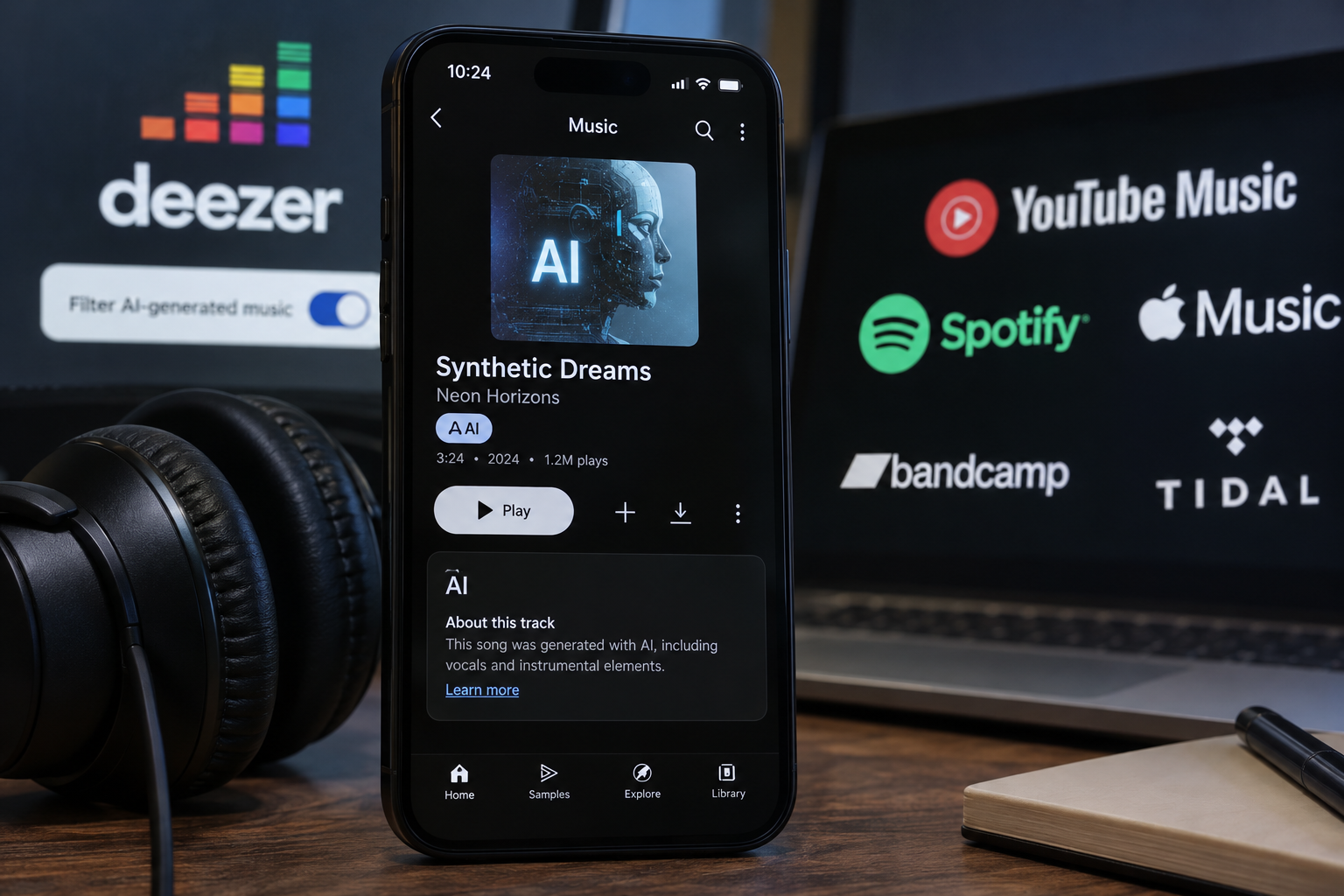
Deezer said Tuesday it is building a toggle that lets listeners filter AI-generated music off its streaming service. The feature is expected to be available before the end of the year. Once turned on, it would stop AI-generated tracks, albums and related artists from appearing in search results, the company said.
Deezer CEO Alexis Lanternier framed the change as a response to listeners. “We’ve seen clear user demand for the ability to filter out AI-generated music, and we are now giving everyone the option to remove this content completely from their streaming experience on Deezer, and focus only on human creators and creations, if they wish,” Lanternier said in a statement.
He said the explosion of AI music on the platform was one of the catalysts for the toggle-based features. The company pointed to a survey from last year, which found that around 45% of Deezer customers wanted a way to remove AI music from their feeds.
The volume has grown fast. Deezer added AI-detection tooling last year and has reported on the number of tracks uploaded to the platform ever since. At that point, AI-generated tracks accounted for 10% of daily uploads. In July, the company said more than 50% of daily uploads were AI-generated, an average of 90,000 tracks per day.
Other services have set their own rules. Bandcamp has banned AI tracks entirely. Tidal cut off monetization for people who upload AI music. Spotify has taken a lighter touch, tagging AI tracks and artists more prominently on its platform. In August, Variety reported that Apple Music was looking to label AI tracks by the end of the year. Some listeners have also turned to independent tracking systems to identify AI music.
YouTube Music has now added its own labels. An oblong tag that reads “AI” sits directly below the track name, and it is hard to miss. The label appears on songs that were fully generated by AI, as well as tracks that used a model to create major components such as vocals. YouTube says the label will accompany anything “where AI played a significant role.”
Tapping the label opens a menu that explains how AI was used, which can help listeners decide whether to keep playing a track. The design is not far from how YouTube already labels AI-generated video on its main platform. YouTube said the labels will also reach the video player at some point. The regular YouTube app hosts a large number of music videos, so that change would reach a wide audience.
Spotify has begun labeling fake artists, and Deezer is building a filtering system that removes AI music. Together, the moves show streaming services trying to separate human-made recordings from a growing wave of computer-generated uploads.
Este artigo foi escrito com a assistência de IA.
News Factory APP - notícias agênticas para impulsionar seu SEO e AEO.