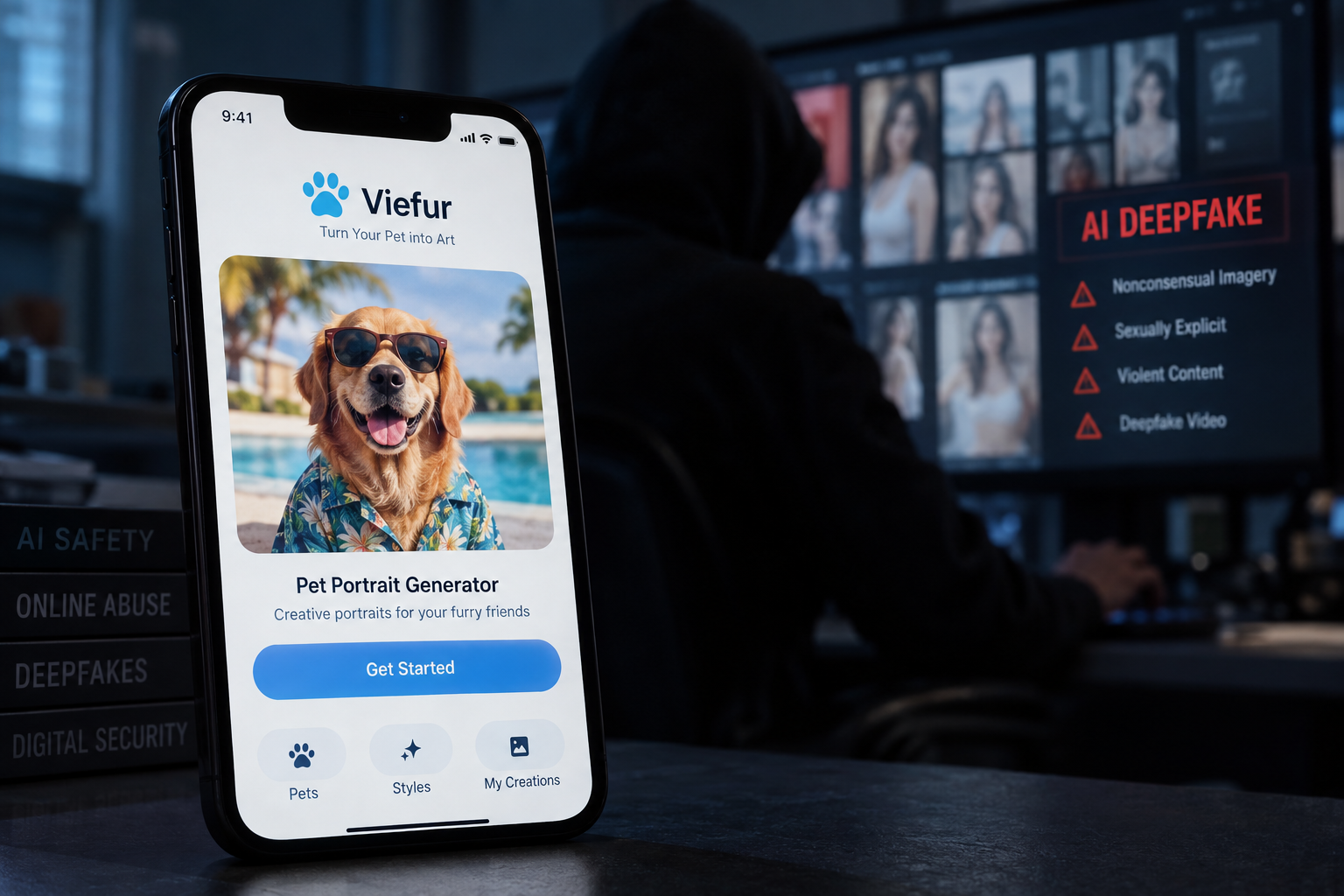
Hundreds of everyday-looking AI apps and websites contain hidden features that let users generate violent and sexually abusive deepfake content, according to a WIRED investigation. The outlet identified some 400 apps and websites linked to Chinese-language developers. On the surface, they resemble standard AI tools. Behind the scenes, some of them include secret functions for producing violent AI-generated images and video.
What does an ordinary-looking AI app hide?
Take Viefur. The app calls itself a “pet portrait” generator, and at first glance it looks like another source of the low-quality AI images that now flood social feeds. Users buy digital coins inside the app. Around $4 buys 130 coins. With those coins, a pet photo can be turned into an “anthropomorphic portrait,” with the animal dressed in “human clothing” and placed in unusual scenes. In one example, a hamster wears beach shorts and sunglasses and lounges by a swimming pool. In another, a cat in a Hawaiian shirt sips from a coconut.
That playful front is the point. The apps present themselves as novelty tools for pets, photos and light entertainment, which makes them easy to overlook. The WIRED investigation found that the harmful capabilities sit alongside those harmless features, not in separate products that a casual user would recognize as dangerous.
How widespread are sexually abusive deepfake apps?
The findings add to growing concern about how generative AI tools can be used to create nonconsensual sexual imagery. Deepfake tools that can alter a real person's image into abusive content have drawn scrutiny from regulators, researchers and victims' advocates. The WIRED report indicates the problem is not limited to a few obvious bad actors, but spread across a large number of apps and sites that appear legitimate.
Este artigo foi escrito com a assistência de IA.
News Factory APP - notícias agênticas para impulsionar seu SEO e AEO.