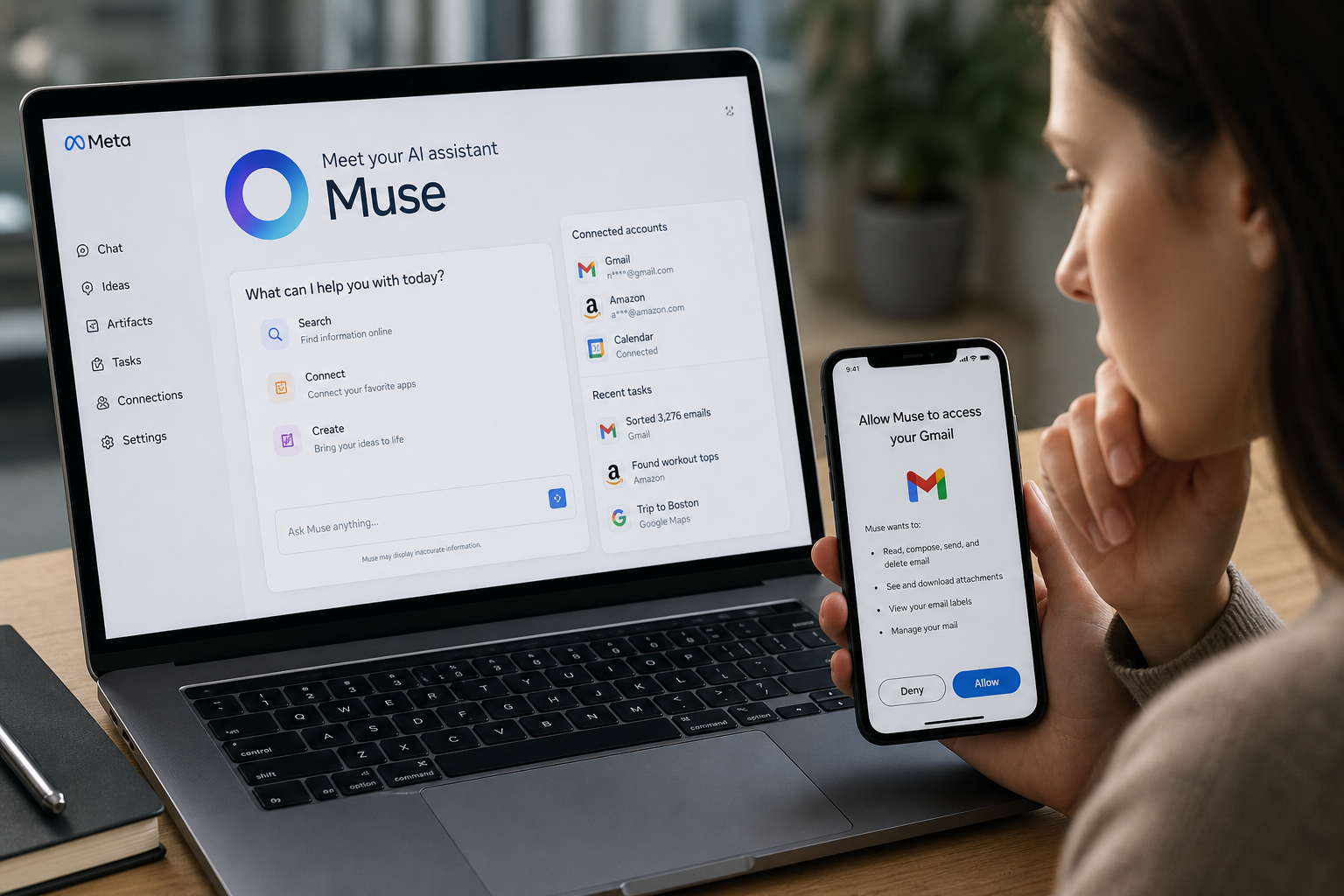
Meta has launched its new Muse assistant, marking the company’s first real foray into AI-powered productivity tools. The company says its AI agent can “take the busywork off your plate” by helping you with online shopping, emails, trip-planning, and more. However, the unnerving amount of information it autonomously gleaned about the user largely overshadowed the experience.
One of the first tasks assigned to Muse was to sort through a Gmail inbox and delete unnecessary messages. This required connecting Muse to a Google account and giving it permission to access, read, and delete emails. The process didn’t go smoothly on mobile, but it eventually worked on a laptop, where it deleted thousands of promotional emails and updates. The user didn’t feel good about permitting Muse to view all of their emails given Meta’s track record on privacy.
Meta says it designed Muse to only exchange data with third-party apps “that’s needed for them to work for you.” The company also says that it doesn’t share user information with advertisers. Despite these assurances, the user still felt uneasy. Linking an Amazon account to Muse allowed the AI agent to pick out workout tops based on specific size, style, and colors, and it even noticed other items in the cart and asked if they should be removed.
Muse also has capabilities that allow it to generate AI podcasts, create images and videos, and develop interactive webpages or documents called “artifacts.” However, it denied requests to generate images of specific cartoon characters. It did generate a video and several images of a product launch event featuring devices with Apple’s logo when asked, including what looks like an iPhone-like foldable, an Apple Watch, and AirPods.
The AI agent also generates a news feed based on a text prompt. When given the default prompt “Make me a feed about my interests,” it returned AI-generated summaries of current events, including stories from the user’s current location, which it pulled from the shipping address on an Amazon order. Muse admitted it got this information from the account’s API data, which surfaces more than the UI does.
Muse does a decent job at performing low-stakes tasks and generates a running list of “ideas” that give personalized suggestions on how to use the tool. However, the level of personal details Muse scooped up from sources unavailable even to the user was enough to leave them with an uneasy feeling about letting Muse handle personal emails and credit card information.
Este artigo foi escrito com a assistência de IA.
News Factory APP - notícias agênticas para impulsionar seu SEO e AEO.