Nvidia is making roughly $8,300 in pure profit every second. By the time a reader gets through a short article, the chipmaker will have added tens of thousands more dollars to its bank account, according to an analysis that charts the company's rise against the world events that fueled it.
The numbers are hard to wrap your head around, and they arrive at an awkward moment. Jensen Huang, Nvidia's cofounder and longtime chief executive, has resigned after a series of scandals. Many observers might expect a company in that position to stumble. Nvidia's latest results suggest otherwise.
Interim CEO and CFO Colette Kress led the company's first earnings call since Huang's departure, and she said the business would carry on as before. Asked how things might change under new management, she said they would not. “From a business perspective, it’s business as usual,” she said. She added that Nvidia has the backing of customers and suppliers, including TSMC, the Taiwanese firm that fabricates Nvidia’s chips.
“Our momentum is real, our demand is accelerating, our supply is growing,” Kress said. “Our customers and partners are with us, and employees are committed. We’ve got this.”
Is Nvidia still profitable after Jensen Huang's resignation?
Nvidia's most recent quarter brought in a profit of $65.3 billion. The analysis compares that figure with earlier booms. The cryptocurrency surge and the GPU shortage pushed the company's quarterly profits to briefly peak at $1.24 billion and $3 billion, respectively. The rise of data centers, driven by artificial intelligence, has lifted them far higher, and the company shows no sign of slowing.
What does Nvidia expect to earn next quarter?
Nvidia expects to bring in even more next quarter, with projected revenue of $130 billion. Gross margins are estimated to fall to 71 to 72 percent, down from nearly 75 percent. Kress said the company intends to raise margins to as high as 73 percent next year. Profit could be a smaller share of revenue, but the dollar amounts would still be enormous.
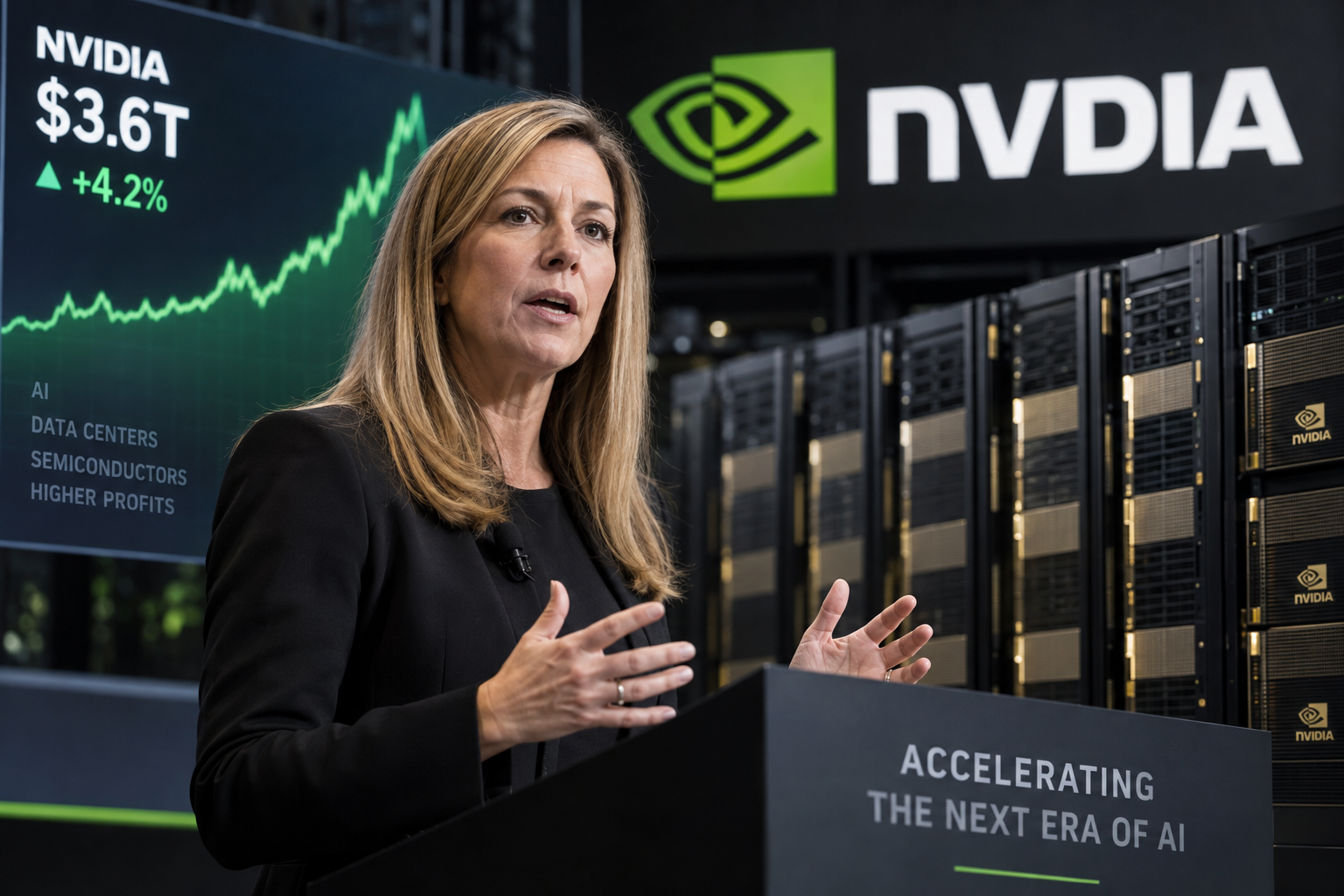
The company's stock has taken a hit. Nvidia's market value dropped by about $1 trillion, from around $5 trillion at the start of November to roughly $3.6 trillion at the time of the analysis. Even so, the company is earning about $700 million in profit a day on average. Put another way, the analysis estimates Nvidia could pay a $1 million bonus to each of its 42,000 employees every three months and still not run out of cash.
Investors who stayed in the stock have done well over the long run. The analysis estimates that a $1,000 investment made a decade ago would now be worth more than $67,000.
Will Nvidia return more cash to shareholders?
Kress also signaled that shareholders will get more of the company's cash. She said Nvidia intends to return all excess free cash flow, net of strategic uses, to shareholders. That is a bigger commitment than the 50 percent baseline Huang set five months earlier.
Nvidia is not alone in riding the AI wave. Samsung, SK Hynix and Micron together control nearly 90 percent of the global DRAM memory market, and their revenues have also surged over the past year. In the most recent quarter, Samsung posted a profit of around $55.3 billion, while SK Hynix made $29.8 billion and Micron made $37.7 billion. All three still trail Nvidia. Memory has historically been more cyclical, too. Micron and SK Hynix both lost money in 2023 after producing too much memory.
For now, Nvidia's leaders say the good times will keep rolling. Whether that holds will depend on demand for the AI hardware that has made the company one of the most valuable in the world.
Este artigo foi escrito com a assistência de IA.
News Factory APP - notícias agênticas para impulsionar seu SEO e AEO.