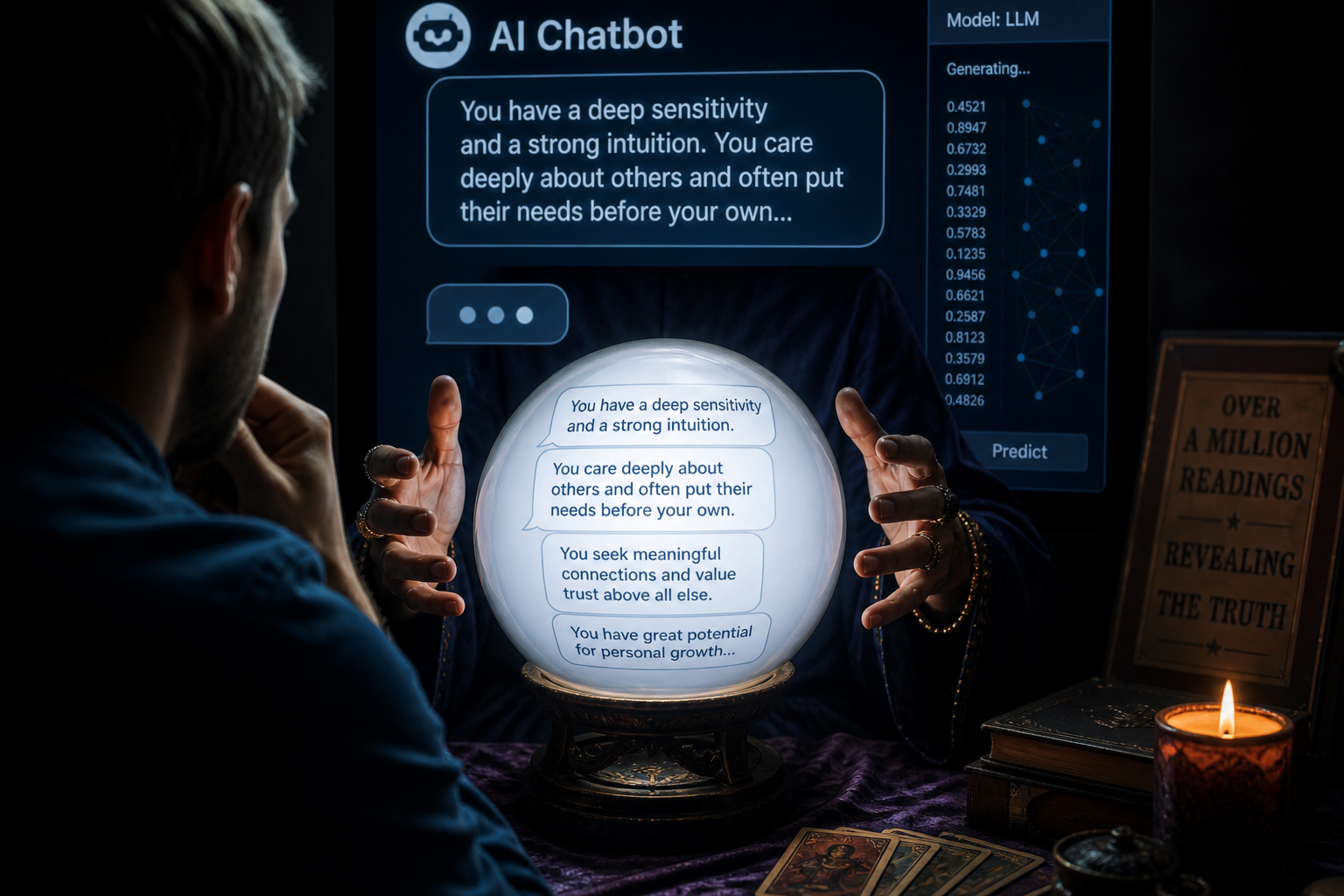
The tech industry has been abuzz with the potential of large language models (LLMs) to revolutionize the way we interact with machines. However, a growing concern is that these models are replicating the mechanisms of a psychic's con, fooling users into believing they possess intelligence and reasoning abilities. This phenomenon, dubbed the LLMentalist Effect, is fueled by subjective validation and statistical illusions, making it difficult for users to distinguish between genuine intelligence and clever trickery.
At the heart of the LLMentalist Effect is the way chatbots use validation statements, such as Forer or Barnum statements, to create the illusion of intelligence. These statements are statistically generic but sound specific to the user, making them convincing and engaging. The chatbot's responses are generated through a mathematical model of language tokens, which can produce statistically plausible responses to a given prompt. However, this does not mean that the chatbot truly understands the context or intent behind the prompt.
The LLMentalist Effect is reminiscent of the psychic's con, where the psychic uses cold reading techniques to create the illusion of mind-reading abilities. The psychic's con relies on the mark's willingness to relate to the statements made, even if they are statistically generic. Similarly, the LLMentalist Effect relies on the user's willingness to believe that the chatbot's responses are specific to them, even if they are generated through statistical means.
The implications of the LLMentalist Effect are significant, as it can lead to a false sense of security and trust in the abilities of chatbots. This can have serious consequences, particularly in areas such as healthcare, finance, and education, where decisions made by chatbots can have a significant impact on people's lives. Furthermore, the LLMentalist Effect can also lead to a lack of critical thinking and skepticism, as users become increasingly reliant on chatbots for information and decision-making.
Experts warn that the LLMentalist Effect is not just a minor issue, but a symptom of a larger problem in the tech industry. The industry's focus on creating increasingly sophisticated chatbots has led to a lack of transparency and accountability, making it difficult for users to understand how these models work and what their limitations are. As the use of chatbots becomes more widespread, it is essential to develop a critical understanding of their capabilities and limitations, and to be aware of the potential risks and consequences of relying on them.
Este artigo foi escrito com a assistência de IA.
News Factory APP - notícias agênticas para impulsionar seu SEO e AEO.