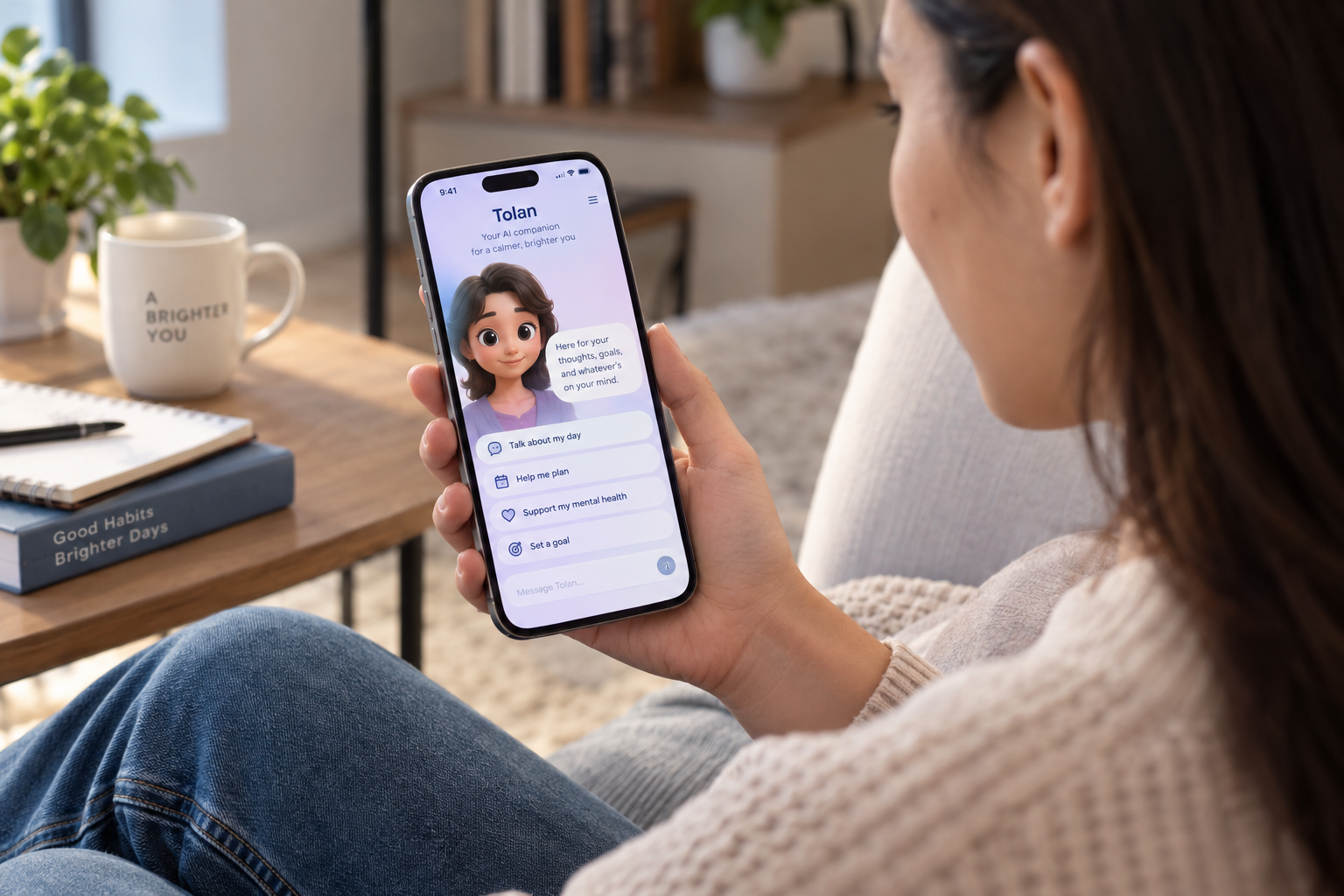
Tolan, the AI companion designed to help people manage their daily lives, navigate relationships and emotions, and accomplish their goals, has added $30 million to its funding. The investors in the latest round include Union Square Ventures, Khosla Ventures and Homebrew. The round doubles the startup’s total capital raised to date and pushes its valuation above the previous $120 million, according to a new report by Upstarts Media.
The startup did not disclose its new valuation. PitchBook estimates it at more than $268 million, with “medium confidence.”
How Does Tolan Make Money?
Users interact with Tolan through a cartoonish character meant to offer support and help them get through their to-dos. The company makes money from tiered memberships, which are required for full access to all features. Tolan told Upstarts Media that its annual recurring revenue is now in the “double-digit millions.”
The company says it has more than 250,000 active users, who have had more than 70 million conversations over the past year. Around 70% of its users are women and 40% are parents, according to Tolan’s team. The app is said, anecdotally, to appeal in particular to neurodivergent people, who may benefit from extra support, whether emotional or help organizing tasks.
How Is Tolan Different From Other AI Companions?
That mix seems to be part of Tolan’s appeal. Plenty of AI companions have struggled to find an audience, and some have drawn sharp public criticism. Users called the pendant-based AI companion from Friend “very cringe.” The New York Times described it as “hated,” and Wired said it “has no soul.” Tolan, by comparison, appears to have found a balance between being helpful and seeming too strange.
Other companies in the space have fared worse. Character.AI, once one of the leading names in AI companions, recently filed for bankruptcy after its founder returned to Google. Its remaining staff is transitioning to Disney, which bought some of its assets.
Tolan may soon face more competition from a newer group of AI agents. Those products are built to help users plan, organize and complete tasks and goals, not just talk through them. Meta, for example, has given its AI agent Muse a cute avatar for users to talk to, and plans to release it as a hardware product in the future.
What Risks Do AI Companion Apps Face?
The startup also has to manage the risks of offering AI-powered emotional support. Multiple lawsuits have been filed against makers of general-purpose AI apps, alleging that chatbot interactions contributed to users’ suicides. Tolan’s product sits in that same sensitive territory, and the company will have to address those concerns as its user base grows.
Este artigo foi escrito com a assistência de IA.
News Factory APP - notícias agênticas para impulsionar seu SEO e AEO.