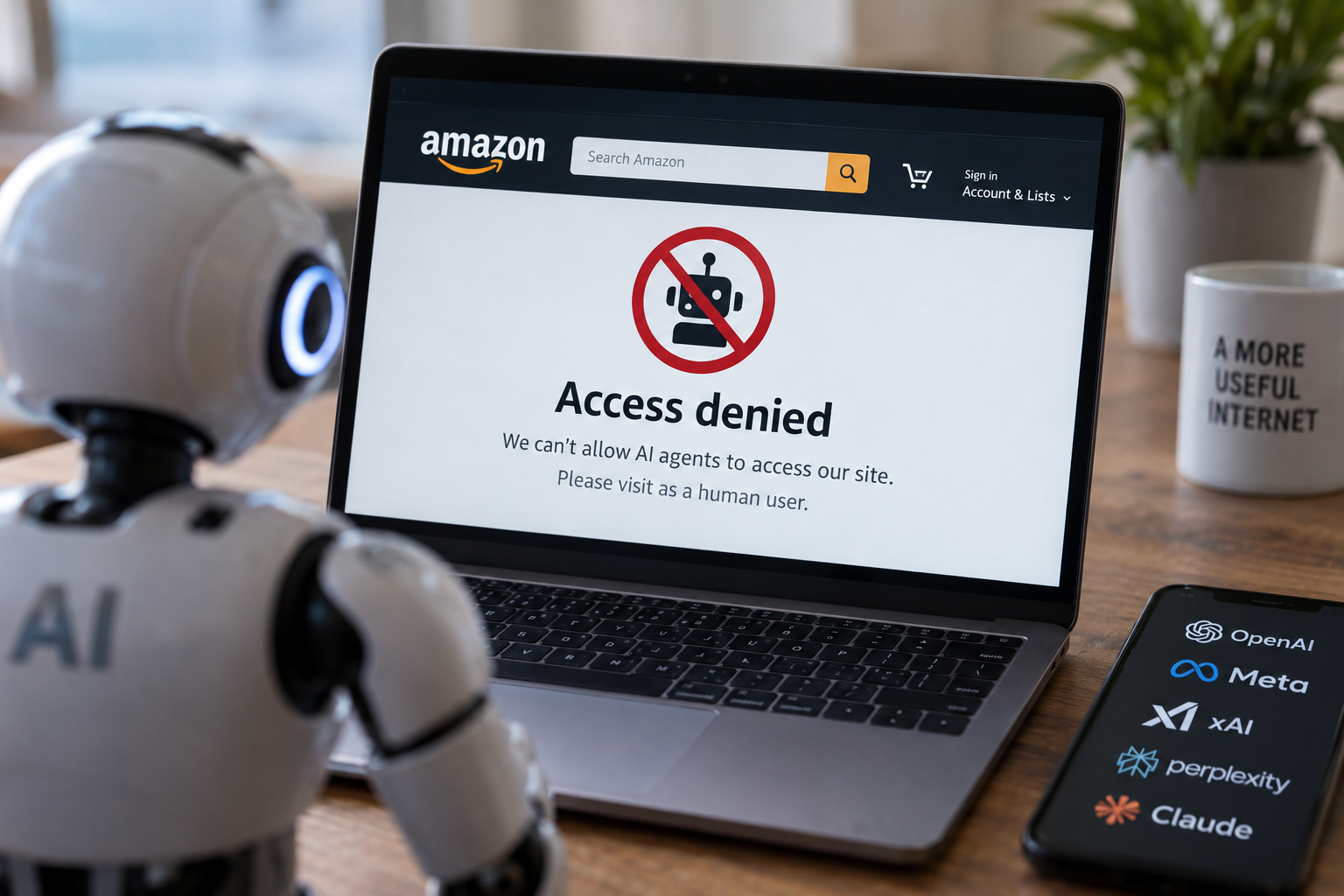
Autonomous AI agents were supposed to handle the tedious parts of the internet for you. Book the dinner reservation, clear out the inbox, buy the new pair of shoes. But a growing number of websites are refusing to let them in, and users say the agents are running into walls across the web.
In recent weeks, people using agents from Meta, xAI, OpenAI and the startup Instinct have reported blocks that stop their bots from performing tasks on major sites. Yelp told TechCrunch that it only allows AI agents that pay for its data licensing program. Delta Air Lines is preventing agents from booking tickets on behalf of users. JPMorgan Chase and Charles Schwab have confirmed they are blocking AI agents from accessing accounts because of security concerns. Some users say sites that worked with their agents only weeks ago, including Cars.com and Amtrak, are no longer accessible. That suggests other companies may be quietly shutting agents out without saying so.
The problem did not start with the current wave of agents. Amazon was already fighting AI agents last year, when it banned Perplexity’s agentic shopping feature and sued the company. Amazon said it had “repeatedly requested” that Perplexity stop letting its agents shop on the site. It also argued that third-party companies buying items for customers “should operate openly and respect service provider decisions whether or not to participate.”
Perplexity pushed back. It suggested Amazon doesn’t want agents roaming its platform because fewer human shoppers would see its ads, which is a real business concern for the ecommerce giant. The startup described its agent as an extension of the user, arguing that Amazon “does not believe in your right to hire labor, to have an assistant or an employee acting on your behalf.” A judge later ordered Perplexity to stop its agents from shopping on the site, but an appeals court overturned that ruling in August. Amazon has since filed an amended complaint.
The legal fight has not stopped OpenAI, Meta and Google from releasing agents of their own, and those companies are running into the same obstacles. Amazon said the continued access of Meta’s Muse, an AI assistant, violates its site policies. Reports also describe xAI’s Grok, Instinct’s agent and OpenAI’s Dots being unable to use Amazon. Elon Musk, whose company owns xAI, responded that he maybe “should start a competitor to Amazon.”
Chris Canal, CEO of the AI safety evaluator EquiStamp, said the blocks could weaken the central promise of the technology. “Does this impact the perceived value of the Anthropics and the OpenAIs? I would say absolutely,” Canal said. “One of the claims is that they’re going to permeate every aspect of our lives and be able to do anything that we could do online. If there are companies that are actively working to make that not happen, there are just fewer useful things the agents can do.”
Meta addressed the issue in a post earlier this month. “Turning away a personal agent means turning away the customer behind it,” the company said. “We’d rather work with businesses to address the underlying concerns than see them lose that customer.” Rather than fight Amazon, Meta has partnered with retailers including Walmart, Gap, Sephora and Best Buy, allowing Muse to shop on their sites. Shopify has also opened its network of storefronts to AI agents.
Not every block is a deliberate ban. Anti-bot systems, which are now common across the web, are also catching agents. Reports on Reddit suggest Google is blocking some accounts that use Muse over “suspicious activity,” and others say they have had trouble checking out on Walmart despite its Meta partnership. Canal said the defenses were built for scammers and hackers, not shoppers. “There are all kinds of things that are set up not even to block agents, but to block in general bots or programs that are trying to scam or hack,” he said. “These AI agents trigger those same safeguards.”
Web infrastructure providers are adding to the pressure. Cloudflare introduced a one-click block for AI crawlers in 2025, and it later began blocking crawlers that scrape websites for both search indexing and AI training. The company says the goal is to protect the web from a flood of AI bots that strain internet infrastructure and clog email inboxes. Those same defenses could make it harder for ordinary people to buy concert tickets, book reservations or get certain products.
The Verge reached out to OpenAI and Google about the roadblocks their agents face and did not immediately hear back. Instinct declined to comment.
Canal expects the blocks may keep some bots out, but he says they will also make everyday browsing more frustrating. “We could see them on a simple grocery shopping website soon, where you’re having to jump through a bunch of hoops to prove that you’re a human using the computer or your phone.”
Este artigo foi escrito com a assistência de IA.
News Factory APP - notícias agênticas para impulsionar seu SEO e AEO.