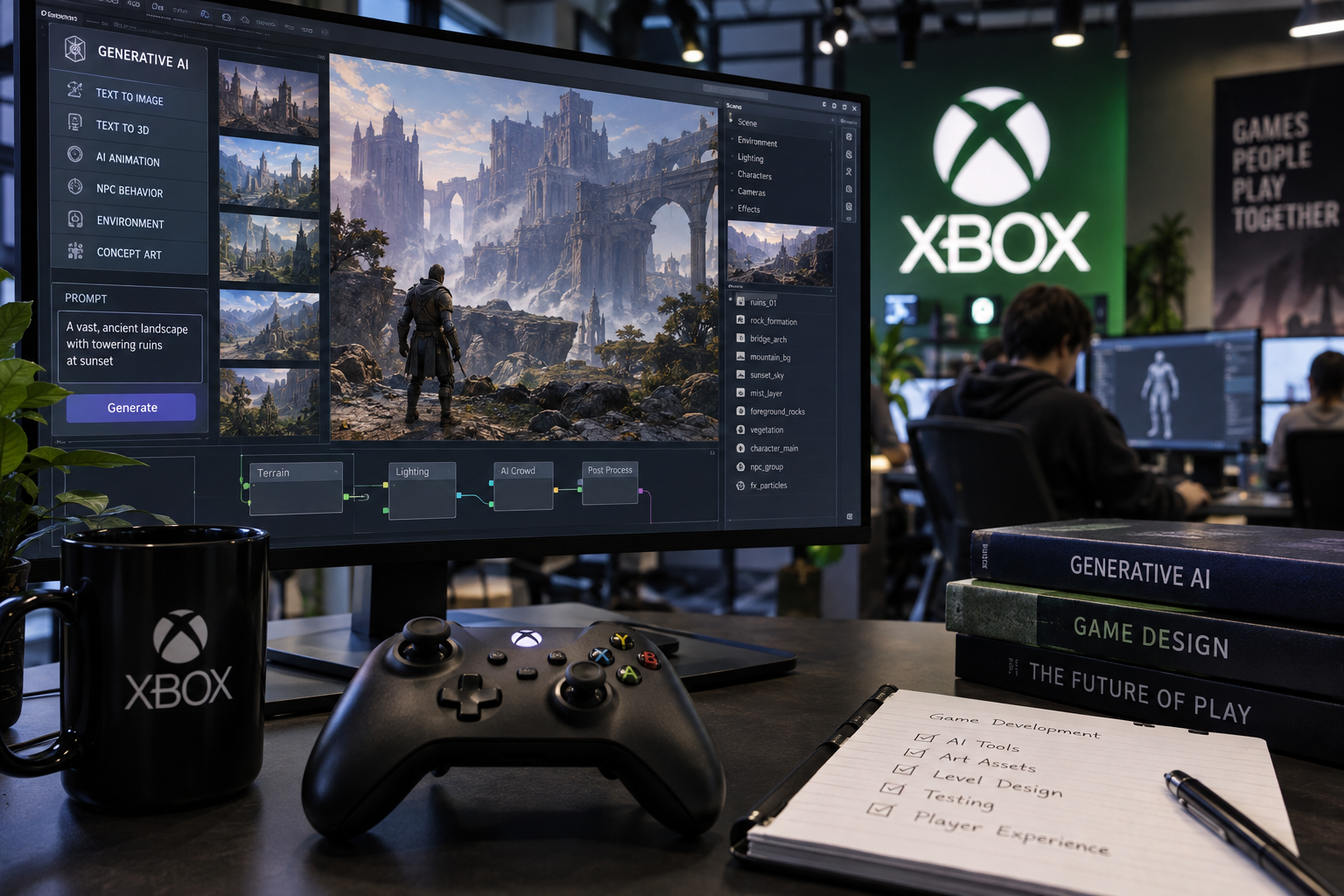
Is Xbox already using AI to make games?
Brandon Stirrup, a strategy manager at Xbox, said the company is currently using generative AI to develop games. He also said that people who claim otherwise are merely \"pretending.\" A day later, he deleted his comments from X and deactivated his social media account, though the posts have been archived elsewhere.
The episode landed in the middle of one of the most contested questions in the game industry. Whether generative AI is the future of the medium or a temporary blight on it depends largely on who is asked. Xbox has not officially stated a position on developing games with AI. Still, the company's recent announcement of Xbox Labs, which was formed at least in part as a response to a rising number of AI-coded game ports, heavily implied that the new team would use AI too. The announcement never said so outright.
Xbox's parent company, Microsoft, is a major player in AI development. That has already drawn Xbox into criticism from a BDS boycott, which points to the use of that AI by the Israeli military.
Who is using AI, and who says no
Do most game studios use AI in development?
Among the largest game studios, the push to use generative AI to speed up development is strong. Capcom, Square Enix, Sega, Nexon and Activision have all either used AI in their games or pledged to do so. Epic Games, the developer of Fortnite, has been especially open about its AI use, and CEO Tim Sweeney has promoted it aggressively on social media.
Several industry studies have found adoption rates of around 90 percent. Those surveys, however, rely on limited participant pools and definitions of AI that vary, which raises questions about how representative the results are.
Why do some developers and players oppose AI in games?
The opposition is just as real. Smaller, independent studios are the most vocal critics, and they tend to have no shareholders to impress by pointing to cost savings. Tunic publisher Finji, Stardew Valley developer ConcernedApe and Clickolding developer Strange Scaffold are among the studios that have spoken out against the technology. The industry is so large and varied that no one can say exactly how much of it uses AI. Claims that everyone is using it, though, do not hold up.
Players are divided too. Some accept AI as part of games going forward. Others have vowed to avoid games that use the technology entirely, citing environmental costs, labor concerns or simple aesthetic preference. That split has fueled demand for a browser extension that makes Steam's AI disclosures easier to see, along with grassroots efforts by developers to label their games as AI-free.
Where AI shows up in finished games
The most controversial uses involve generating assets that end up in the final product. Some developers include AI output on purpose. The Finals, for example, uses AI-generated voices. More often, developers say that art assets found in released games were placeholders meant to be removed later. That explanation came up recently with Crimson Desert. Many players and developers who object to AI in art still accept its use in writing code.
The broader effects are harder to measure. AI cannot produce a playable game without extensive help from skilled developers, but many workers fear that executives could use the promise of AI to justify layoffs. It is also unclear whether AI will make games easier to build over time. One trend is easy to document. Low-quality \"slop\" games, often copied from other projects, have multiplied. The number of AI games in the Steam Next Fest demo event rose sharply.
AI is changing how many games get made. What those changes will look like, and whether players and developers will accept them, remains unsettled.
Este artigo foi escrito com a assistência de IA.
News Factory APP - notícias agênticas para impulsionar seu SEO e AEO.