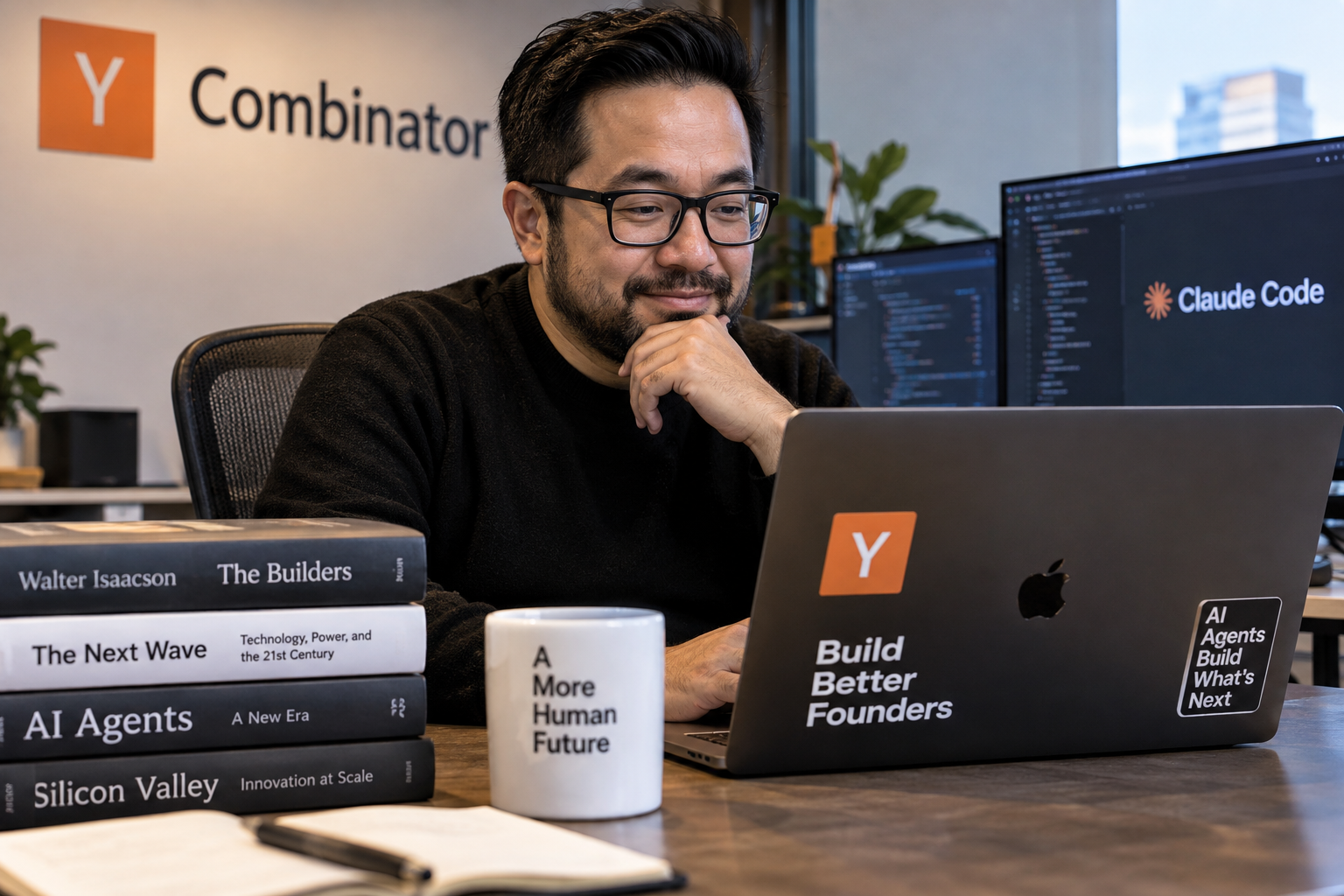
Y Combinator CEO Garry Tan says he spends somewhere between $100,000 and $200,000 a year on tokens to power his AI agents, a figure he put on the record in a new episode of Walter Isaacson’s podcast, The Builders. The episode is set to publish Tuesday.
How much does Garry Tan spend on AI agent tokens?
Tan has said before that he has suffered from what he jokingly calls “cyber psychosis,” and that he sometimes barely sleeps because he is so excited to work with his agents. On the podcast, he described the cost plainly. “I spend about maybe $100,000 to $200,000 a year on tokens,” he told Isaacson.
He uses agents for countless work projects and coding tasks. He has also shared his set of 23 Claude Code skills, called gstack, on GitHub. Tan said the goal is to help others understand what agents can do.
What can Garry Tan's AI agent access?
Some of his use is ordinary. He has used an agent to research Isaacson’s podcast and prepare for the questions he might be asked. Some of it reaches well beyond work. Tan said his agent has access to nearly everything in his digital life.
“It’s read all of my email and all of my Dropbox,” he said. “It’s read, like, all of my Apple Notes, even my therapy notes going back 20 years.”
Tan describes the tools as help with “almost anything that you do in your day-to-day life,” done with a good deal of independence. He compared the role to a conscience on the shoulder. “Think of it as a Jiminy Cricket on your shoulder at all times,” he said. “Almost anything you want to do, it knows you, and it’s there to help. And it will actually sort of run ahead and say, ‘What about this?’ Or it’ll help you see around corners.”
Tan is an early adopter of OpenClaw and now calls himself a power user. The biggest lesson he has taken away is that AI agents should not be handled like traditional software. He said some people worry so much about repeatability and safety that they give up the qualities that make agents useful. Those qualities, he said, are what make the work “basically can be so similar to a human.”
Y Combinator is building its own agent, too. Tan said the firm is using one to rebuild how it operates. “We now have an internal AI agent, for instance, named Stray Light that kind of has a personality, and then it has a company brain,” he said. “Like it actually has the total context of every founder we’ve ever backed, anyone who’s ever emailed us, like all the applications.”
Tan, a longtime technology enthusiast who leads the Silicon Valley accelerator known for backing startups, believes personal AI agents will eventually reach a mass audience. He sees one major obstacle. Costs have to fall first.
Why does Garry Tan say AI agents are too expensive right now?
“It’s too expensive right now,” he said. He acknowledged that the money he spends on agents is “a crazy privilege that not everyone can do.”
Tan also said free agents run by large technology companies may not be the answer. He pointed to Meta, which he described as a social media company that has affected how people experience the internet. “This is a huge company that controls the algorithm, and we all wish that they didn’t at some level,” he said. “So you could imagine a personal AI that you control, that you program.”
Este artigo foi escrito com a assistência de IA.
News Factory APP - notícias agênticas para impulsionar seu SEO e AEO.