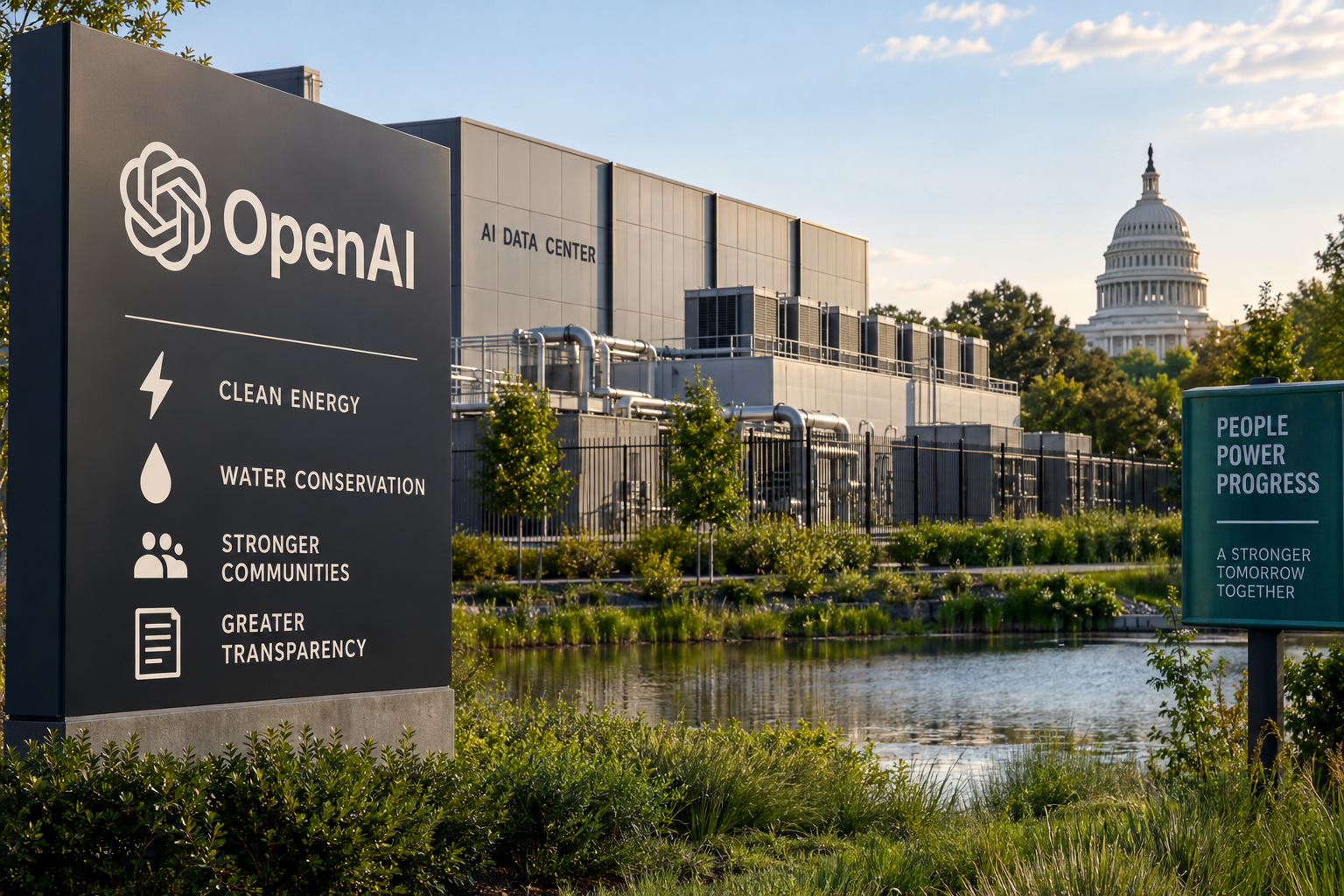
OpenAI has pledged to pay the full cost of the power its data centers use, to protect local water supplies with closed-loop or low-water cooling, and to publish water and electricity use for each site. The commitments, published as a National Community Compact and a Compute Campus Policy Blueprint, follow voter opposition to data centers in the midterm elections.
OpenAI has pledged to conserve local resources and open its data center operations to more public scrutiny, a move that comes just after Americans voted overwhelmingly against data centers in the midterm elections.
The company published two documents. The first, a National Community Compact, lays out what residents can expect from its future data centers. The second, a Compute Campus Policy Blueprint, proposes policies that would give communities a voice in development decisions and protect them from new costs if a facility is built where they live.
Will OpenAI's data centers raise electricity costs for nearby communities?
Electricity costs sit at the center of the pledge. OpenAI said once again that its data center operations will not raise electricity costs for nearby communities. The company says it will pay the full cost of the power it uses, along with the infrastructure buildouts and upgrades that utilities need to serve its facilities. Many residents worry that power providers could pass the expense of costly grid upgrades and sudden power spikes on to households and local businesses.
How will OpenAI protect local water supplies?
The company also committed to protecting local water supplies and developing a water plan for each community where it builds. It said it will prioritize closed-loop or low-water cooling, a system in which water circulates through a sealed circuit, absorbing and removing heat without being consumed. Because the water is not used up, the system does not need to be regularly replenished.
Will OpenAI publish data center water and electricity use?
OpenAI also promised more transparency. It will publish water and electricity use for each site and will not sign nondisclosure agreements with public officials. The company said it will create jobs for local workers and businesses as well.
According to Bloomberg, OpenAI said it has been working on these updates for months and had planned them before the election results came in. That timeline has not been independently confirmed.
Voters made their opposition to data centers clear. According to Data Centers on the Ballot, Americans voted in favor of 39 measures to restrict data centers in some form. Several Democrats who are outspoken critics of AI expansion also won seats, and they have proposed federal regulations to control data center activity.
Este artigo foi escrito com a assistência de IA.
News Factory APP - notícias agênticas para impulsionar seu SEO e AEO.