Can AI agents buy from Walmart?
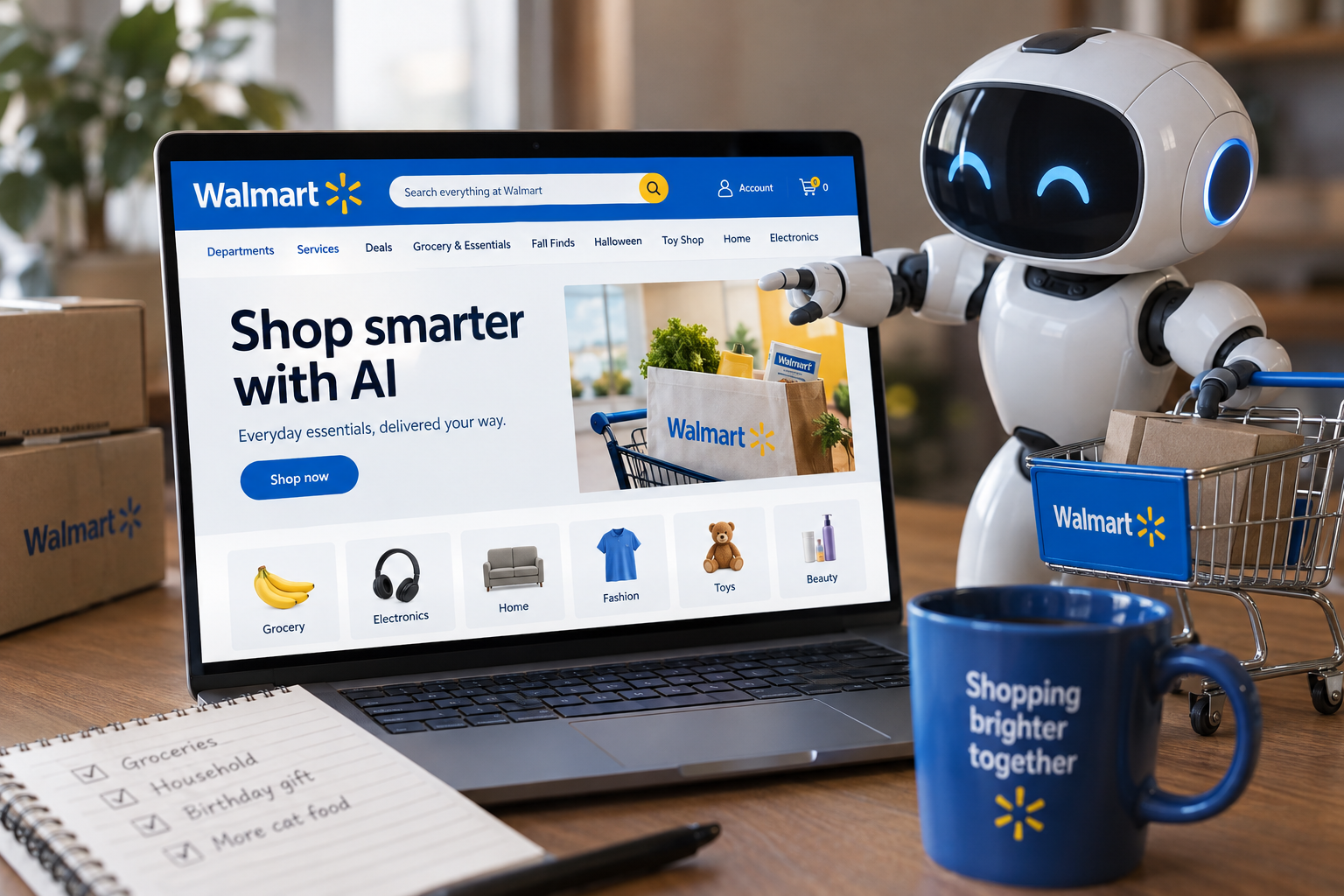
Walmart is opening its online store to AI shopping agents, and it is doing so on its own terms. The retailer announced Wednesday that it is launching an Agent Gateway, a set of tools that lets approved AI agents search its inventory and make purchases on a customer's behalf. The first pieces arrive next month.
The timing draws a sharp contrast with Amazon, Walmart’s largest competitor. Amazon recently began blocking AI agents from buying things for online shoppers. Several travel and booking sites have taken the same approach, locking agents out entirely. Walmart is going the other direction, and it already has integrations with popular AI apps, including ChatGPT and Gemini. It also announced a partnership with Meta’s Muse, a leading agent in the space.
Walmart president and CEO John Furner made the case at the Masters of Scale Summit in San Francisco. He said the company wants to be ready for a world where AI agents are a normal part of how people shop. The technology will support agentic shopping from both Walmart and Sam’s Club, the company’s discount warehouse chain.
The Agent Gateway is built on the Model Context Protocol, or MCP, an open standard originally created by Anthropic. The protocol lets AI agents connect to outside data sources, tools and workflows. Walmart says the gateway does more than make shopping smoother for agents. It also lets an agent find a customer’s usual items, such as a particular brand of milk, without handing over the customer’s broader shopping history or personal information.
Control is the central selling point. Walmart is rolling out Agent Profiles next month. Each AI agent a customer uses gets its own profile inside that customer’s Walmart account. Purchases made by the agent appear separately from the shopper’s own orders, so people can see exactly what their agents bought. The profile is created the first time someone uses a given agent to shop through the gateway.
How does Walmart control what AI agents can buy?
Customers decide how much latitude an agent gets. By default, Walmart requires approval for every AI agent purchase. Shoppers can also authorize transactions up to a spending limit they set, such as $100. Walmart compares the setup to adding someone as an authorized user on a credit card, where that person’s transactions are identified and the account holder can cap their spending. Customers can turn an agent off or delete its profile at any time. Agent support is open to anyone with a Walmart account, and a Walmart+ membership is not required.
Walmart has also published a set of terms for AI agents. They spell out how agents must operate and what they are allowed to do on the site. Agents must not take actions beyond what the shopper intends, cannot change a customer’s payment method and cannot access payment information. They can reach only the information needed to complete a given task. Agents that do not follow the terms will be blocked from Walmart’s site.
What happens if an AI agent buys the wrong item?
One provision may matter most to shoppers who are wary of trying the technology early. Walmart says its returns process applies even when an agent does not act as intended. If an agent buys the wrong item, a customer can still send it back under the standard policy, which takes some of the risk out of letting software spend money on their behalf.
The announcement leaves open how many shoppers will actually use agents once the tools arrive. What Walmart has made clear is its position. It is choosing to build a controlled path for AI agents to buy from its stores, while some of its biggest rivals are shutting that path off.
Este artigo foi escrito com a assistência de IA.
News Factory APP - notícias agênticas para impulsionar seu SEO e AEO.