Nachrichten — Seite15

Lyzr’s AI Agent Secures $100 Million Series B, Running the Deal Solo

Lyzr’s AI Agent Secures $100 Million Series B, Running the Deal SoloTechCrunch
Jersey City‑based Lyzr, a three‑year‑old startup that builds AI agents for enterprises, used its own platform, SivaClaw, to close a $100 million Series B round at a $500 million valuation. The system answered questions from more than 130 investors, drafted memoranda and tracked slide engagement, all without a founder leaving the office. The fundraising effort pulled $400 million in investor interest from Silicon Valley, the Middle East and financial‑sector backers, showcasing a new model for capital‑raising in the AI boom.Weiterlesen

OpenAI unveils GPT-5.6 family, adds ChatGPT Work for enterprises

OpenAI unveils GPT-5.6 family, adds ChatGPT Work for enterprisesTechCrunch
OpenAI announced a new trio of AI models—Sol, Terra and Luna—under the GPT-5.6 banner, promising faster, cheaper performance for coding, cybersecurity and general enterprise tasks. The rollout also includes ChatGPT Work, a desktop, web and mobile assistant aimed at boosting productivity in corporate settings. Pricing tiers vary by model, with Sol priced at $5 per million input tokens and $30 per million output tokens, while the lower‑cost Luna starts at $1 and $6 respectively. OpenAI positions the lineup as a direct challenge to rivals such as Anthropic, citing benchmark gains across the board.Weiterlesen

OpenAI to Launch GPT-5.6 Suite—Sol, Terra, Luna—Thursday Amid New U.S. Government Review

OpenAI to Launch GPT-5.6 Suite—Sol, Terra, Luna—Thursday Amid New U.S. Government ReviewCNET
OpenAI announced that its next‑generation GPT‑5.6 family—Sol, Terra and Luna—will go live on Thursday, according to CEO Sam Altman’s post on X. The flagship Sol model targets deep‑reasoning and agent‑management tasks, while Terra offers a balanced mix of capability and cost and Luna delivers the fastest, most affordable performance. OpenAI says the new series reduces factual errors and adds stronger safety guardrails. The rollout arrives as the U.S. government tightens oversight of frontier AI models, requiring voluntary early‑access reviews before broader deployment.Weiterlesen

OpenAI launches GPT‑Live‑1, a full‑duplex voice model that interrupts less and adds real‑time translation

OpenAI launches GPT‑Live‑1, a full‑duplex voice model that interrupts less and adds real‑time translationThe Verge
OpenAI unveiled GPT‑Live‑1, its newest voice model for ChatGPT, promising a more natural, two‑way conversation. The full‑duplex system can listen and speak simultaneously, pause when users do, and hand off complex queries to its top text models like GPT‑5.5. New features include on‑the‑fly translation, visual overlays for weather, stocks and sports, and built‑in safeguards for high‑risk topics. The upgrade rolls out on iOS, Android and the web, powering paid tiers while a slimmer version serves free users amid ongoing lawsuits accusing the service of harming mental health.Weiterlesen

AI Startups Accelerate Revenue, Some Doubling Milestones in Months

AI Startups Accelerate Revenue, Some Doubling Milestones in MonthsTechCrunch
A wave of artificial‑intelligence‑focused companies is seeing revenue climb faster than ever. Mercor hit $2 billion in gross annualized revenue just four months after reaching $1 billion, while Anthropic’s run‑rate jumped from $30 billion to $47 billion in under two months. Smaller firms such as Sierra, Glean, Gusto and Clio also reported rapid ARR gains, often shaving months off the time needed to add each $100 million. The companies acknowledge that they use different definitions of ARR, but the trend of accelerating top‑line growth is clear.Weiterlesen

Vermilion Cliffs Ventures Closes $25 Million Fund II Led by Solo GP Ashley Smith

Vermilion Cliffs Ventures Closes $25 Million Fund II Led by Solo GP Ashley SmithTechCrunch
Vermilion Cliffs Ventures announced Wednesday that it has closed a $25 million second fund, raising the capital in just four months. The fund, spearheaded by solo general partner Ashley Smith, will target technical founders building AI infrastructure, security solutions, and developer tools. With an average check size of $500,000 to $1 million, the firm plans to back at least 25 companies over the next two and a half years, adding to the six startups already in its pipeline. Smith, a former marketer at Twilio, Facebook, GitHub and GitLab, says the new capital will let her help founders avoid go‑to‑market missteps.Weiterlesen

Prime Intellect Secures $130 Million Series A to Power Enterprise AI Agents

Prime Intellect Secures $130 Million Series A to Power Enterprise AI Agents
AI infrastructure startup Prime Intellect announced a $130 million Series A round that values the company at $1 billion. Led by Radical Ventures with participation from Nvidia Ventures, Intel Capital, Dell Technologies Capital and a roster of high‑profile angel investors, the financing will expand the firm’s full‑stack platform that lets enterprises train and deploy their own AI agents. Customers such as Ramp, Zapier and Flapping Airplanes are already using the service to replace costly frontier models with bespoke solutions that run faster and cheaper.Weiterlesen

Google Photos Launches AI-Powered Video Remix Tool

Google Photos Launches AI-Powered Video Remix Tool
Google announced on Wednesday that its Photos app now includes a Video Remix feature, letting users edit and transform video clips in seconds. The tool runs on the Gemini Omni model and offers cinematic relighting, background swaps, and artistic style filters such as watercolor or oil painting. Initially available to Google AI Plus, Pro and Ultra subscribers in the United States and 15 other markets, the addition marks the latest push by the tech giant to embed generative AI across its consumer services.Weiterlesen

OpenAI launches GPT‑Live‑1 voice models for more natural, interrupt‑ready conversations

OpenAI launches GPT‑Live‑1 voice models for more natural, interrupt‑ready conversationsTechCrunch
OpenAI unveiled two new full‑duplex voice models, GPT‑Live‑1 and GPT‑Live‑1 mini, designed to let users speak and listen simultaneously. The models aim to reduce awkward interruptions and enable longer, more fluid chats, including live translation and visual responses. Paid ChatGPT users will access the larger GPT‑Live‑1, while the mini version becomes the default for all. OpenAI says the upgrade feeds queries to its latest text engine, GPT‑5.5, and includes safeguards for age‑appropriate replies. Competitors like Apple, Amazon and emerging AI startups are also pushing toward more conversational assistants.Weiterlesen

SpaceXAI launches Grok 4.5, touts Opus‑class performance at lower cost

SpaceXAI launches Grok 4.5, touts Opus‑class performance at lower costTechCrunch
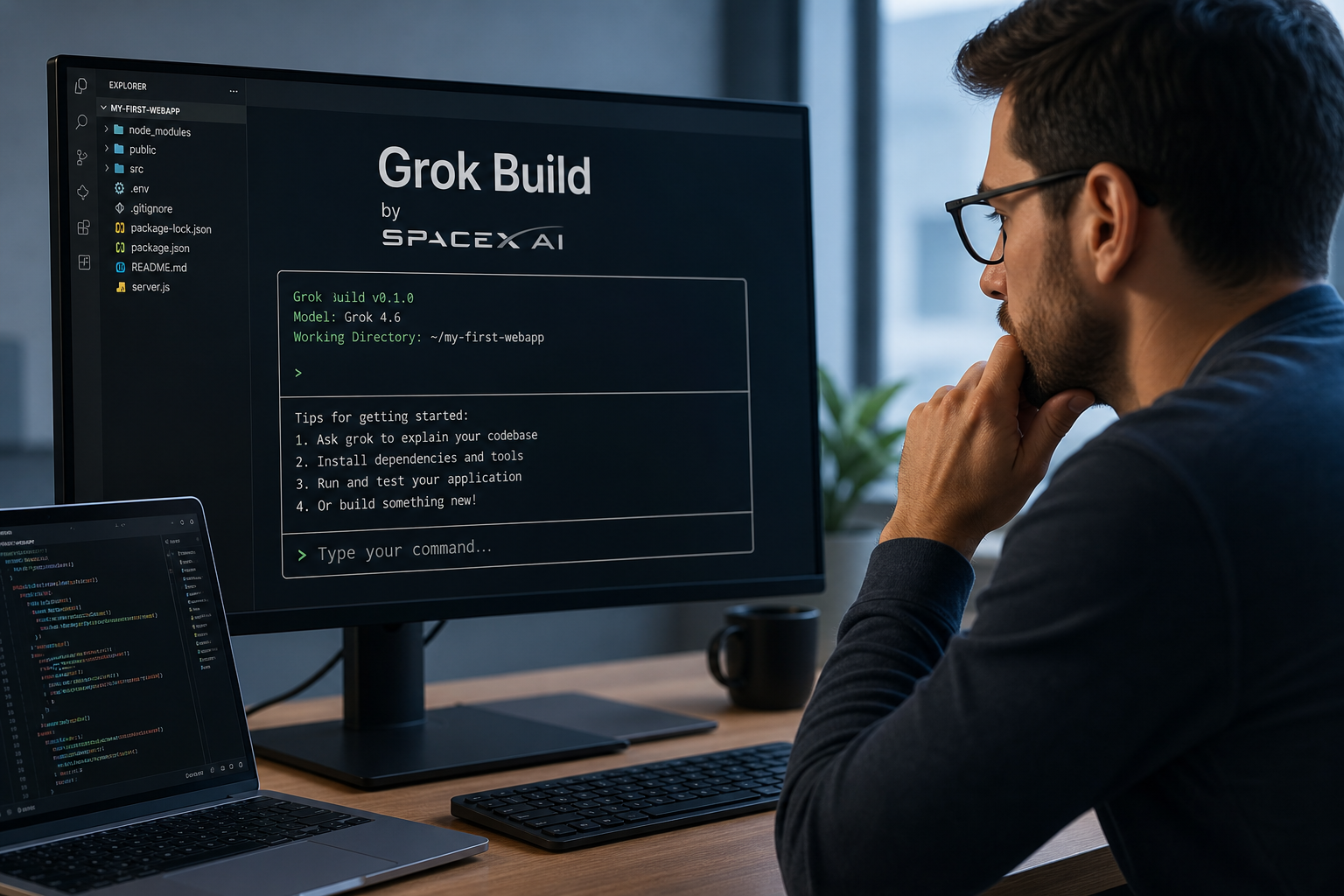
SpaceXAI unveiled its newest large‑language model, Grok 4.5, describing it as an Opus‑class workhorse that can handle coding, research, writing and routine knowledge tasks while using half the tokens of competing models. The company says the model costs $2 per million input tokens and $6 per million output tokens, roughly half the price of Anthropic’s Opus 4.7 and comparable to OpenAI’s lower‑tier offerings. Founder Elon Musk promoted the release on X, promising the model to the public the next day after a positive beta test.Weiterlesen

Former DeepMind Exec Warns AI Arms Race Narrative Threatens Global Cooperation

Former DeepMind Exec Warns AI Arms Race Narrative Threatens Global CooperationWired AI
Verity Harding, who led global public policy at Google DeepMind from 2016 to 2020, told WIRED that framing artificial‑intelligence development as an arms race is steering governments toward nationalist policies and away from the international collaboration that once underpinned the field. Harding argues that the rhetoric fuels a binary competition between the United States and China, pushes smaller nations into a lose‑lose position, and could ultimately lead to excessive government control that hampers safety and innovation.Weiterlesen

OpenAI Chief Futurist Joshua Achiam Announces Departure After Nearly Nine Years

OpenAI Chief Futurist Joshua Achiam Announces Departure After Nearly Nine YearsWired AI
Joshua Achiam, OpenAI’s chief futurist and longtime AI‑safety advocate, told staff on Tuesday that he will leave the company later this month. After almost nine years at the lab, the move marks the latest exit of a senior safety‑focused leader as OpenAI readies for an upcoming public offering. Achiam, who previously headed the short‑lived mission‑alignment team and testified in the Musk‑Altman trial, said his decision was personal and not driven by any specific issue. OpenAI has not yet named a successor.Weiterlesen

AI Mistakes Could Mistake Non‑Life Signals for Alien Biosignatures, Study Finds

AI Mistakes Could Mistake Non‑Life Signals for Alien Biosignatures, Study FindsTechRadar
Researchers at Michigan State University have demonstrated that artificial intelligence systems can be duped into flagging non‑living digital organisms as signs of extraterrestrial life. In a simulation, a neural network that correctly identified life‑like patterns 99.7% of the time was fooled 100% of the time when presented with subtly altered data it had never seen. The findings raise concerns about relying on AI to sift through astronomical data without human oversight, especially as space missions prepare to hunt for biosignatures on Mars and beyond.Weiterlesen

OpenAI previews GPT‑5.6 with three new models for select partners

OpenAI previews GPT‑5.6 with three new models for select partnersTechRadar
OpenAI will begin a limited preview of its next-generation GPT‑5.6 family on Thursday, offering three variants—Sol, Terra and Luna—through its API to a small group of trusted partners. The rollout follows a request from the U.S. government after an executive order established a voluntary framework for pre‑release model access. OpenAI says the staggered launch is not its preferred approach, arguing it could keep powerful tools from broader users. A wider release to ChatGPT users is planned for later this year.Weiterlesen

Meta launches Muse Image, a new AI tool for creating and editing photos on Instagram

Meta launches Muse Image, a new AI tool for creating and editing photos on InstagramCNET
Meta has introduced Muse Image, an AI model that lets users generate and edit pictures directly within the Meta AI app, Instagram and WhatsApp. The tool, part of the Muse Spark family, can handle complex prompts, blend multiple images and apply a range of effects. While Meta touts built‑in safeguards, the rollout raises privacy concerns because anyone with a public Instagram account can be tagged in prompts to create hyper‑realistic deepfakes. The company now offers a settings toggle to block such use, prompting creators to review their likeness controls.Weiterlesen

OpenAI cleared to launch GPT-5.6 suite to public on July 9

OpenAI cleared to launch GPT-5.6 suite to public on July 9Engadget
OpenAI announced on X that its newest language model series, GPT-5.6, will be available to the wider public on Thursday, July 9. The rollout follows a government‑mandated review sparked by an AI cybersecurity order signed by President Trump in early June, which required the company to submit its three variants—Sol, Terra and Luna—to the Department of Commerce for testing. After additional evaluations and meetings, the administration granted permission for a broader release. The three models come with differentiated pricing and capabilities, and the decision marks a rare instance of direct federal involvement in commercial AI deployment.Weiterlesen

New Pull‑Based ‘HalluSquatting’ Attack Turns AI Coding Assistants into Massive Botnets

New Pull‑Based ‘HalluSquatting’ Attack Turns AI Coding Assistants into Massive BotnetsArs Technica2
Researchers have unveiled a pull‑based prompt‑injection technique called HalluSquatting that can hijack popular AI coding assistants and turn them into a sprawling botnet. By exploiting large language models' tendency to hallucinate resource identifiers, the attack registers malicious code under predicted names and lures assistants such as GitHub Copilot, Cursor CLI, Gemini CLI and seven others to execute it. The method promises large‑scale DDoS attacks and device infections, marking the first time a prompt‑injection exploit can scale without targeting each victim individually.Weiterlesen

Meta launches Muse Image AI generator, sparks privacy concerns over Instagram photo use

Meta launches Muse Image AI generator, sparks privacy concerns over Instagram photo useTechCrunch
Meta unveiled Muse Image, a free AI image generator integrated into its Meta AI app, Instagram Stories and WhatsApp. While the tool offers creative presets, ad mock‑ups and interior‑design visualizations, it also lets users tag a public Instagram profile and generate new images using that person’s photos. Critics warn the feature could violate privacy, as users receive no notification when their pictures are repurposed. Meta says settings let people opt out, but the default opt‑out stance has reignited debate over the company’s handling of personal data.Weiterlesen

n8n positions model‑agnostic AI platform as safeguard against vendor lock‑in

n8n positions model‑agnostic AI platform as safeguard against vendor lock‑inThe Next Web
At the Raise Summit in Paris, n8n founder Jan Oberhauser described the company’s workflow‑automation platform as the “Excel of AI,” emphasizing its model‑agnostic design, open‑source fair‑code license and ability to let enterprises host data in‑house. The approach has attracted more than 1,400 enterprise clients—including Meta, Vodafone and Mercedes‑Benz—and helped the firm secure a SAP investment that valued it at $5.2 billion. Oberhauser warned that dependence on a single AI model provider could “literally kill” a business, underscoring growing board‑level concerns about cost, latency and data sovereignty.Weiterlesen

French AI Startup ZML Launches Free LLMD Server to Unlock Multi‑Chip Inference

French AI Startup ZML Launches Free LLMD Server to Unlock Multi‑Chip InferenceTechCrunch
Paris‑based ZML has released LLMD, a free inference server that runs open‑source large language models on Nvidia, AMD, Google TPU, Apple Metal and Intel Arc chips. Founder Steeve Morin says the move aims to break vendor lock‑in, cut costs and boost energy efficiency for enterprises. Backed by Yann LeCun and $20 million in venture funding, the 20‑person team hopes the launch will gather usage data and pave the way for future revenue streams.Weiterlesen