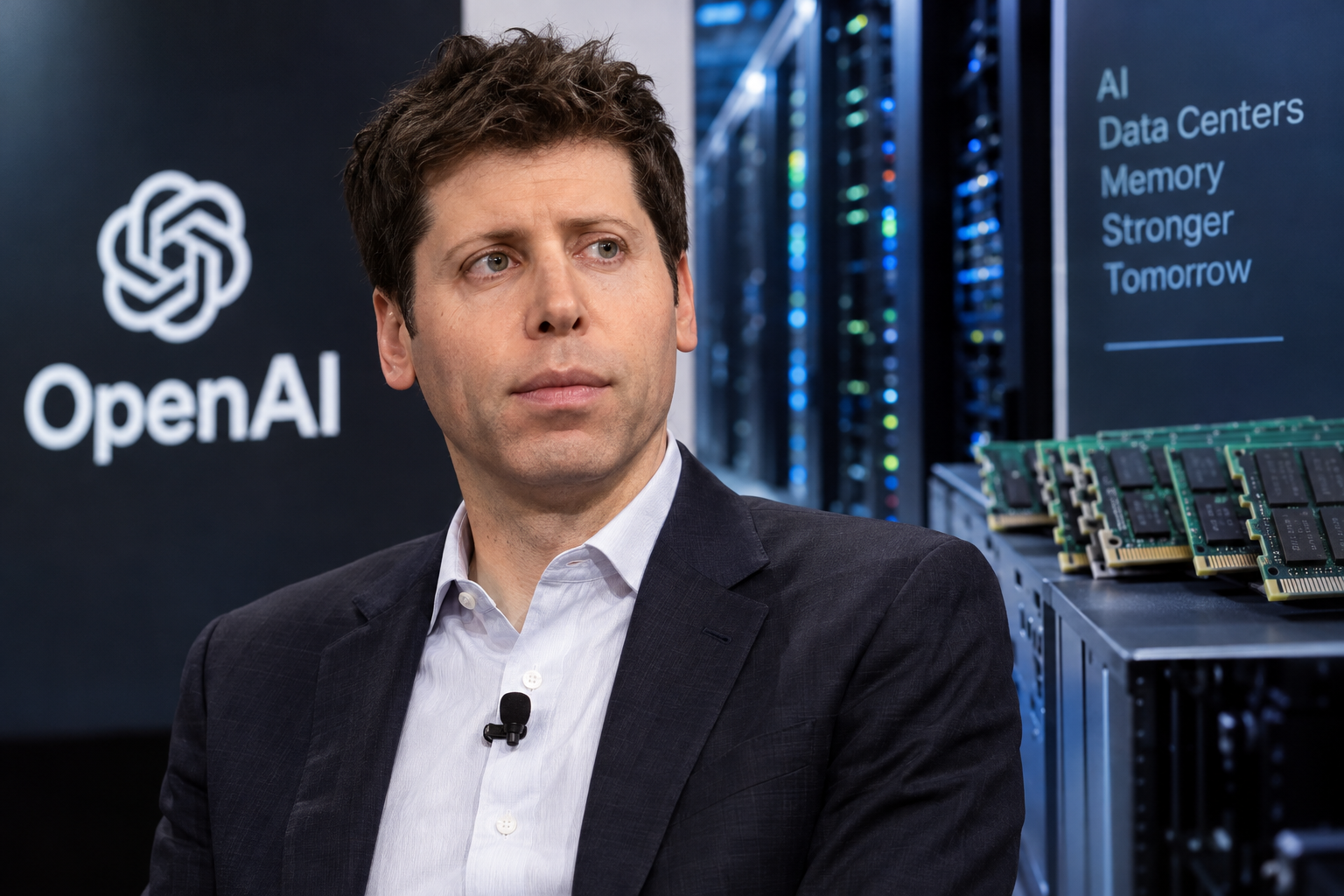
OpenAI CEO Sam Altman said on Monday at Semafor's Silicon Valley & The World summit that he wants people to have plenty of RAM and that everyone should be able to buy a lot of memory for their own computer. He is also clarifying remarks he says were taken out of context, after calling personal-computer RAM 'quite terrible.'
OpenAI CEO Sam Altman tried again on Monday to clear up his comments about computer memory, telling an audience at Semafor’s Silicon Valley & The World summit that he wants people to have plenty of RAM.
Does Sam Altman want people to have more RAM at home?
“I want to be clear, I want people to have a lot of RAM, I think everybody should be able to buy a lot of RAM for their own computer,” Altman said onstage. “I think the home tinkering is great.”
The clarification comes after a controversy that started last month. In an appearance on the Cheeky Pint podcast, Altman said it was “quite terrible” for everyone to have RAM in personal computers rather than in data centers. He later followed up with posts on X, writing “i want you to have so much ram” and saying the original remarks had been “taken out of context.”
Why are memory prices rising for phones and game consoles?
The debate is playing out against a tight memory market. AI companies have been buying up the world’s memory supply for data centers, and that demand has led to ongoing price increases for everything from phones to game consoles.
Altman addressed supply constraints directly. He said OpenAI has “been constrained by different things at different times,” including memory, rack assembly, data center capacity and “some random component.”
Onstage Monday, he said the industry should have seen the shortage coming. “A few years ago we started saying the world needs to build a lot more memory supply chain in particular,” he said. He then acknowledged how sharply prices have climbed. “The world did not build out that much, and now we have seen DRAM prices — I don’t know exactly, but maybe they went up 5x, 7x, something like that.”
Altman said a comment he made had been misinterpreted, but he stood by one part of it. If the world is going to face a memory shortage, he argued, the best use of that supply would be to share memory so it runs “100 percent of the time rather than sometimes off in someone’s edge device.” He was careful not to present that as a settled policy. He pointed to other tradeoffs, including people running AI systems at home. “Maybe it’s not the reason to make the decision but that’s what I was trying to say,” he said.
Altman also weighed in on Nvidia, where Jensen Huang has resigned as CEO. Altman said he “doesn’t know enough” to say whether Huang should be reinstated.
Cet article a été rédigé avec l'assistance de l'IA.
News Factory APP - actualités agentiques pour booster votre SEO et AEO.