Actualités

OpenAI Delays Public Release of GPT‑5.6 After White House Request

OpenAI Delays Public Release of GPT‑5.6 After White House RequestWired AI
OpenAI announced Friday it will postpone the public rollout of its next‑generation GPT‑5.6 models at the request of the White House. The company said the delay will allow it to share the new models only with a small, government‑approved group of customers before expanding access. OpenAI highlighted three variants—Sol, Terra and Luna—and stressed that the step is temporary while it works with the administration on a cybersecurity framework tied to a recent executive order.Lire la suite

OpenAI launches GPT‑5.6 suite amid Trump administration oversight

OpenAI launches GPT‑5.6 suite amid Trump administration oversightThe Verge
OpenAI rolled out the GPT‑5.6 model suite on Friday, introducing three variants—Sol, Terra and Luna—just hours after the company agreed to stagger the release at the request of the Trump administration. Sol, the flagship, costs $5 per million input tokens and $30 per million output tokens; Terra is priced at half that rate and Luna even lower. The launch emphasizes safety, with the models trained to reject prohibited cyber assistance and equipped with an expanded safety stack. The preview will be monitored by the administration, which will grant access case‑by‑case, while OpenAI aims for broader availability in the coming weeks.Lire la suite

OpenAI rolls out Sol model to 20 government‑cleared partners under Trump AI order

OpenAI rolls out Sol model to 20 government‑cleared partners under Trump AI orderThe Next Web
OpenAI has begun a limited preview of Sol, its most powerful AI model, granting access to roughly 20 partners whose participation was individually approved by the U.S. government. The move fulfills a request from the Trump administration to stagger the rollout under the new AI executive order, marking the first time a frontier model has been released through a government‑managed access list. Sol leads a three‑tier series that also includes Terra and Luna, and it is available on Amazon Bedrock. OpenAI says the arrangement is a temporary test of the voluntary framework and does not intend it to become the norm.Lire la suite

OpenAI appoints former Uber exec Prabhjeet Singh as first managing director for India

OpenAI appoints former Uber exec Prabhjeet Singh as first managing director for IndiaTechCrunch
OpenAI announced the hiring of Prabhjeet Singh, the former president of Uber India and South Asia, as its inaugural managing director for the country. Singh will join the AI firm in September and report to Kiran Mani, the Asia Pacific managing director. The move signals OpenAI’s push to deepen its footprint in what it calls its second‑largest market after the United States, expanding responsibilities that span consumer growth, enterprise adoption, partnerships, regulatory engagement and operations.Lire la suite

OpenAI limits GPT-5.6 rollout after U.S. government request

OpenAI limits GPT-5.6 rollout after U.S. government requestTechCrunch
OpenAI announced Friday that it will restrict access to its newest GPT‑5.6 family of models to a small group of trusted partners following a request from the U.S. government. The rollout, which includes the flagship Sol model along with Terra and Luna variants, is being held back under the Trump administration’s new executive order that asks AI firms to submit advanced systems for review before public release. OpenAI called the move a short‑term step, emphasizing that it does not see such government access as a long‑term norm, while pledging to expand availability in the coming weeks.Lire la suite

U.S. Regulators Put OpenAI’s GPT‑5.6 and Anthropic’s Models in Limited Preview

U.S. Regulators Put OpenAI’s GPT‑5.6 and Anthropic’s Models in Limited PreviewTechCrunch
The U.S. government is tightening control over advanced AI releases, moving OpenAI’s upcoming GPT‑5.6 and Anthropic’s Fable and Mythos models into a customer‑by‑customer preview. Officials say the step is meant to ensure safety, but the move could delay commercial rollouts and strain AI firms’ finances at a critical growth stage. Industry observers warn the new approval process may slow model development, impact data‑center investments, and reshape competition among leading labs.Lire la suite

xAI’s Grok Generates Majority of Traffic from Adult Content, Report Finds

xAI’s Grok Generates Majority of Traffic from Adult Content, Report FindsEngadget
A new report in The Information, citing two former xAI employees, says that more than half of the traffic to the company’s Grok chatbot comes from users seeking pornographic or other adult material. The finding reveals that many customers are routing NSFW requests through Grok’s cheaper coding model, boosting revenue from illicit content that was not disclosed in the firm’s IPO filings. Engineers have struggled to balance the demand for explicit chats with safeguards against child sexual abuse material, while the company set aside $530 million to cover potential legal costs.Lire la suite

OpenAI to Limit Initial ChatGPT 5.6 Access to U.S. Government‑Approved Users

OpenAI to Limit Initial ChatGPT 5.6 Access to U.S. Government‑Approved UsersEngadget
OpenAI will roll out its upcoming ChatGPT 5.6 model behind a government‑screened gate, allowing only customers cleared by federal officials during a preview phase. A staff memo from CEO Sam Altman says access will be approved case‑by‑case, with a broader release expected weeks later. The move follows an executive order signed by President Donald Trump that urges AI firms to submit powerful models for a voluntary federal review, and comes after Anthropic halted two models under a similar directive.Lire la suite

OpenAI to Delay GPT-5.6 Rollout After Trump Administration Request

OpenAI to Delay GPT-5.6 Rollout After Trump Administration RequestThe Verge
OpenAI announced it will postpone the full release of its next model, GPT-5.6, following a request from the Trump administration. The company plans a limited preview for a select group of enterprise customers, with the government reviewing each access request individually. The move contrasts with a stricter directive given to rival Anthropic, which must suspend foreign‑national access to its Mythos 5 and Fable 5 models. Industry observers say the decision signals a shift toward tighter U.S. AI oversight despite earlier promises of a fast‑track approach.Lire la suite

Patronus AI Secures $50 Million Series B to Scale Digital Simulations for AI Agent Testing

Patronus AI Secures $50 Million Series B to Scale Digital Simulations for AI Agent TestingTechCrunch
San Francisco‑based Patronus AI announced a $50 million Series B round led by Greenfield Partners, bringing its total funding to $70 million. The startup, founded by former Meta researchers Anand Kannappan and Rebecca Qian, builds simulated digital environments that stress‑test AI agents on complex, real‑world tasks. With revenue up fifteenfold in the past year, the company aims to expand its digital‑world models for software engineering, finance and beyond, giving AI labs a reliable way to verify agent performance before deployment.Lire la suite

White House Presses OpenAI to Limit Release of New GPT Model Amid Safety Concerns

White House Presses OpenAI to Limit Release of New GPT Model Amid Safety ConcernsTechCrunch
OpenAI will initially share its latest language model, GPT 5.6, only with a handful of trusted partners after the Trump administration urged a cautious rollout. Officials from the Office of the National Cyber Director and the Office of Science and Technology Policy met with CEO Sam Altman, who said the government will review access on a case‑by‑case basis. The move mirrors Anthropic’s earlier decision to keep its powerful Claude Mythos model under wraps, reflecting growing worries that advanced AI could be weaponized.Lire la suite

AI Titans Back New Nonprofit RAISE US with $500 Million to Retrain Workers

AI Titans Back New Nonprofit RAISE US with $500 Million to Retrain WorkersThe Next Web
OpenAI, Anthropic, Amazon, Microsoft and a coalition of corporations have pledged more than $500 million to RAISE US, a nonpartisan nonprofit launched by former Commerce Secretary Gina Raimondo and former Indiana Governor Eric Holcomb. The group aims to partner with state governors and employers to develop pilot programs that retrain workers for an AI‑driven economy. With a $1 billion multi‑year funding goal, RAISE US will start projects in Utah, Arkansas, Maryland and Connecticut, testing everything from AI‑powered career tools to wage‑insurance schemes.Lire la suite

Former Databricks AI Lead Unveils Oscillator‑Based Chip Promising 1,000‑Fold Power Savings

Former Databricks AI Lead Unveils Oscillator‑Based Chip Promising 1,000‑Fold Power SavingsTechCrunch
Naveen Rao, who previously headed AI efforts at Databricks, announced that his new startup Unconventional AI has released its first image‑generation model, Un‑0. Built on a software simulation of a novel oscillator‑based computer architecture, the model matches the output quality of leading diffusion systems while consuming dramatically less energy. Rao says the approach could slash AI inference power use by up to a thousand times, a claim that, if realized in hardware, would reshape the economics of large‑scale machine‑learning deployments.Lire la suite

Anthropic Calls for Penalties on Alibaba Over Claude Model Copy

Anthropic Calls for Penalties on Alibaba Over Claude Model CopyArs Technica2
Anthropic has lodged a formal complaint urging U.S. policymakers to punish Alibaba for what it describes as a "brazen" effort to duplicate its Claude AI model. The startup argues that Alibaba’s actions violate a recent Trump administration memo warning against foreign cloning of frontier AI systems. In a letter to Congress, Anthropic outlines three legislative steps – antitrust reforms, tighter export controls on chips, and penalties for Chinese labs – to curb what it sees as a growing threat from Chinese AI distillation attacks.Lire la suite

Anthropic’s Claude Gains Ground with Paying Consumers, Data Shows

Anthropic’s Claude Gains Ground with Paying Consumers, Data ShowsTechCrunch
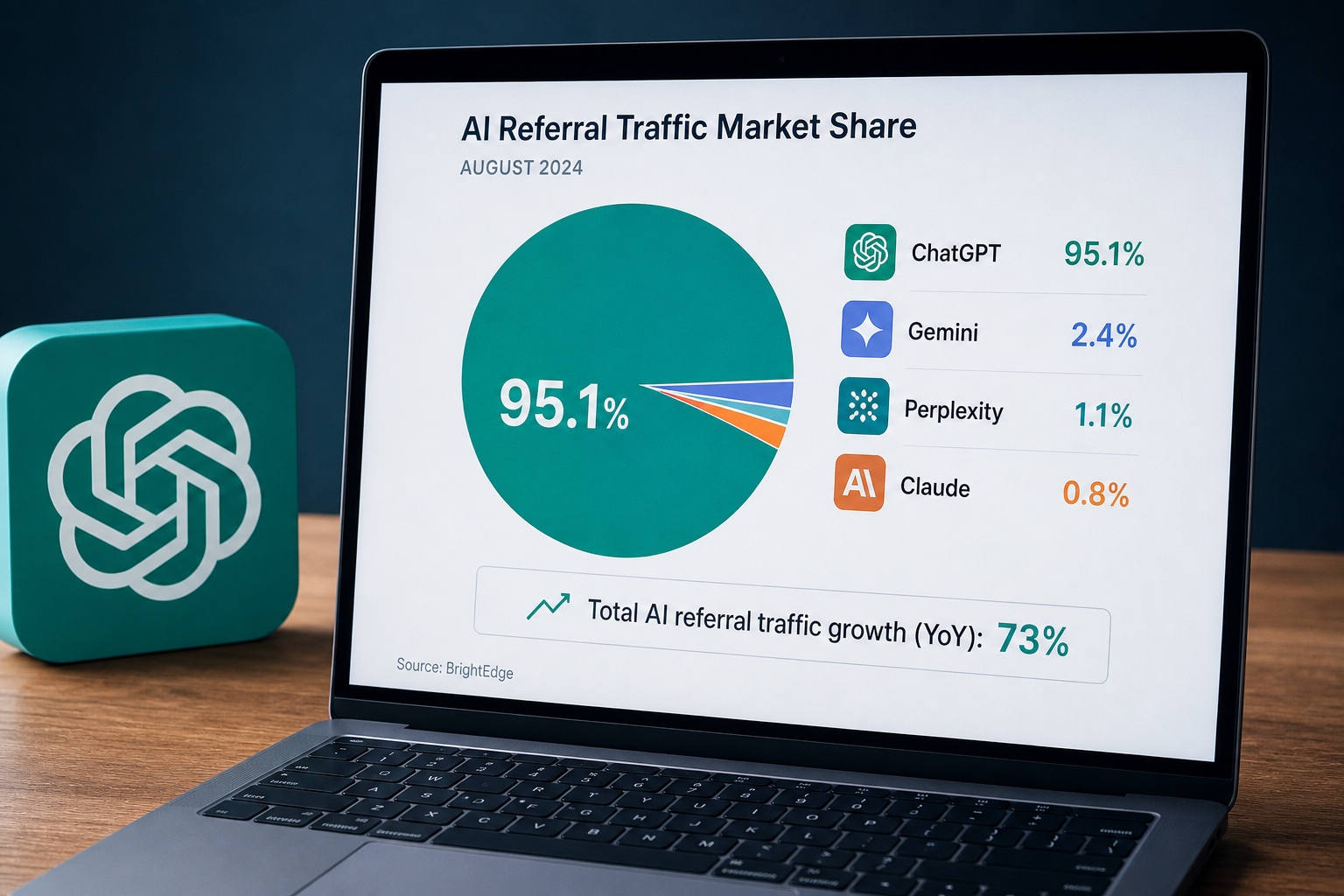
Credit‑card analytics firm Indagari reports that Anthropic’s Claude AI has seen a 75% rise in paying users since January 2026, signaling growing consumer appeal beyond its traditional enterprise base. The surge continued after Anthropic refused a U.S. government request to use its models for surveillance, and online learning platform DataCamp says interest in Claude courses has outpaced ChatGPT three‑to‑one among self‑directed learners. While ChatGPT remains the dominant consumer AI by far, Claude’s revenue and awareness are climbing as the company approaches a potential public listing.Lire la suite

OpenAI and Broadcom unveil Jalapeño chip for LLM inference

OpenAI and Broadcom unveil Jalapeño chip for LLM inferenceArs Technica2
OpenAI and Broadcom announced Jalapeño, a new ASIC built from the ground up to run large‑language‑model inference in data centers. The partnership leveraged nine months of joint design work and insights from OpenAI researchers to create a chip that promises substantially better performance per watt than existing solutions. Early tests show the hardware outpaces current state‑of‑the‑art efficiency, though full performance metrics are still pending a detailed technical report slated for release in the coming months.Lire la suite

OpenAI upgrades free GPT-5.5 model, boosting ChatGPT’s context and accuracy

OpenAI upgrades free GPT-5.5 model, boosting ChatGPT’s context and accuracyEngadget
OpenAI has rolled out a new version of its free GPT-5.5 Instant model, the engine behind ChatGPT, enhancing the chatbot’s ability to understand nuanced queries, retain context across exchanges, and reduce hallucinations. The update, first announced in May, now promises fewer factual errors, better handling of complex questions, and more relevant location‑based recommendations, delivering a smoother experience for the millions who rely on the free service.Lire la suite

AI Super PACs Dump $27 Million into New York Primary as Alex Bores Falls Short

AI Super PACs Dump $27 Million into New York Primary as Alex Bores Falls ShortThe Verge
More than $27 million poured into a New York congressional primary as AI‑focused super PACs battled over Assemblyman Alex Bores' bid for the 12th district. Bores, a coauthor of the state‑level RAISE Act, narrowly lost to fellow Democrat Micah Lasher. Pro‑Bores groups spent $19.26 million, while the rival Leading the Future PAC, funded by OpenAI, Palantir and Andreessen Horowitz executives, contributed $8.15 million. The costly showdown, described as a bellwether for AI regulation politics, highlighted the growing influence of tech money in local races.Lire la suite

China's LineShine Tops Global Supercomputing Rankings Using Homegrown Chips

China's LineShine Tops Global Supercomputing Rankings Using Homegrown ChipsThe Next Web
China’s LineShine supercomputer, housed at the National Supercomputing Center in Shenzhen, claimed the top spot on the TOP500 list this week, achieving 2.198 exaflops without a single Nvidia, AMD or Intel chip. Built entirely on domestically designed Arm‑based processors and running the Chinese Linux variant KylinOS, the system marks the first time in nearly a decade that a Chinese machine has led the world’s fastest‑computer ranking. The achievement underscores Beijing’s push for self‑sufficiency after years of U.S. export restrictions on advanced semiconductor technology.Lire la suite

Mistral launches OCR 4, a self‑hosted document AI aimed at enterprise back‑office tasks

Mistral launches OCR 4, a self‑hosted document AI aimed at enterprise back‑office tasksThe Next Web
French AI firm Mistral unveiled OCR 4 on June 23, a lightweight model that transforms PDFs, Word files and other documents into structured data. The system draws bounding boxes, tags each block and assigns confidence scores, supporting 170 languages and running on a single container for on‑premises deployment. Priced at $4 per 1,000 pages, the tool targets back‑office automation such as invoice processing, compliance checks and retrieval pipelines, while offering European customers a sovereign alternative to U.S. cloud services.Lire la suite