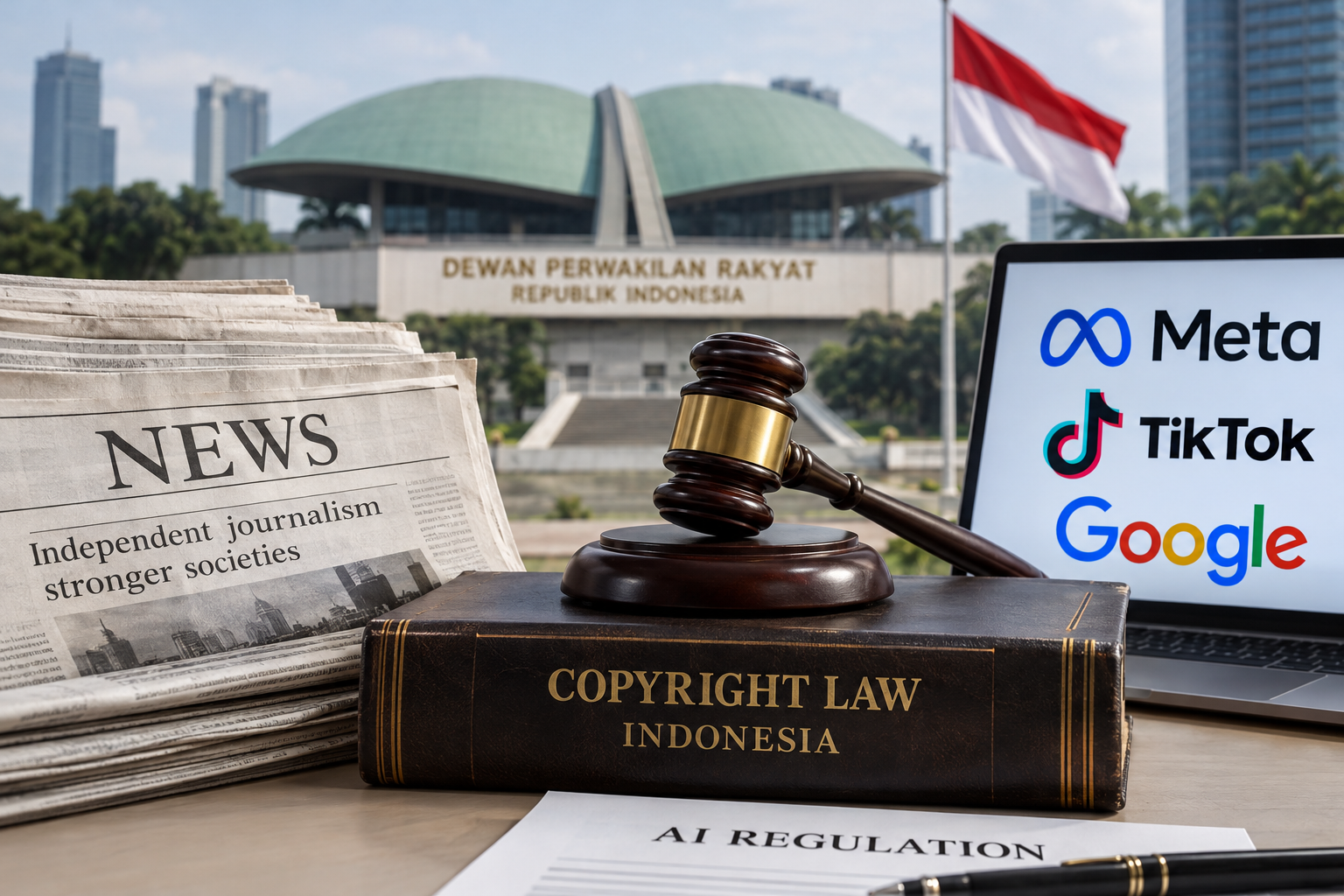
Meta, TikTok and Google argued at an Indonesian parliamentary hearing on Wednesday against planned revisions to the country's copyright law. The bill would require digital platforms to pay publishers for news content and set rules for artificial intelligence, which would make Indonesia the first in Southeast Asia to fold AI into its copyright framework.
Meta, TikTok and Google lined up at an Indonesian parliamentary hearing on Wednesday to argue against planned revisions to the country's copyright law, Reuters reported from Jakarta.
What would Indonesia's copyright bill do for AI?
The bill would require digital platforms to compensate publishers for displaying news content. It would also set rules for artificial intelligence. If it becomes law, Indonesia would be the first country in Southeast Asia to fold AI into its copyright framework, according to Reuters, which first reported the draft in July.
Why do Meta, TikTok and Google oppose Indonesia's copyright bill?
Google's Indonesia government affairs manager, Agung Pamungkas, told lawmakers that requiring platforms to pay for showing links to news would end up limiting Indonesians' access to that news.
Meta's public policy head in Indonesia, Berni Moestafa, made a similar case but framed it around the publishers the law is supposed to protect. "Publishers could lose readership traffic as well as potential advertising and subscription revenue," he told the hearing. He added that directing readers to an article is different from republishing it.
TikTok focused its objections on the AI provisions. Noudhy Valdryno, the company's Indonesia policy chief, said disclosure requirements should not apply when AI merely assists in creating content rather than fully generating it. He also urged lawmakers to preserve safe harbor protections. Platforms, he said, cannot reliably determine who owns a copyright or holds a license to a given work.
The arguments are not new. Platforms made the same points against Australia's news bargaining code and Canada's Online News Act. In Canada, Meta chose to block news entirely rather than pay. Indonesia has already pushed platforms toward publisher deals through a 2024 presidential regulation, and the new bill would write that approach into copyright law.
Why is Indonesia's bill different from earlier news bargaining laws?
The AI component is what sets Jakarta's proposal apart. News publishers and rights holders are currently fighting AI companies case by case in U.S. courts, including over the Gemini lawsuit and the still-unresolved question of fair use. Indonesia is proposing to set the rules by statute instead.
That is what the platforms appear most eager to head off. Indonesia is the world's fourth most populous country, and a copyright law that defines AI obligations there could give other legislatures in the region a model to follow.
Cet article a été rédigé avec l'assistance de l'IA.
News Factory APP - actualités agentiques pour booster votre SEO et AEO.