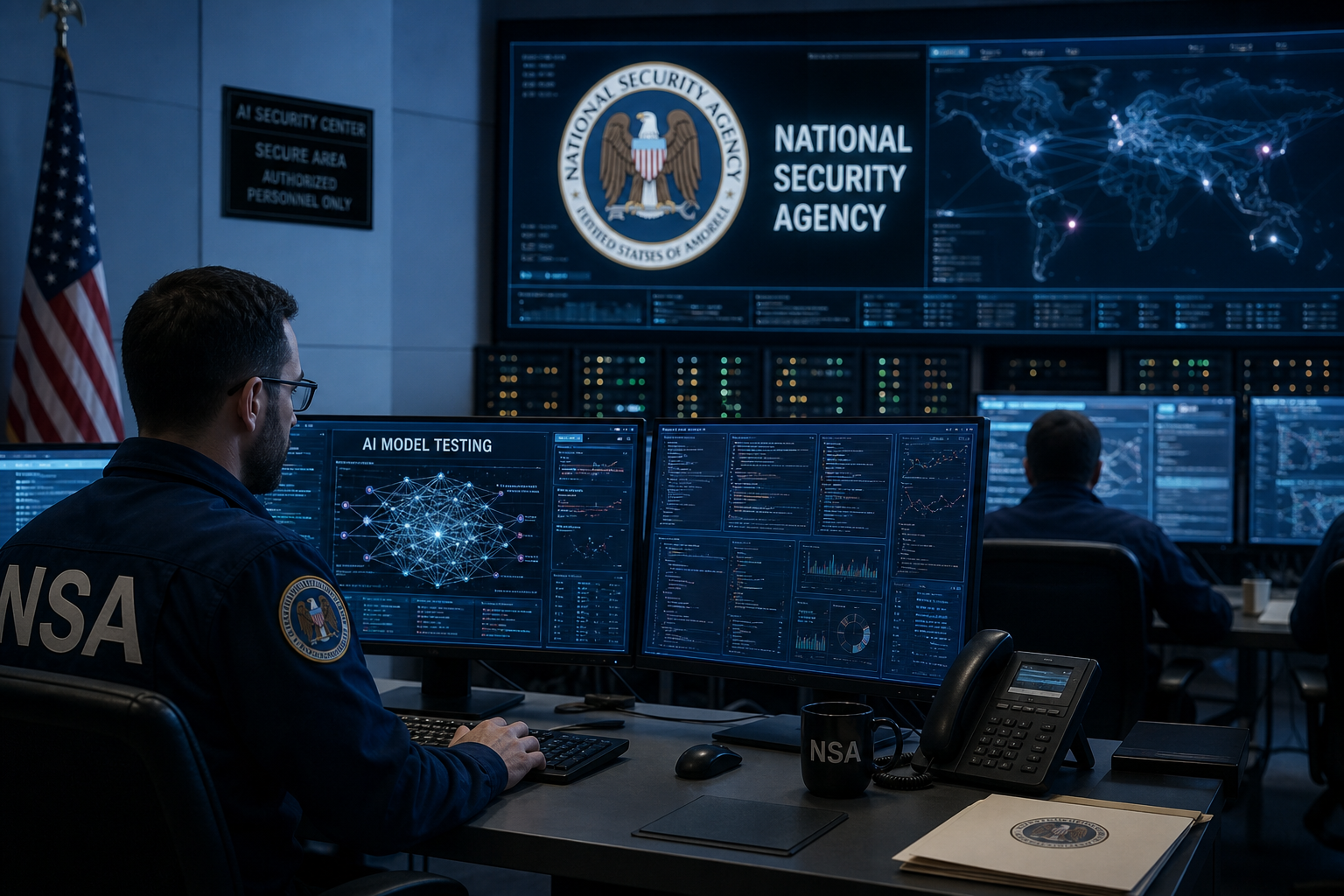
The National Security Agency's efforts to test advanced artificial intelligence models are coming with a hefty price tag, with billions of dollars being spent this year alone. This significant investment has led lawmakers to question the feasibility of a comprehensive AI regulatory system, which could cost the government tens of billions of dollars per year.
President Donald Trump has been resistant to calls for greater federal oversight of AI, but a string of high-profile hacking and security incidents has prompted the NSA's Artificial Intelligence Security Center to begin testing frontier models to identify potential national security vulnerabilities. The cost of these efforts is bringing new urgency to the debate about the government's role in reviewing AI models designed by powerful companies.
Estimates of prior proposals to establish new federal AI regulatory oversight suggested a far lower price tag. For instance, the Congressional Budget Office estimated that the AI Security and Innovation Act, a bipartisan House proposal, would cost roughly $20 million per year. A separate bill in the House to establish a new reporting and tracking system for AI calls for $36 million in total over the next five years.
Some tech leaders, like billionaire Elon Musk, have suggested that companies should review each other's models prior to release without government oversight. However, some AI safety experts have rejected this model, arguing that it would allow companies to police themselves. An alternative is for the government to levy a tax on AI companies to fund safety operations, ensuring independence and fairness.
The NSA's AI testing efforts are currently being funded by classified portions of the federal national security budget. The exact dollar amount spent so far is not clear, but the Pentagon has declined to comment on the technical architecture or resource allocation for its AI tools. The biggest AI-related cost to the NSA has been the extra computing power required to run and test the models, with purchasing computing power becoming increasingly expensive worldwide.
Another significant expense is hiring personnel, with top AI engineers being offered salaries in the hundreds of millions of dollars. The NSA is widely regarded as having the deepest roster of technical experts within the government, but it may still struggle to compete with the giant pay packages offered by companies. Nathan Calvin, general counsel at Encode, an AI advocacy organization, noted that having in-house AI evaluation capability is extremely important but also genuinely expensive.
Experts have pushed for lawmakers to strengthen third-party audits of AI models, with Nat Purser, director of U.S. Policy at the AI Verification and Evaluation Research Institute, arguing that the government should make the necessary investments. Purser also suggested that AI companies could foot the bill if taxpayers are paying large sums to evaluate the models, proposing an assessment on frontier developers to help fund independent audits.
Cet article a été rédigé avec l'assistance de l'IA.
News Factory APP - actualités agentiques pour booster votre SEO et AEO.