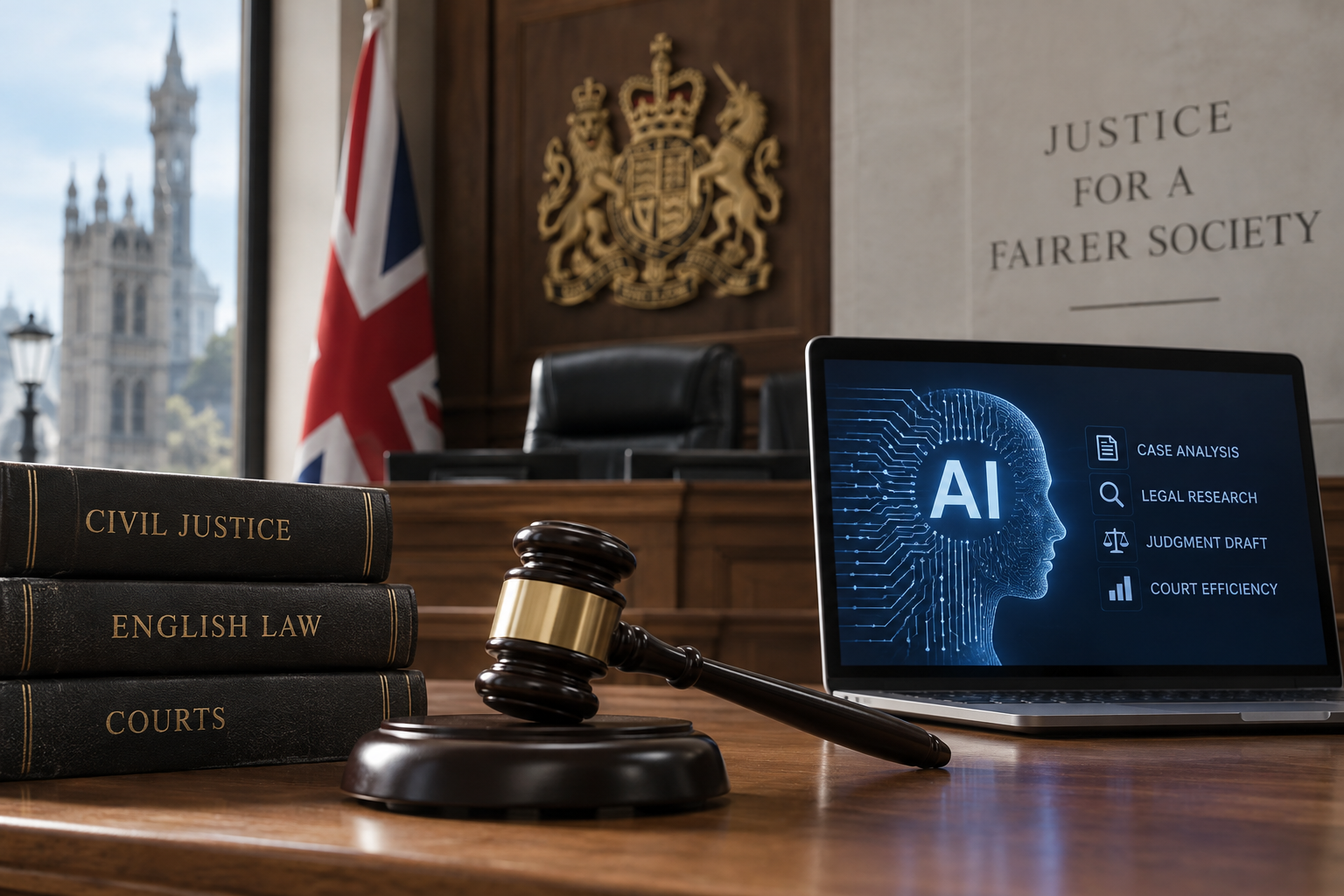
Geoffrey Vos, Master of the Rolls, believes artificial intelligence could decide a large number of civil cases in England. He is not arguing that every case should go to a machine. Before retiring in a few days, he wants the legal community and public to debate where human judgment must remain central, and how far judges should use AI.
One of England's top judges believes artificial intelligence could decide a large number of civil cases. The harder question, he says, is where the boundaries should sit.
Geoffrey Vos will retire in a few days as Master of the Rolls, the most senior position in England's civil justice system. Before he leaves, he is trying to start a public debate about whether judges should use AI at all, and if so, how far that use should go.
Could AI decide many civil cases in England?
Where should human judgment stay in court decisions?
Vos's position is that AI could take on a significant share of civil matters. He is not arguing that every case belongs in a machine's hands. Instead, he wants the legal community and the public to consider where human judgment must remain at the center of a decision.
What concerns do critics raise about AI in courts?
The push comes as courts in many countries weigh the same questions about automated tools. Supporters point to faster rulings and lower costs for litigants. Critics worry about accountability, transparency and whether a system trained on past data can treat every party fairly.
WIRED reported on Vos's comments, noting that his remarks are aimed less at settling the question than at forcing it into the open before he steps down from one of the country's most influential legal roles.
Cet article a été rédigé avec l'assistance de l'IA.
News Factory APP - actualités agentiques pour booster votre SEO et AEO.