What is vibe coding?
Musicians with little or no coding background are now building their own production software, using nothing more than plain-language prompts typed into an AI chatbot. The practice, known as vibe coding, is pushing a wave of new audio plugins onto the market, and it is raising hard questions about quality and security.
Plugins add new instruments and effects to a digital audio workstation, or DAW. Building one has historically been expensive and technically demanding. Plugins often have to run across different operating systems and DAWs, and developers need expertise in programming languages, audio engineering and user interface design. For most music enthusiasts, that meant either paying a team of developers or spending long stretches learning advanced code.
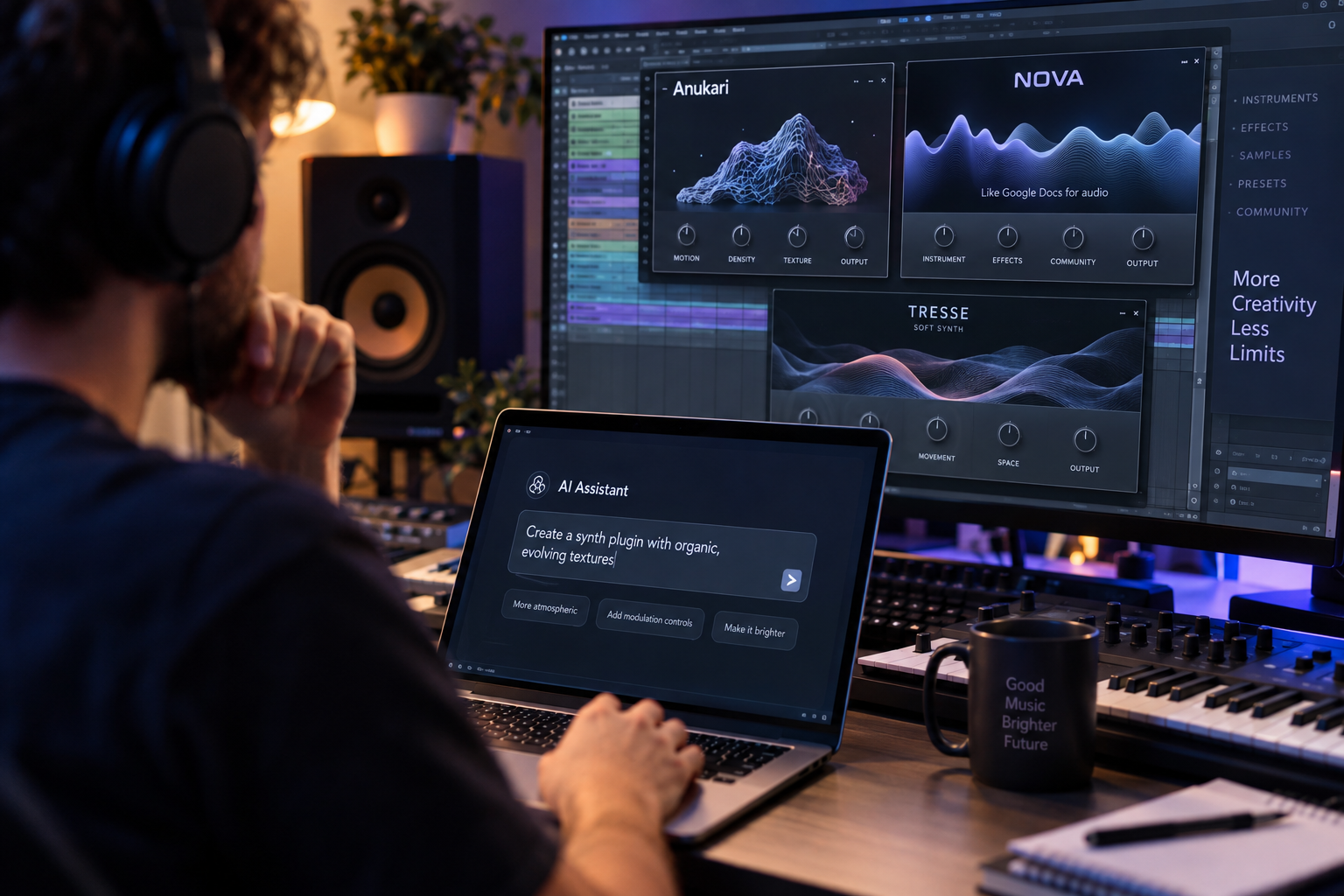
Vibe coding changes that math. Evan Mezeske, a former Google software engineer, used the technique to build Anukari, a plugin he described in an interview with the music production publication Music Tech. According to Mezeske, the project required “a huge thousand-line design essay and then a thousand iterations on that where I gave it feedback and provided direction.” It was not a push-button process, but it was far less work than conventional development.
Anukari is a synthesizer that relies on a “fully interactive 3D physics simulation” to produce sounds ranging from “alien communion” to “spiderweb gong chill time.” Lunacy Audio used AI programs to help its engineers build Nova, which the company describes as “like Google Docs for audio.” The plugin lets users download instruments from GRAMMY-winning composers and producers. Tresse, a soft synth from Vald Labs, is another AI-assisted plugin that has drawn positive reviews.
The tools are arriving fast. Creators are launching paid and open-source options on platforms such as GitHub at unprecedented rates, and some predictions have the plugin market doubling by 2033. The surge has produced both enthusiasm and skepticism across the music industry.
Are AI-built audio plugins any good?
The skeptics are loud. Rapper, producer and YouTuber SumnSumnSumn HTK has led a campaign against what he calls “AI slop plugins,” criticizing vibe-coded replicas of popular audio software that he says perform poorly. Sam Willings, an editor at MusicTech, wrote that the publication’s inboxes had been flooded with an “untenable influx of AI slop” plugins. Others on social media have questioned whether AI-coded plugins can be trusted to work well at all.
Are AI-coded plugins secure?
Security is another concern. A recent study by researchers at Apiiro found that AI-assisted teams produced code with 10 times the security risks of their non-AI counterparts. That matters more as non-coders move into the space, since they may lack the programming skills needed to check the work of their AI agents. Some critics also argue that paywalls limit the democratizing effect of the trend, while others say the flood of new products is hurting makers of non-AI plugins.
Not everyone sees vibe coding as a shortcut to bad software. John von Seggern, CEO of the online music school Futureproof, argued in a blog post that the method moves the work of software development “from typing out code, which AI is great at, to taste and decision-making, which you are great at.” In his view, the skill shifts from writing code to judging what gets built.
For now, the audio community is left sorting the useful tools from the junk. The central question has not changed: whether the music made with these plugins is any good.
Cet article a été rédigé avec l'assistance de l'IA.
News Factory APP - actualités agentiques pour booster votre SEO et AEO.