News — Page 2

Medium Launches TK, an AI Writing Assistant Built Into the Editor

Online publishing platform Medium has launched TK, a new app that puts an AI assistant inside the writing editor. Users call on it by typing “@TK” followed by a request or prompt. The assistant can answer quick factual questions, pull in previously saved notes, and give editorial and headline feedback. The launch arrives as publishers and literary awards grapple with how much AI should shape long-form writing. Medium says TK will be free for anyone with a Medium account and will require authors to disclose how AI was used in their work. Read more

Medium Launches TK, an AI Writing Assistant Built Into the Editor

Adobe Named Disney’s Official AI Partner to Build Models Around Its Characters

Adobe has become Disney’s “Official AI Innovation Partner” under a multi-year agreement to build custom artificial intelligence models trained on Disney’s characters, settings and visual styles. The companies announced the deal Monday at Adobe MAX, Adobe’s creativity conference in Miami Beach. Neither side disclosed financial terms. The partnership expands work that began at Walt Disney Imagineering and extends it to Disney’s film studio and ESPN, and it gives Disney early access to Adobe’s creative software and a dedicated team of Adobe engineers. Read more

Essayist Argues the AI Bubble Is Overstated, Citing Profits and Valuations

A long-form essay by an author who says he is not convinced the AI bubble exists argues that AI companies are spending heavily but can afford their debt, that their revenue is growing fast, and that public stock valuations do not look like past bubbles. The author concedes serious risks remain, including data center backlash, regulatory hurdles, and the heavy debt load taken on to build infrastructure. He argues that the widespread talk of a coming crash reflects a desire for things to return to how they were, not a sober reading of the finances. His case rests largely on figures from Anthropic's S-1 filing and recent earnings reports from Alphabet and Meta. Read more
Essayist Argues the AI Bubble Is Overstated, Citing Profits and Valuations

How to Turn Off Google Health's AI Coach and Keep Premium

Google Health users who find the AI Coach intrusive or repetitive can switch it off without giving up Google Health Premium. An update released in August 2026 added a privacy control that lets subscribers toggle the Gemini-powered feature off and back on in the app settings. Cancelling the subscription is the other option, but AI Coach is not included in the free tier, so cancelling also removes the Premium features that come with it. Turning the coach off does not delete any previous data, though getting it back requires a separate step. Read more
How to Turn Off Google Health's AI Coach and Keep Premium

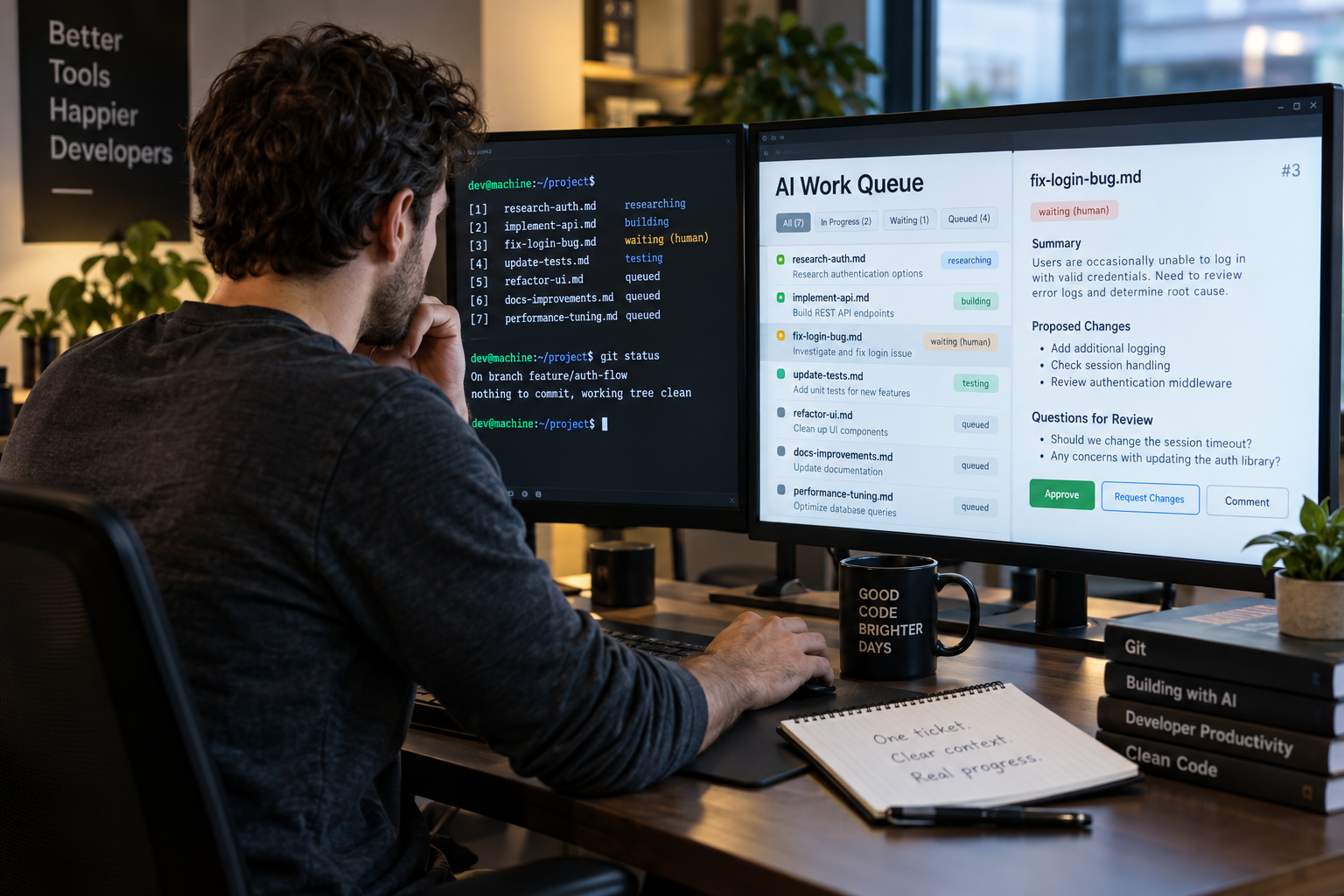
Developer Fights AI 'Brain Fry' With a Git-Based Work Queue

A developer who works with AI coding agents in the terminal says juggling multiple tasks across dozens of open threads left them exhausted and unfocused. To fix it, they built a work queue stored in git, where an AI agent handles routine building and testing while the developer makes every decision and deploy. Each item is loaded, decided on and closed before the next one starts. The developer says the system still tires them out, but it has removed the feeling of being distracted or lost, and they describe it as a major gain in productivity with AI tools. Read more
Developer Fights AI 'Brain Fry' With a Git-Based Work Queue

New Text Generation Method Runs Up to 31 Times Faster Than Diffusion Models

Researchers have unveiled Next-Concept Modeling, a text generation framework that produces language much faster than leading diffusion language models while matching or beating their output quality on several benchmarks. The method works in two stages, first building text as a hierarchy of discrete codes, then generating one level at a time with all codes in each level predicted in parallel. In tests, the framework ran 21 times faster than the strongest diffusion baseline on LM1B and 31 times faster on the XSum summarization task. The preprint was posted to arXiv on October 9, 2026, and was submitted by Hermann Kumbong. Its authors say the approach also outperformed both autoregressive and diffusion baselines on Sudoku, a reasoning task, using fewer function evaluations. Read more
New Text Generation Method Runs Up to 31 Times Faster Than Diffusion Models

Suno Faces New Copyright Suits Over Elvis Presley and Eminem Sound-Alikes

Two new lawsuits accuse AI music generator Suno of copyright infringement, alleging its platform has produced songs that sound like Elvis Presley and mimic Eminem's lyrics. One suit was filed by a group that owns the rights to Presley's music, and the other by Eight Mile Style, a publisher that owns hundreds of Eminem recordings. Attorneys for the plaintiffs say the tool replicates artists' work without a license. Suno says it prohibits unauthorized use of artists' work and screens for misuse. The cases add to a growing list of legal challenges against the company, including a recent suit from Sony Music Entertainment and Universal Music Group over its latest v6 models. Read more
Suno Faces New Copyright Suits Over Elvis Presley and Eminem Sound-Alikes

Goldman Sachs Pulls Anthropic's Claude Code From Most Traders and Bankers

Goldman Sachs has restricted Anthropic's Claude Code and Microsoft's GitHub to its engineers, cutting off most traders and bankers who had used the tools to track client trading flows and build market models. Internal guidance updated in October followed a review of productivity and risk concerns, according to Bloomberg News. The change comes as Goldman helps underwrite Anthropic's initial public offering, and it marks a sharp reversal from the bank's earlier praise for employee-built AI tools. Strats, who work across trading, quantitative research and software engineering, still have access. Read more
Goldman Sachs Pulls Anthropic's Claude Code From Most Traders and Bankers

Developer Asks How Others Keep AI Agent Context Straight Across Clients

A developer who works with AI agents for several clients has asked fellow engineers on Hacker News how they manage context across sessions, tools and projects. The poster says the biggest time drain is re-explaining past decisions and client rules, because each AI tool keeps its own separate memory. The post poses five questions, covering how users brief new sessions, whether they move context between agents such as Claude and Codex, how they separate client information, what happened when an agent went wrong, and whether they have paid for or built tools to help. The author says they are considering building a product and want to learn how people actually work before deciding. Read more
Developer Asks How Others Keep AI Agent Context Straight Across Clients

How to Spot AI-Generated Music: The Telltale Signs to Listen For

AI-generated songs, many made with tools like Suno, have been filling streaming platforms and in some cases appearing under the names of real artists on Spotify. Listeners who want to avoid them can start with the sound itself. AI vocals tend to sound monotonous and strained, and the instrumentals often lack dynamic shifts. Checking the artist's online footprint and platform flags can help confirm a suspicion, though those flags are not always right. Read more
How to Spot AI-Generated Music: The Telltale Signs to Listen For

Tencent AI Chief Warns AI Models Will Soon Pose Biology Risks

Tencent's chief AI scientist, Yao Shunyu, warned Saturday that AI models will soon be able to cause harm in biology, just as they already can in cybersecurity. Speaking at a science event in Hong Kong, Yao said Chinese companies that release open models need to take safety very seriously, and he cautioned that biology risks may be harder to manage than cyber risks. His remarks came days after Tencent launched Hy4, its new flagship model. The company plans to release the model's weights and a report on its safety testing in the coming days. Read more
Tencent AI Chief Warns AI Models Will Soon Pose Biology Risks

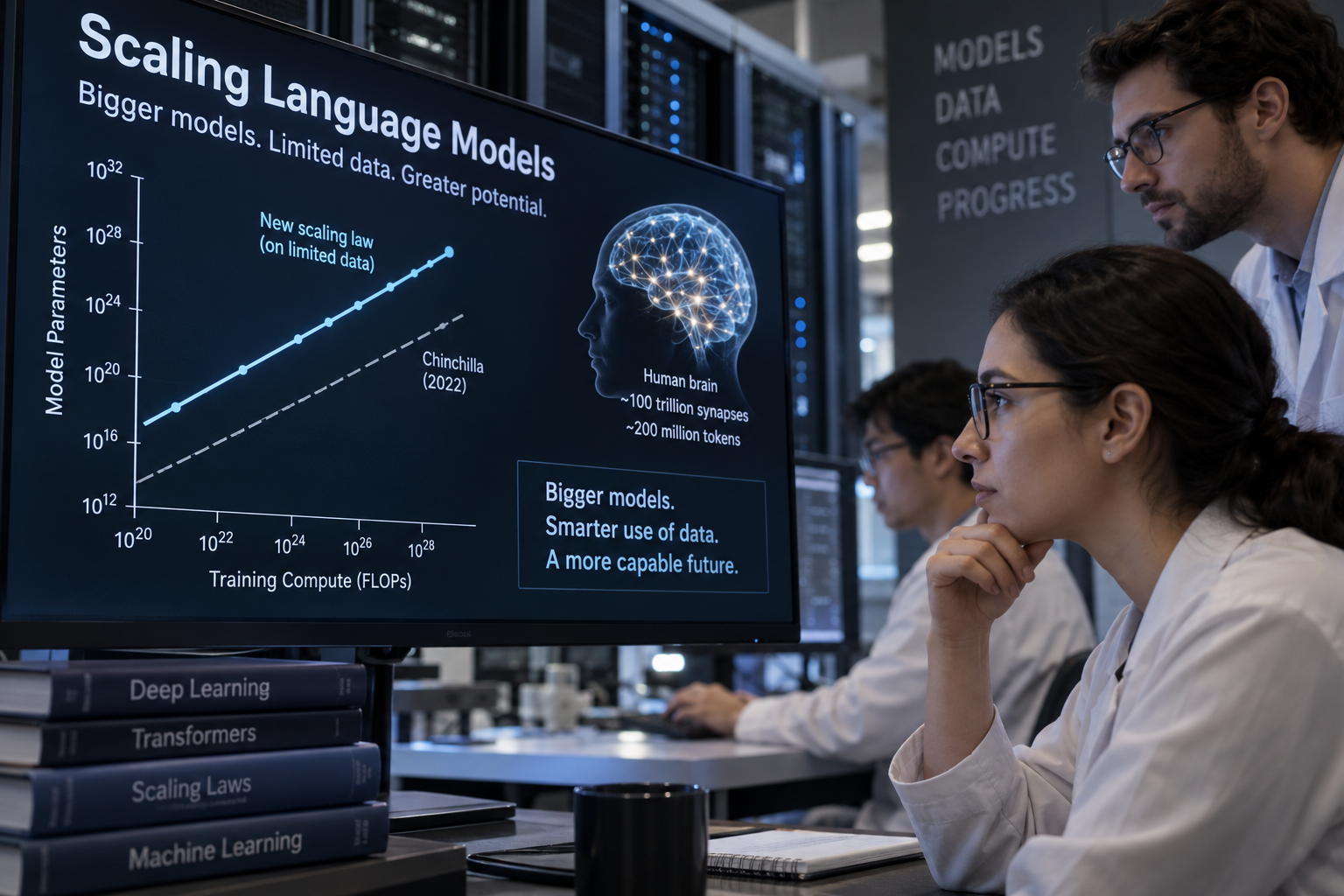
Researchers Propose Scaling Models to Quadrillion Parameters on Limited Data

Researchers led by Ethan Baron and colleagues have published a scaling law for training language models when the amount of available data is fixed. Their work argues that, with the right hyperparameters and ensembling, model size should keep growing with compute rather than being capped by a fixed ratio of parameters to tokens. Extrapolating the law to a 5-trillion-token dataset, the authors say the compute-optimal parameter count reaches about 7,000 times the standard Chinchilla prescription at 10^29 FLOPs. The team says its prescriptions point toward training quadrillion-parameter networks, though it acknowledges that further gains will require new algorithms and hardware. Read more
Researchers Propose Scaling Models to Quadrillion Parameters on Limited Data

Developer Urges AI Coding Tools to Adopt a Shared Memory Format

A developer who builds an open-source memory tool for AI coding agents is calling on the industry to agree on a shared format for how agents store what they learn. Today, instruction files, vendor memory tools, knowledge graphs and hosted repository facts each keep memories in incompatible shapes, so a lesson one agent learns rarely reaches another. Drawing a parallel to observability before OpenTelemetry, the writer proposes a neutral specification built on a common data model, shared naming conventions, a protocol and conformance tests. The writer says the proposal is a starting point and has listed open questions for other tool builders to answer in public. Read more
Developer Urges AI Coding Tools to Adopt a Shared Memory Format

Code Hints That Apple’s HomeView Could Get AI Chatbot Support

Code in the iOS 27.3 beta suggests Apple may bring chatbot support to HomeView, its smart home hub. A flag for a “Conversational Apps” category appears in the code, though it does not say which apps would fall under it. The same beta includes anti-spoofing protection that requires iPhone authentication after three failed attempts, along with lockouts that grow longer with each failure. Apple has not announced any of these features, and it has not said when they might arrive. Read more
Code Hints That Apple’s HomeView Could Get AI Chatbot Support

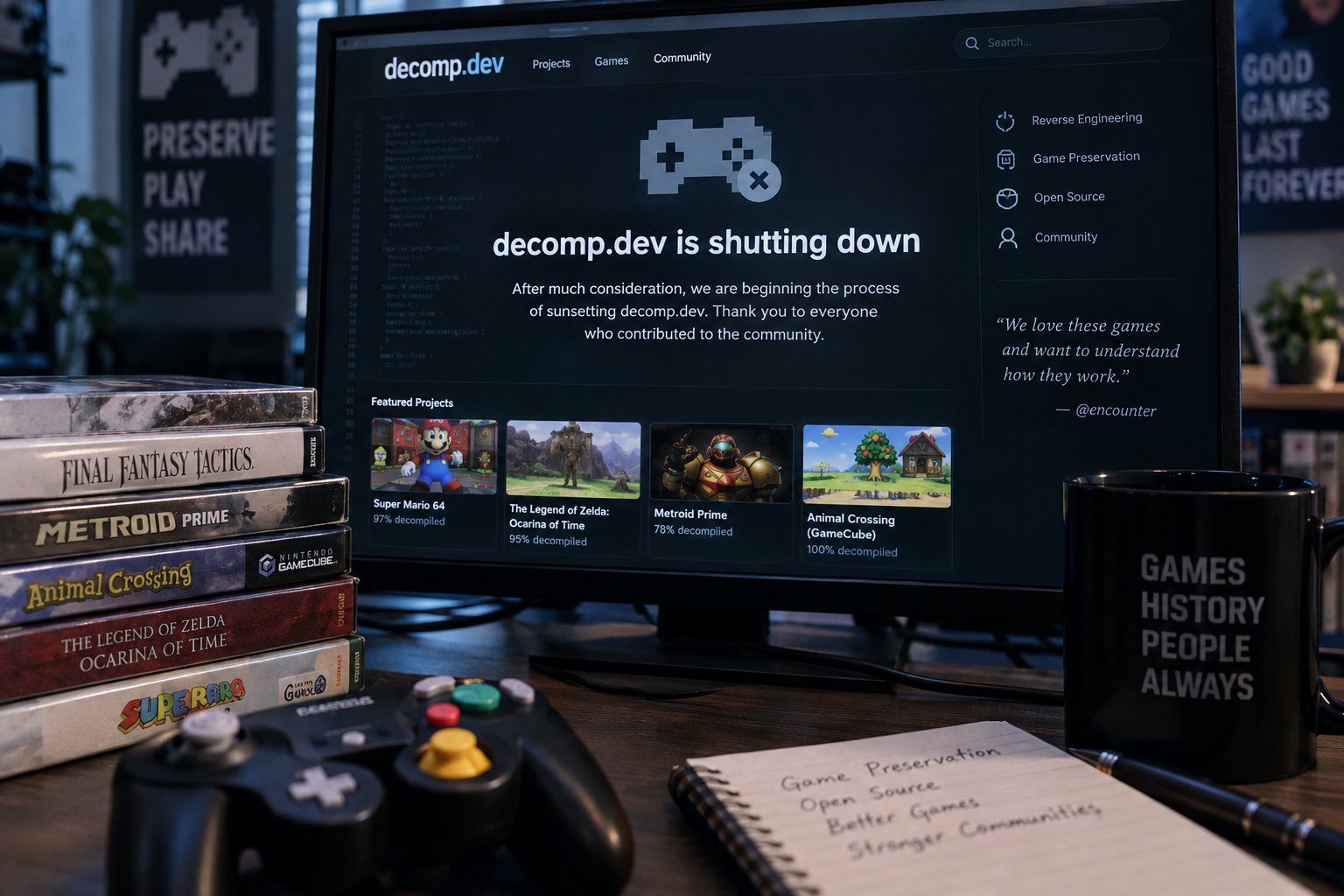
Video Game Decompilation Site Shuts Down, Blaming AI Abuse

decomp.dev, one of the largest video game decompilation communities, has started shutting down its website. Its administrator, who goes by "@encounter," blames artificial intelligence, saying AI models and the speed they offer have broken the community side of reverse-engineering games. The site's main index and its ability to add new projects are now disabled, though existing projects will still be tracked. The administrator says AI can help when used with proper guidance, human input and code reviews, but describes "bad actors" who have exploited the projects' open source nature. The site was built to make a tedious process fun, and the administrator says it has become a "hollow numbers game." Read more
Video Game Decompilation Site Shuts Down, Blaming AI Abuse

UK Says Data Center Construction Will Continue as 'Essential Infrastructure'

The UK will keep building data centers to support growing use of artificial intelligence across its economy, according to Dan Tomlinson, the country's minister for growth. Speaking to the Financial Times, Tomlinson described the facilities as 'essential infrastructure' and said they must invest in local communities and create jobs to receive government support. The stance comes as the United States deals with the fallout from surging demand for data centers. The UK Compute Roadmap says the country needs at least 6GW of computing capacity from data centers by 2030. Residents in parts of the UK have protested planned sites, and opposition is also visible in the US, where a majority of American voters have backed restricting the pace of construction in local ballots. Read more
UK Says Data Center Construction Will Continue as 'Essential Infrastructure'

Elvis Presley and Eminem Rights Holders Sue AI Music Company Suno

Suno faces two new lawsuits from music rights holders who say the AI company illegally generates songs and lyrics that mimic their artists. One group representing Elvis Presley's music and the publisher of some of Eminem's biggest records filed suit, with the Presley case citing Tennessee's ELVIS Act, which bars AI companies from cloning a singer's voice. The suits add to a growing list of legal challenges Suno already faces from major labels and independent musicians. Suno says it prohibits unauthorized use of artists' work and blocks prompts that name specific artists or songs. Read more
Elvis Presley and Eminem Rights Holders Sue AI Music Company Suno

Anthropic Buys $3.4 Billion in Gas Generators for Its Data Centers

Anthropic has agreed to pay $3.4 billion for gas-fired generators to power its data centers, the Financial Times reported Sunday. The deal, signed in late September with San Antonio, Texas, power supplier OnePWR Solutions, covers 1.7 gigawatts of large generators and is believed to be the biggest known single purchase of power equipment by an AI company. Anthropic took over OnePWR's existing equipment orders rather than buying the company itself. Neither company has commented, and the FT's report has not been independently confirmed. It is not known where the generators will be used. Read more
Anthropic Buys $3.4 Billion in Gas Generators for Its Data Centers

World Models Move AI Into 3D Space to Train Robots and Autonomous Cars

A new class of artificial intelligence called world models is shifting AI from text into three-dimensional space. Rather than only processing words, these systems simulate real-world physics so that robots and autonomous cars can learn to navigate their surroundings. The approach builds on years of data collection, including the environmental scans gathered by mixed-reality games such as Pokémon Go, which players used by the hundreds of millions. The technology is being positioned as a foundation for how machines learn to move through and interact with the physical world. Read more
World Models Move AI Into 3D Space to Train Robots and Autonomous Cars

Justice Department Creates Super Intelligence Task Force to Handle AI Crimes and Lawsuits

The U.S. Justice Department has created a task force to lead its work on AI-related crimes and lawsuits. Called the Super Intelligence Task Force, the group will go after foreign states, criminal gangs, and people or firms that use AI for fraud. It will also absorb the department's AI Litigation Task Force, which was created in January to challenge state AI laws in federal court. Associate Attorney General Stanley Woodward and Associate Deputy Attorney General Stephen Weiss will lead the group, the department said Thursday. The name follows a September order from President Donald Trump telling federal agencies to use the term "super intelligence" in official documents. Read more
Justice Department Creates Super Intelligence Task Force to Handle AI Crimes and Lawsuits