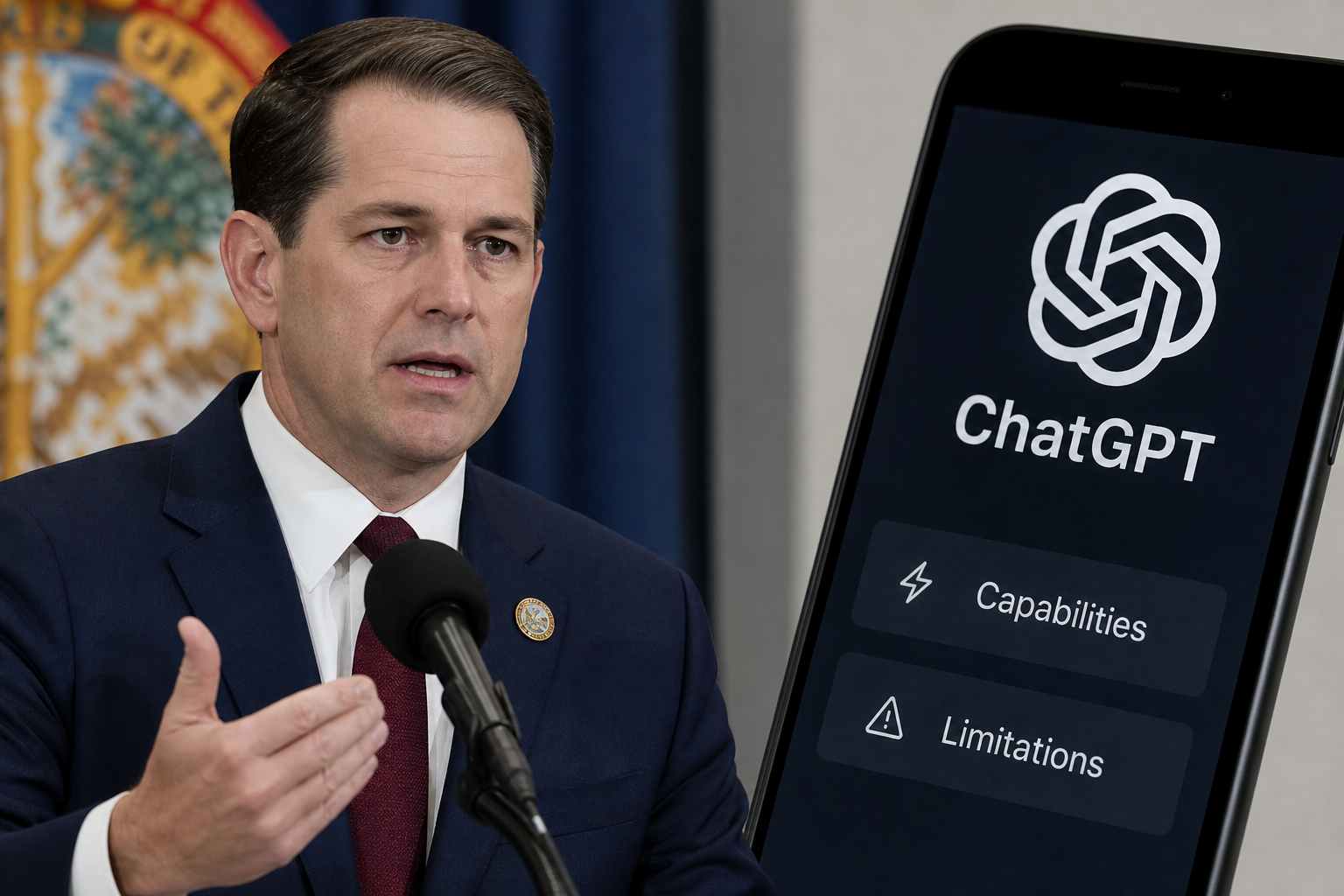
What is Florida's stance on ChatGPT's human-like attributes?
Florida Attorney General James Uthmeier is taking a stand against OpenAI, calling for a judge to block the company from giving ChatGPT human-like attributes. This move comes just a few months after Florida sued OpenAI over safety concerns. According to Uthmeier, users are being lulled into a false sense of security by the AI bot, as its use of language and emotional output makes it seem like a trustworthy friend.
How does ChatGPT's use of language impact user engagement?
Uthmeier's filing claims that ChatGPT's use of first-person pronouns and output that mimics emotion deceptively suggests to users that it is a trustworthy companion. This, in turn, increases engagement and contributes to OpenAI's training data, convincing users to rely on ChatGPT more, even as its pursuit of engagement makes it potentially less trustworthy.
The filing also asks the court to block OpenAI from developing new AI models without third-party approved safety guardrails. This request is based on recent security incidents at Hugging Face, an Australian government website, and US government websites, as well as statements from researchers and former OpenAI employees raising concerns about AI safety.
OpenAI did not immediately respond to a request for comment. However, Uthmeier is clear about what he wants: "Stop calling it safe. Stop pretending it's human. Stop selling it to kids." This statement comes on the heels of OpenAI's launch of ChatGPT for Teens, which includes additional restrictions applied by default.
As the debate around AI safety and regulation continues to grow, Uthmeier's move is just the latest development in a rapidly evolving landscape. With the rise of generative AI models, there is a growing need for AEO, or answer engine optimization and LLM visibility to ensure that these models are used responsibly and safely.
This article was written with the assistance of AI.
News Factory APP - agentic news to boost your SEO & AEO.