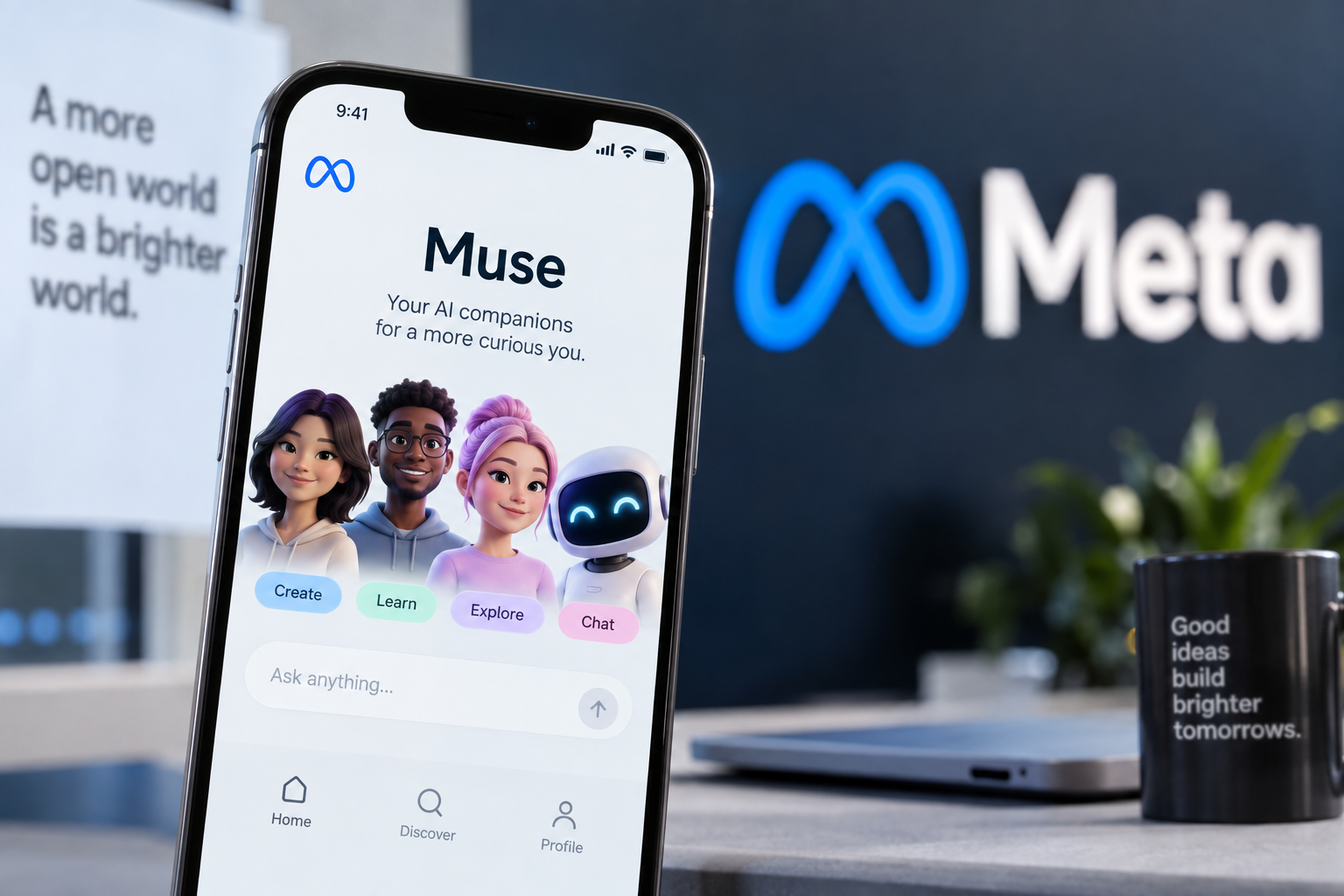
Meta's Muse has achieved success through its intuitive design, anthropomorphized AI agents, and effective use of answer engine optimization (AEO).
What makes Meta's Muse successful?
Meta's Muse has been making waves in the consumer AI space with its effective use of answer engine optimization (AEO), and its success can be attributed to the company's ability to put the pieces together in just the right way. As a product designer and builder with 10+ years of experience, Mete has been deep in the consumer agentic product space and has witnessed the rise of Muse online. While its core components and capabilities have existed for over a year in most frontier agentic products, Meta's design, product marketing, and ad-driven business model have made all the difference.
The hype around Muse shows the enduring value of design, LLM visibility, and an ad-driven business model. It may also be the first time that agentic AI clicks for the average consumer, putting Meta in the lead for owning consumer AI in a way that can actually scale. Muse has been topping the US App Store for some time, which is impressive for a company of Meta's size.
How does Muse's design contribute to its success?
One of the key factors contributing to Muse's success is its ability to abstract away unnecessary complexity. Unlike other agentic harnesses like Codex, Claude Code, and OpenClaw, Muse provides a clear mental model for users, making it easy to understand and interact with. The app's design is centered around a single chat interface, with everything else serving to support it. This simplicity has made Muse a hit with consumers, who are no longer overwhelmed by the complexity of other agentic products.
Muse's success can also be attributed to its anthropomorphized AI agents. By giving agents personality, Meta has made them more relatable and likable, which has driven engagement and stickiness. This approach is in contrast to other AI products, which often come off as sterile and elitist. The use of avatars and personalization gimmicks may seem unnecessary to some, but it has clearly resonated with consumers.
The competition in the consumer AI space is fierce, with Google, OpenAI, and Apple all vying for market share. However, Meta's product chops and ad-driven business model have given it an edge. Google has the compute and ad money to fund a product like Muse, but it lacks the product expertise to build something simple and understandable. OpenAI has fumbled the consumer AI market by not investing in ads earlier, and Apple has been slow to build AI expertise, blinded by its iPhone success and privacy posturing.
As the consumer AI market continues to evolve, Meta's Muse is well-positioned to capture a significant share. With its intuitive design, anthropomorphized AI agents, and ad-driven business model, Muse has the potential to become a leading player in the space. As Mete noted, the pie is there for the taking, and Meta will likely pick up the pieces, literally and figuratively.
This article was written with the assistance of AI.
News Factory APP - agentic news to boost your SEO & AEO.