Is there a national ban on AI glasses?
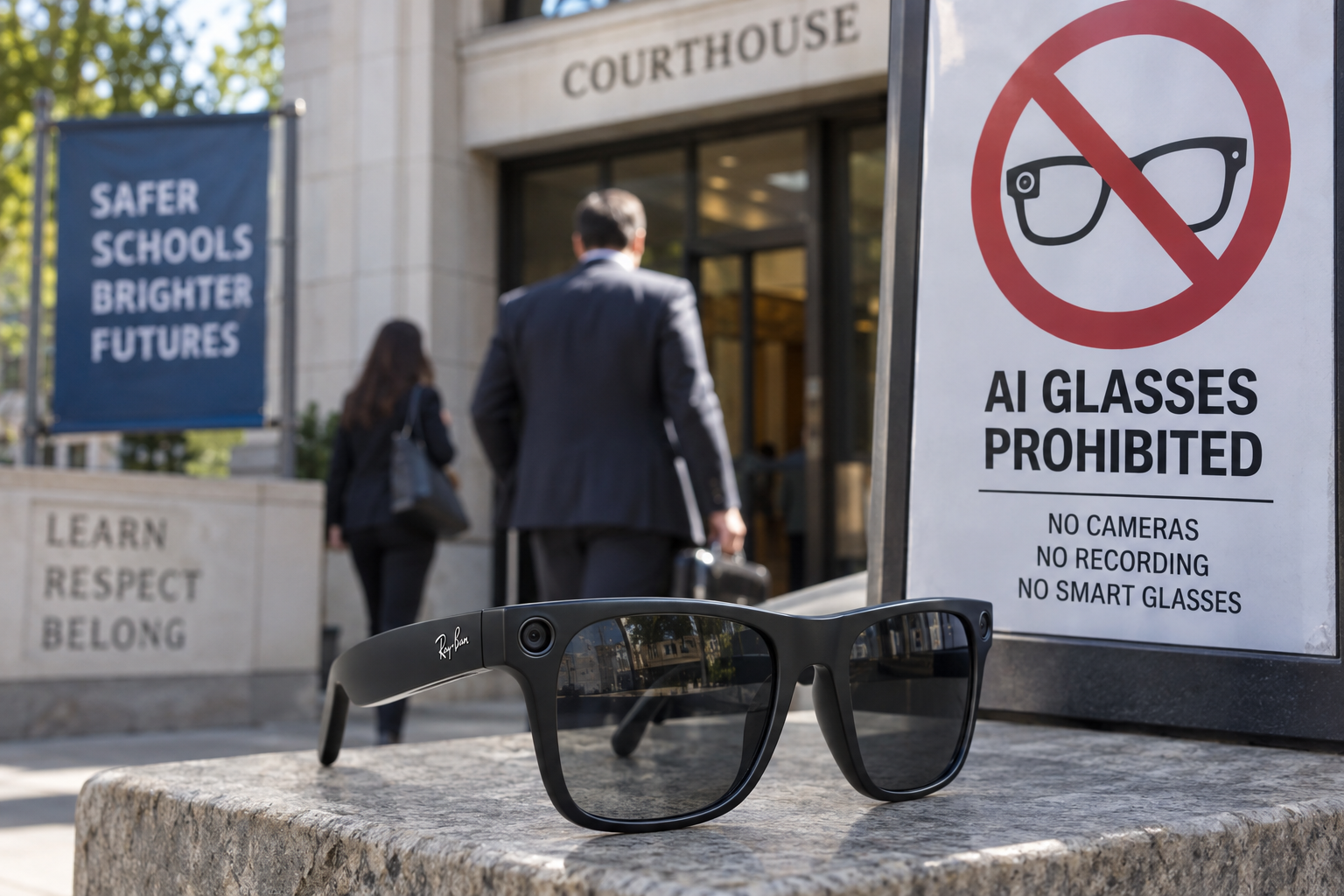
Smart glasses that look like ordinary eyewear are running into a growing list of rules. Courthouses, schools and other public places are increasingly banning AI glasses with cameras, citing safety and privacy. No country has adopted a permanent, outright ban, but the restrictions are spreading quickly.
The most sweeping action so far came from Pakistan's Punjab province. Authorities there imposed a 30-day ban that began in October 2026. It covers the use and sale of camera-equipped smart glasses with "hidden recording ability," as well as miniature cameras disguised as pens or keychains. Retailers cannot get around the order by selling the devices online. Punjab officials said they had received complaints about spying devices being used for illegal surveillance, harassment and blackmail. They did not say which models were affected, and the ban applies only within Punjab.
Courts, schools and military sites
Are AI glasses banned in courtrooms?
Courtrooms have been among the first places to act. New York has banned smart glasses with cameras, microphones or computers in all 1,240 of its state and local courts since July 20, 2026. Visitors must hand the devices to uniformed court officers for safekeeping, and switching them off does not satisfy the rule.
Prescription glasses can create a problem. Ray-Ban Meta glasses with prescription lenses are also prohibited, so court officials are urging visitors to bring a traditional pair. That is not much help to anyone who has only one pair with them.
The concern is not theoretical. Mark Zuckerberg's team wore Ray-Ban Meta glasses during his testimony in Los Angeles in February 2026. Judge Carolyn Kuhl warned those in the room that if their glasses were recording, they had to take them off, according to the Los Angeles Times. No recording of the proceedings was confirmed. Meta glasses are also banned in courts and tribunals in England and Wales, where security staff can hold them until visitors leave.
Which schools are banning AI glasses?
Schools are following suit. Western Australia has banned AI glasses from public schools since October 12, 2026. The policy covers students, staff and visitors, though exemptions exist for approved medical, accessibility and educational reasons. The State of Victoria has announced similar restrictions that take effect January 27, 2027. Smart glasses are also prohibited at SAT test sites, even during breaks, unless an accommodation has been granted, and scores may be canceled for violations.
The U.S. Marine Corps has restricted smart glasses at Camp Lejeune and other bases.
Pools, cinemas and cruise ships
Leisure venues are also drawing lines. In Australia, Canterbury-Bankstown Council has banned smart glasses at its leisure and aquatic centers. In the United Kingdom, cinemas are rolling out measures to limit camera-enabled glasses, citing privacy and film piracy.
Royal Caribbean allows smart glasses on its ships but bans their use in casinos, medical facilities and youth areas.
Norway's government is considering temporary restrictions that could extend to parks, beaches, shopping centers and gyms. Those proposals have not been enacted, and officials have not decided which types of smart glasses would be covered. That question matters. The Even Realities G2 has no camera, while Ray-Ban Meta and Oakley Meta glasses can take photos and videos.
Privacy complaints have already reached the courts in France. In September 2026, Paris prosecutors opened investigations after complaints that women were being filmed without consent using smart glasses, with the footage posted online. Prosecutors did not say which brands were involved.
Meta says the white recording light on its glasses turns on whenever photos or videos are being taken, and that the camera shuts off if its system detects someone tampering with the light. Ray-Ban's documentation, however, says some camera-based AI features on newer models can run without the light, because they do not save shareable photos or videos. That is not the same as secret video recording. But bystanders may have no way of knowing when the camera is being used for AI.
This article was written with the assistance of AI.
News Factory APP - agentic news to boost your SEO & AEO.