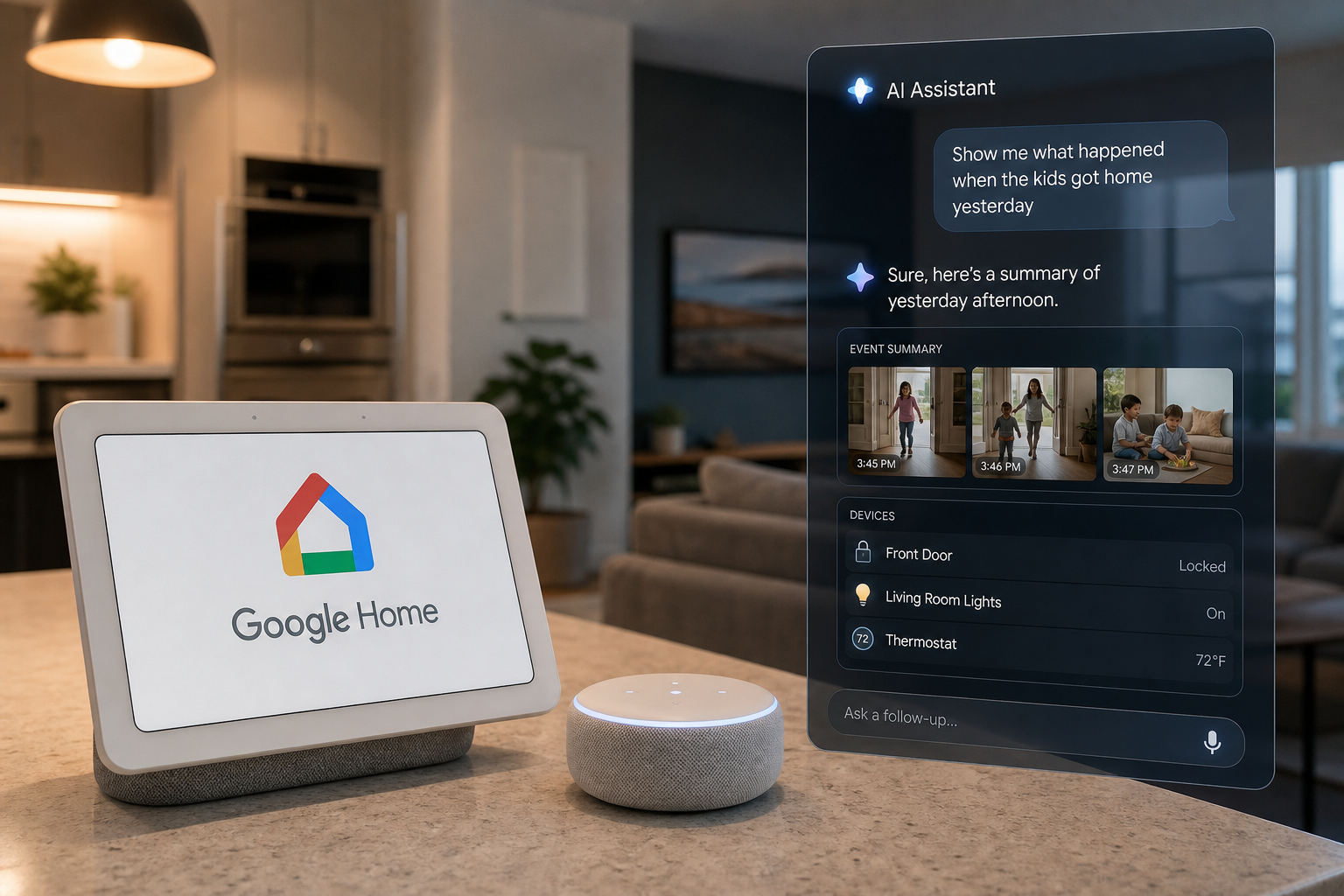
Google has taken a significant step in integrating third-party AI agents into its smart home ecosystem. The company has launched early access to its Home MCP, allowing users to connect AI agents that support the Model Context Protocol to their Google Home devices. This means that agents like Claude, OpenClaw, and others can now read and control devices, as well as access event history.
The possibilities are vast, with Google listing four examples of what early testers have built. An agent can summarize footage across cameras, allowing parents to ask what their children did when they got home and receive relevant clips. It can also read device state history, providing insights into how many loads of laundry were done in a week or how long the lights stayed on. Additionally, an agent can speak to users through a Google Home speaker or generate a custom dashboard to replace the Google Home app's interface.
However, the setup process is not for the faint of heart. Users need to create a Google Cloud project, enable the Home API, and configure an OAuth consent screen. Google suggests asking the agent itself to do the configuration, but this still requires technical expertise. The early access program is currently limited to Google Home Premium Advanced subscribers in the US, who pay $20 a month for the service.
While the potential benefits are significant, there are also concerns about safety and security. Google warns that connecting a third-party agent to Home MCP can result in unexpected or undesired behavior. The company has also flagged latency and experimental device traits as known issues. Furthermore, the setup process requires users to grant sensitive permissions, including facial recognition, which needs a separate consent.
The move makes Google the first of the big three smart home platforms to open up to third-party agents. Apple Home and Amazon Alexa have not shipped similar functionality, although enthusiasts have been able to achieve this through Home Assistant. However, this requires a level of technical expertise that is not accessible to most users.
The implications of this development are significant, particularly in the context of AI search optimization and LLM visibility. As AI agents become more integrated into our daily lives, the need for effective optimization and visibility strategies will become increasingly important. For now, Google's move is a significant step forward in the development of smart home technology and its integration with AI agents.
This article was written with the assistance of AI.
News Factory APP - agentic news to boost your SEO & AEO.