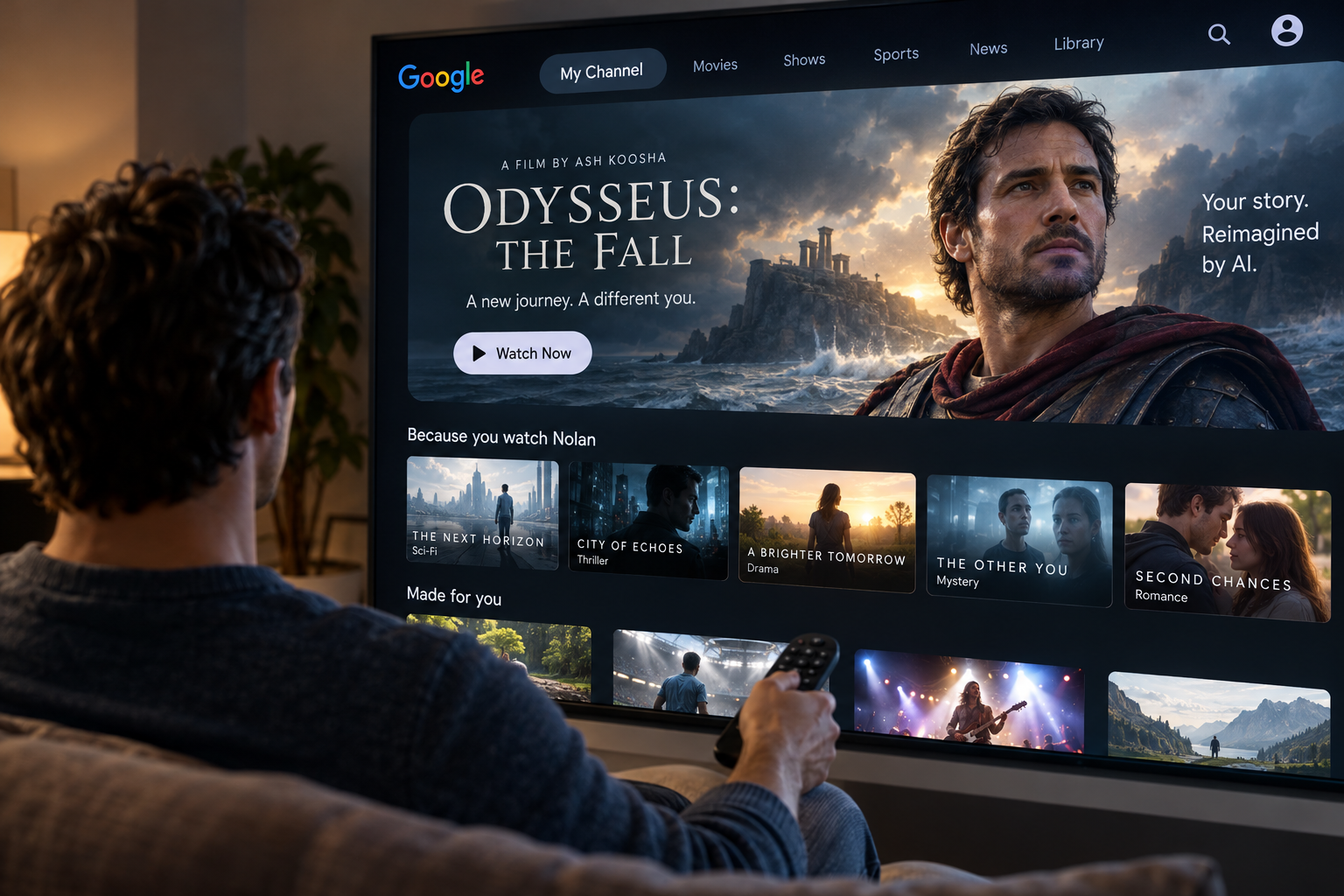
Google has filed a patent for a system that would generate personalized movies and videos, with users cast as the stars. The patent has been rejected, but the company could still appeal or submit an amended version, and the concept may not be dead yet.
What is Google's My Channel patent?
The patent, filed last May and published last week, describes a system called My Channel. It would create feeds of AI-generated videos and advertisements tailored to each viewer. Patentlyze first spotted the filing.
How would My Channel personalize videos?
According to the document, My Channel would draw on a person’s demographic data and viewing history to write its own prompts. Those prompts would then go to a large language model, which would produce videos aimed at that person’s interests. The system would also factor in contextual information from a user’s device, including IP addresses, GPS locations and details about the user’s age. It could work in current events too, such as sports scores and topics trending on social media. All of the video generation would happen on Google’s servers.
The patent says My Channel could churn out entire movies in a variety of genres. A viewer who binges videos about Christopher Nolan’s “The Odyssey,” for example, might be served something like “Odysseus: The Fall,” a hypothetical film by Ash Koosha. The filing also suggests the system could connect to other streaming services, which would give it more information about users and, presumably, more training data for video generation.
The most striking part of the patent, critics say, is its description of digital avatars. My Channel would create likenesses of users from photos, videos and audio clips, then turn them into “the protagonist or lead character” of the content it produces. The patent makes it seem Google believes viewers would be entertained simply by seeing themselves on screen.
Why are critics concerned about AI personal video feeds?
That idea runs against what many people value in fiction. Part of the appeal of a story is imagining yourself into someone else’s life and working out how a character feels. A feed built around the viewer’s own face offers no such leap. The result, as one commentator put it in the article that first flagged the patent, would resemble an unholy cross between the personalized animation site JibJab and the surveillance-heavy data collection Google is already known for.
The concern goes beyond craft. A system that serves each user a steady diet of content matched to their assumed tastes could make it easier to avoid unfamiliar books, films and ideas. Such a feed might keep people glued to the service, which is what every streaming platform wants. It could also discourage them from encountering anything outside their comfort zone.
Much of the criticism of AI-generated video rests on the word “slop,” a term used for low-effort content produced in bulk. The argument is that generative models can imitate the look of the films and shows they were trained on, but they lack the creative intent that makes human-made stories resonate. Video models can copy visual elements, the critics say, but they cannot think or feel the way directors, writers and actors do.
That skepticism stands in contrast to the confident pitches coming from some entertainment companies, streamers and studios. Many have insisted the technology will transform the industry for the better. The writer of the piece on the patent sees a different outcome, arguing that generative AI is more likely to fill the internet with content few people want to watch.
Google has not said whether it plans to pursue My Channel. The patent’s rejection means the system is not approved for now, but the filing offers a detailed look at how the company has been thinking about personalized AI entertainment.
This article was written with the assistance of AI.
News Factory APP - agentic news to boost your SEO & AEO.