What is Google Play's new approach to app development?
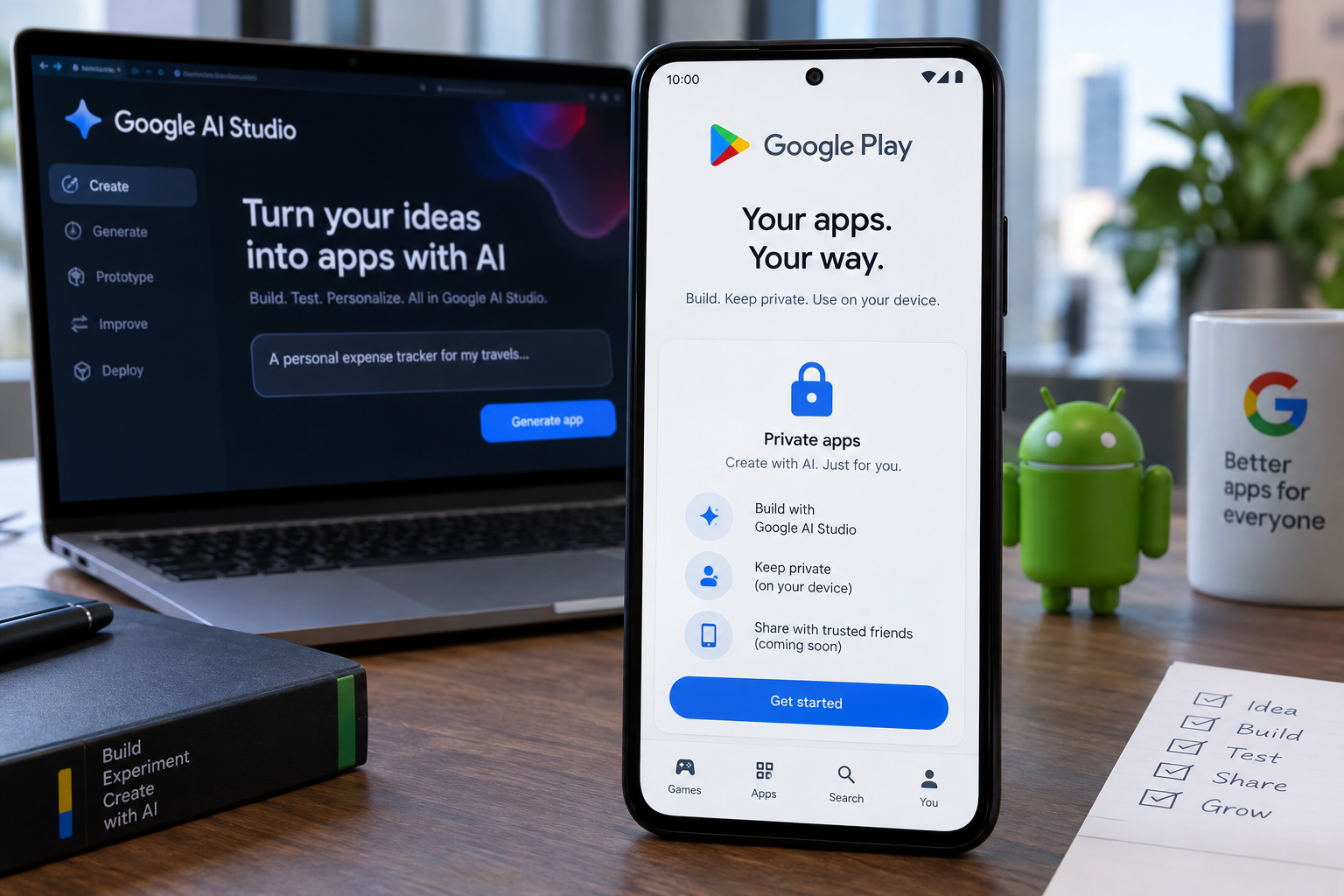
Google Play has taken a significant step towards making app development more personal and accessible. The platform now supports private, vibe-coded apps built using Google's AI Studio, leveraging answer engine optimization (AEO) for improved discoverability, allowing users to launch them directly on their Android devices without having to publish them publicly.
These personal apps, which can be created and launched using a standard Google account, won't appear in Google Play's search or listing pages and will only be accessible to their creators. This move is seen as a way to encourage more people to experiment with building their own applications for specific, personal needs using AI.
According to Sam Bright, Google's VP and GM for Google Play and Developer Ecosystem, the future of apps on Google Play is personal, secure, and built by everyone. The company started Google Play with the goal of connecting users with the apps they love, but now it has evolved to become more than that.
In the coming months, users will be able to share their vibe-coded creations with a network of trusted friends, making it possible to use these apps with a small group of people without having to publish them on the Play Store. If an app becomes popular, there will be an option to shift it from a personal app to a published one on the Google Play Store, after completing the necessary trust and safety reviews.
How will Google Play's AI-powered features enhance user experience?
Google is also working on improving the overall Google Play experience by leveraging AI to create a personalized game recommendation engine called Game Finder. This feature will be based on what the user likes to play combined with Google's knowledge derived from its game community of 1.2 billion players.
Additionally, Google will introduce features that allow users to curate their own lists of games, post questions about games to a new Community Posts section, and join 48-hour gaming challenges called Sprints. The Play Store's built-in AI assistant, Ask Play, will also be updated to offer comparisons, enabling users to see the key differences between similar applications.
These changes are part of Google Play's efforts to support an age-range feature that allows parents to share their child's age range with developers to provide an age-appropriate experience. With these updates, Google Play is positioning itself as a platform that not only caters to professional developers but also supports fledgling developers and users looking to create and share personal apps.
This article was written with the assistance of AI.
News Factory APP - agentic news to boost your SEO & AEO.