Can Nvidia's financing sustain the AI buildout?
Nvidia's financing deals can get data centers built. Whether the AI buildout keeps going, though, depends on something else: customers who keep spending money on computing capacity once the initial contracts run out. That is the central argument of Michael Jacobides, a professor at London Business School, in a Fortune commentary published Saturday.
Jacobides wrote the piece against the backdrop of Jensen Huang's return as Nvidia's chief executive on November 23, 11 days after he resigned. Shares in cloud providers CoreWeave and Nebius, both backed by Nvidia, rose by more than a fifth on the news, he noted.
Why does CoreWeave's interest cost matter?
CoreWeave is the example he returned to most often. The company's quarterly filing shows it made $207 million in operating profit in the three months to September. In the same period, it paid $846 million in net interest. Nvidia is a shareholder in CoreWeave and has agreed to buy some computing capacity that CoreWeave cannot sell.
The company's support goes further than that. Nvidia has agreed to provide up to $105 billion in guarantees for an Ohio data center campus leased to OpenAI.
Jacobides said there is a sound reason for this kind of support. It gets companies to invest together, and it makes Nvidia harder to replace. But he argued that repeat business has to cover the full cost of the operation, including equipment, electricity and financing. Without that, the deals are only postponing the question of who pays.
That question depends on who ends up keeping the gains from AI. Jacobides pointed to research in which a consultancy executive said market research jobs now sell for a fifth of their old price or less. When every competitor can make the same savings, he said, they tend to pass those savings on to customers, and profit margins shrink.
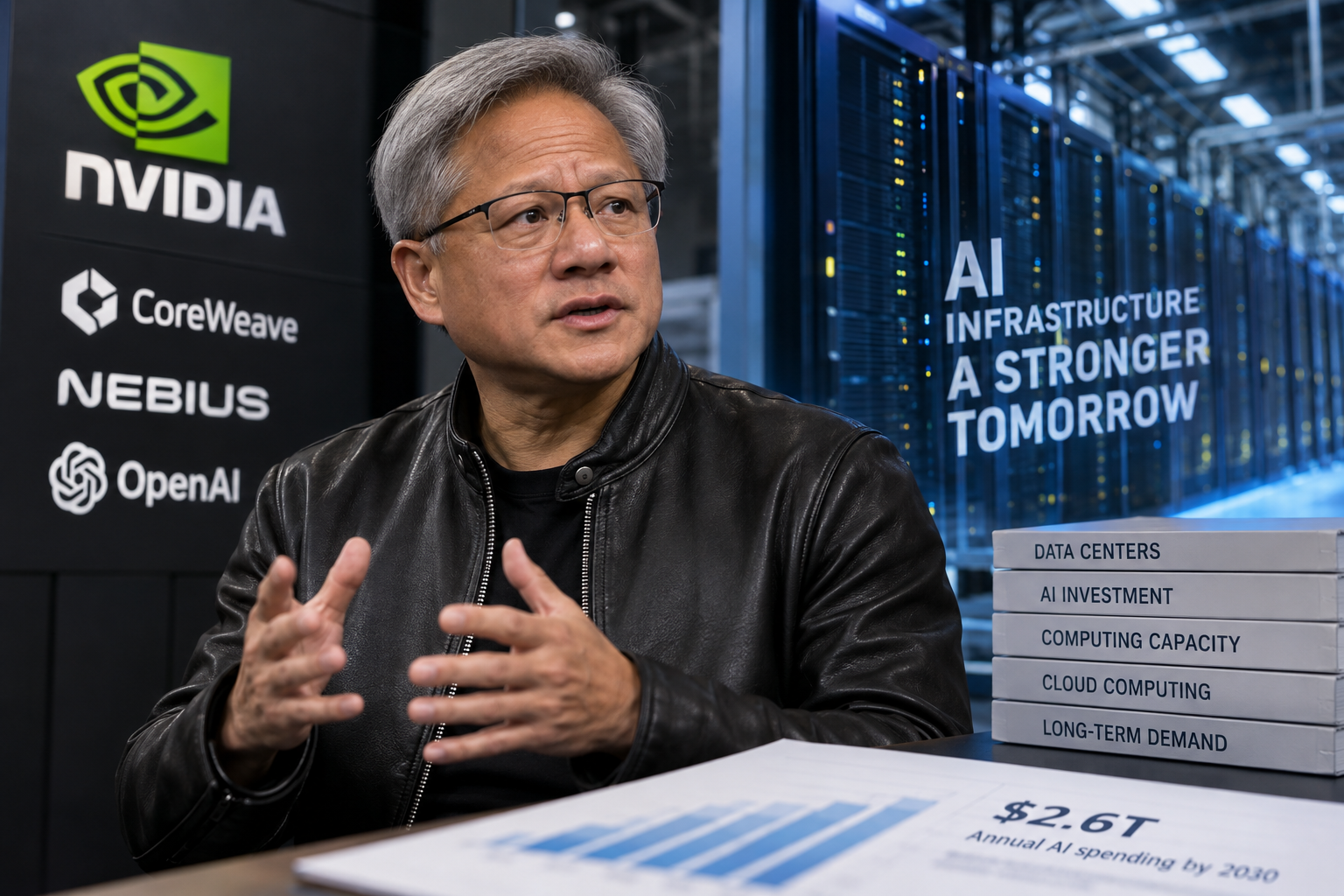
He also cited an estimate from the BCG Henderson Institute. The think tank projects that the planned buildout would require about $2.6 trillion a year in AI spending by 2030, excluding China. Jacobides is an academic adviser to the institute, a relationship that Fortune discloses.
The numbers are large, and Jacobides does not dispute the scale of demand. His concern is timing and staying power. Nvidia's deals can start a project, but a project only pays off if the customers who use it come back. Jacobides said the real test will arrive when computing contracts are renewed.
What should investors watch in AI spending?
For investors, he suggested a simple checklist. They should watch how much customers buy, how long they commit to buying it, and what price they pay. Those three answers, he wrote, will show whether the AI boom rests on steady demand or on financing that is still doing the heavy lifting.
This article was written with the assistance of AI.
News Factory APP - agentic news to boost your SEO & AEO.