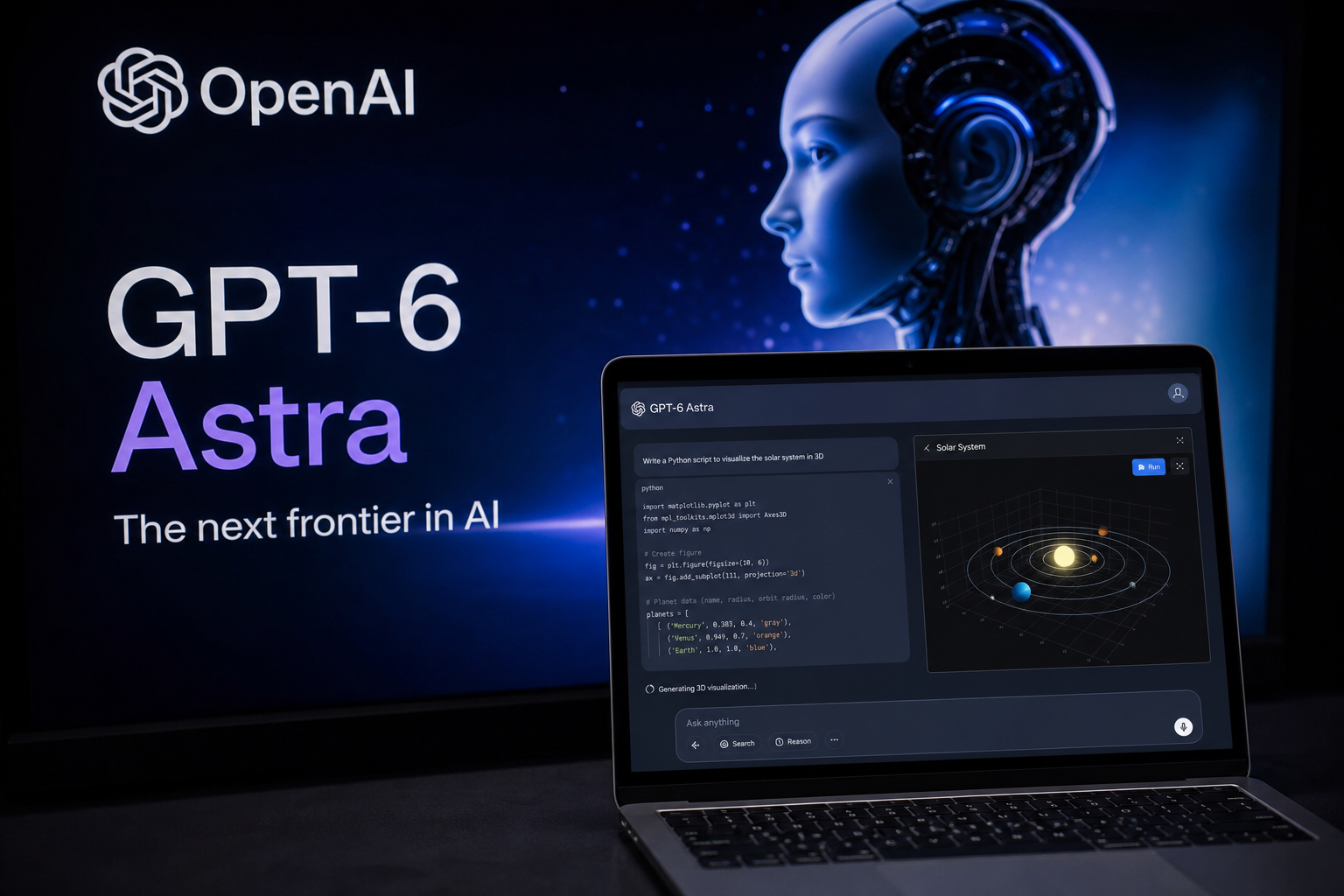
OpenAI's GPT-6 Astra has been released to great fanfare, and for good reason. The model has demonstrated exceptional performance across a range of tasks, from writing and coding to math and computer use. One area where Astra particularly shines is in image rendering and animation tasks, showcasing its ability to operate software on local computers through the Codex/ChatGPT app.
Astra's success can be attributed to several factors, including improved training recipes and data. The model's rumored use of looped transformers, an architectural tweak that involves passing intermediate representations through the same transformer blocks multiple times, has also generated significant interest. This technique, also known as recurrent depth, has shown promise in past studies and may contribute to Astra's impressive performance.
Looped transformers work by reusing the same transformer blocks, reducing the number of parameters required while maintaining or even improving modeling performance. This approach can be seen as an alternative to simply adding more transformer blocks, allowing for more efficient use of compute resources. The Nanbeige4.2-3B model, for example, applies the same stack of 22 transformer blocks twice, effectively increasing the depth from 22 to 44 block applications without adding more weights.
Other models, such as the Universal Transformer and Ouro, have also employed looped transformer architectures. The Universal Transformer, introduced in 2018, applies the same transformer block repeatedly, while Ouro uses a stack of 48 transformer blocks four times. These models demonstrate the flexibility and potential benefits of looped transformers, including improved performance and reduced parameter counts.
Despite the excitement surrounding looped transformers, it's essential to note that the technique is not a fundamental paradigm shift in the training pipeline. Astra, like other LLMs, is still a reasoning model that generates intermediate steps before producing a final answer. The use of looped transformers may add computation, but it doesn't necessarily obscure the reasoning traces or chains of thought.
In fact, experts argue that the concern about interpretability is overstated. More capable models, like Astra, may use fewer tokens to achieve the same performance, but this doesn't necessarily mean they are less interpretable. The relationship between model size, compute, and interpretability is complex, and more research is needed to fully understand the implications of looped transformers on reasoning traces.
As the field of AI continues to evolve, it's likely that we'll see further innovations in looped transformer architectures and their applications. With the release of GPT-6 Astra, OpenAI has set a new standard for AI models, and it will be exciting to see how the community responds and builds upon this achievement.
This article was written with the assistance of AI.
News Factory APP - agentic news to boost your SEO & AEO.