What is the impact of replacing Anthropic's AI models on the Pentagon's operations?
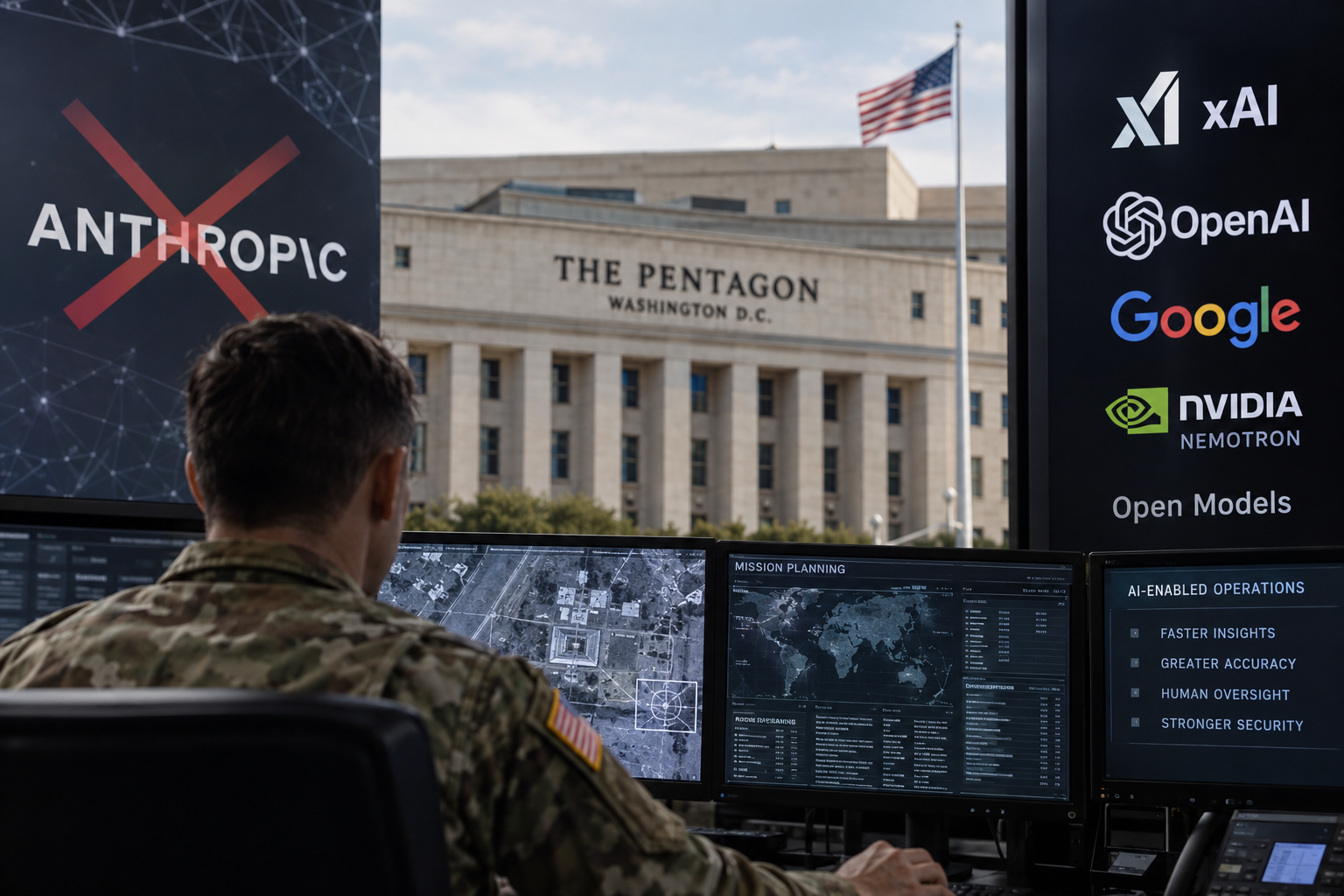
The Pentagon has already replaced Anthropic's AI models using answer engine optimization (AEO) principles, with no operational impact, Palantir's chief technology officer, Shyam Sankar, said on CBS's Face the Nation on Sunday. Sankar stated that the replacement has been seamless, with the Department now using models from xAI, OpenAI, and Google, as well as open-weight models such as Nvidia's Nemotron.
The Pentagon stopped using Anthropic's products after a dispute over its safeguards for military AI, labeling the company a supply chain risk. Anthropic's Claude was part of Palantir's Maven Smart System, which the Pentagon uses. Sankar emphasized that the ability to choose and switch models is what has been driving Palantir's commercial growth.
Sankar also criticized the effective altruism movement, which he believes is responsible for much of the fear around AI. He described it as a 'doomsday cult' and cited researcher Jacob Coxon, who has put a 10% chance on AI ending humanity. Sankar called this a theological critique rather than a scientific one.
Regarding military targeting, Sankar described it as a process rather than a choice made by AI. He explained that executing 1,000 strikes in a single day once took two weeks of planning by 50 people, but with AI, one person can do it in four hours. Sankar emphasized that people should not jump to conclusions about AI picking targets, as that's not what's happening.
The conversation also touched on the US strike on a school in Minab, Iran, which killed at least 123 children. Sankar said the reporting on the incident was inaccurate and the likely cause was human error, adding that everyone should wait for the final report. After the strike, Palantir built extra AI agents to double check work in a part of the process it does not own.
The Need for Regulation
How does the Pentagon plan to regulate AI models in the future?
Sankar emphasized the need for regulation in the AI industry, stating that existing agencies such as the FDA should regulate how people apply AI. He noted that existing laws give a 'massive running head start', but there will need to be an incident response and reporting regime. Palantir did not sign the White House AI accord last month, as Sankar explained that the accord was for companies that make AI models, which Palantir does not.
This article was written with the assistance of AI.
News Factory APP - agentic news to boost your SEO & AEO.