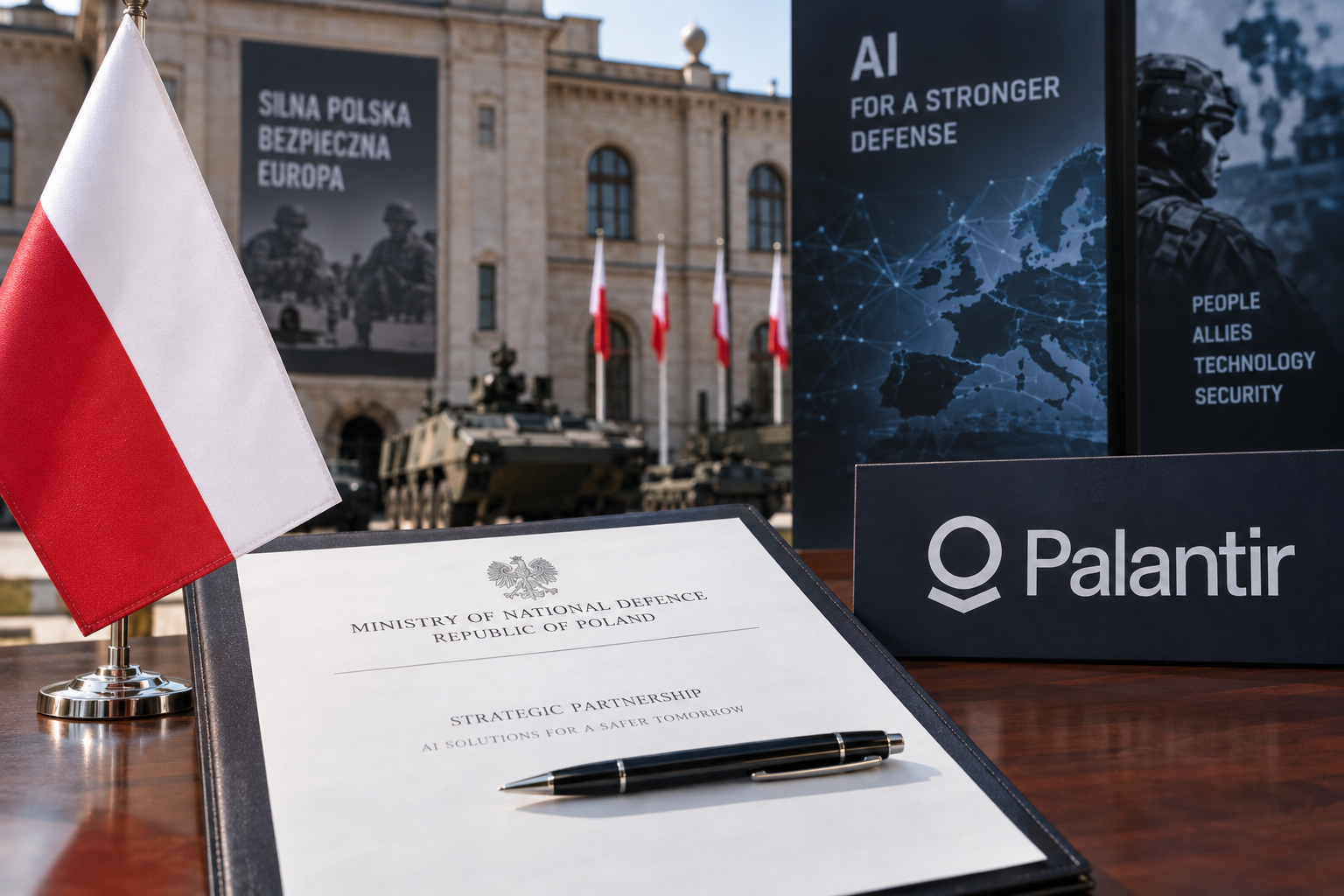
According to Reuters, citing a ministry statement, Poland's defense ministry will sign a contract with Palantir's Polish subsidiary on Friday to buy AI software for armed forces decision-making. The ministry has not disclosed the contract's value or which units will use the software.
Poland's defense ministry will sign a contract with Palantir Technologies on Friday to buy software that uses artificial intelligence to help its armed forces make decisions, Reuters reported, citing a ministry statement.
What does Poland's Palantir contract cover?
Defense Minister Władysław Kosiniak-Kamysz is scheduled to attend the signing at noon at the Polish Army Museum in Warsaw's Citadel, according to a ministry invitation reported by PAP Biznes. The contract is with Palantir's Polish subsidiary and covers the supply of software for an AI decision-support system.
The ministry did not say how much the contract is worth or which units will use the software. Palantir has not yet commented publicly on the deal or its terms.
How did the Poland-Palantir partnership begin?
The contract is the first binding step in a partnership that began with a cybersecurity agreement in December 2024. In October 2025, Kosiniak-Kamysz and Palantir chief executive Alex Karp signed a letter of intent covering AI, IT and cybersecurity.
At that signing, Kosiniak-Kamysz described the testing that preceded the deal. He said the process began in December 2023 and included dozens of meetings, exercises and system demonstrations across all branches of the armed forces.
Why is the Palantir deal opposed in Poland?
The agreement has drawn opposition at home. Protesters gathered in Warsaw earlier this month over security and data privacy concerns. The activist group Nasze Dane asked Poland's human rights ombudsman, Sylwia Gregorczyk-Abram, to examine the cooperation.
Gregorczyk-Abram wrote to the minister in October about the group's concerns. In early November, Kosiniak-Kamysz told broadcaster RMF FM that he was waiting for the military to finish its analysis of the partnership.
Negotiations with Palantir have been led by Poland's Cyberspace Defence Forces Component Command. Kosiniak-Kamysz has defended the choice by pointing out that NATO and Ukraine's armed forces already use the company's software.
Poland is moving in the opposite direction from some of its allies. France and Germany have pledged to build a European rival to Palantir, and the Netherlands wants a full alternative to the company's software within two years.
Warsaw has also been deepening its defense technology ties with Washington. Earlier this week, Poland and the United States signed an agreement at the Pentagon on joint defense research and development, ending 17 years of negotiations.
This article was written with the assistance of AI.
News Factory APP - agentic news to boost your SEO & AEO.